Join us on a literary world trip!
Add this book to bookshelf
Grey
Write a new comment Default profile 50px
Grey
Subscribe to read the full book or read the first pages for free!
All characters reduced
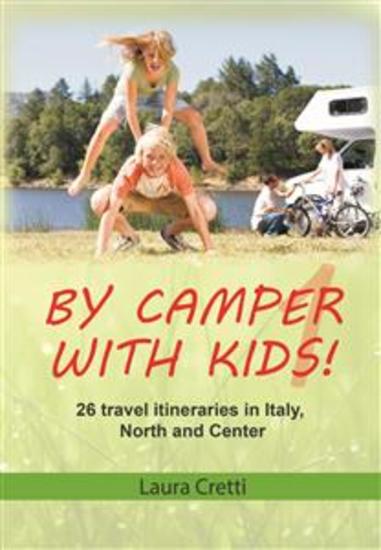
By camper with kids - Volume 1 - 26 travel itineraries in Italy North and Center - cover

By camper with kids - Volume 1 - 26 travel itineraries in Italy North and Center

Laura Cretti

Publisher: Youcanprint

  • 0
  • 0
  • 0

Summary

26 campervan itineraries in Northern and Central Italy exploring medieval villages, UNESCO sites, historical cities of art, hidden gems and theme parks, for all campervan enthusiasts looking for holiday freedom and fun with their children.This handbook provides suggestions on the most interesting visits, as well as practical tips for organizing life on the road, from car parks and rest areas to playgrounds and the most suitable routes.Laura Cretti's book is not only a precious guide to choosing destinations and organizing campervan itineraries for families with children, which can also be done by car: be inspired by her curiosity and passion for travelling! Laura's journeys transmit the joy of discovery and will help you to organize your own stress-free adventures in Italy. Her enthralling enthusiasm proves that campervan holidays with the whole family are easier than you think and an endless source of fun!
Available since: 09/06/2024.

Other books that might interest you

  • Walking - cover

    Walking

    Henry David Thoreau

    • 0
    • 0
    • 0
    Henry David Thoreau’s Walking is a profound meditation on nature, freedom, and self-discovery. Originally published in 1862, this classic essay explores the philosophy of walking as both a physical and spiritual act, emphasizing the importance of immersing oneself in the wild, untamed beauty of the natural world. Thoreau argues that walking is not merely a pastime but a way to achieve a deeper connection with the land, free from societal constraints and distractions. 
    Narrated by Declan McHugh, this audiobook brings Thoreau’s lyrical prose to life, guiding listeners through his reflections on wilderness, solitude, and personal growth. His insights remain as relevant today as they were in the 19th century, inspiring modern readers to step away from the noise of civilization and embrace the tranquility of nature. 
    An essential work for lovers of philosophy, nature writing, and transcendentalist thought, Walking is a timeless call to slow down, wander, and rediscover the world beyond paved roads and crowded cities.
    Show book
  • Andean Economies - Shaping Nations Through Wealth and Hardship (3 in 1) - cover

    Andean Economies - Shaping...

    Anya Solace

    • 0
    • 0
    • 0
    Andean Economies explores the economic paths of three key countries—Bolivia, Chile, and Peru—that make up the backbone of the Andean region. This 3-in-1 volume traces how natural resources, policy choices, and historical legacies have shaped the rise and fall of economic fortunes across these nations. From copper and lithium to agriculture and tourism, the Andes are not just mountains—they’re economic lifelines that have brought both prosperity and hardship to those who call this region home. 
    In From Prosperity to Peril, the book examines how sudden wealth from resource booms often led to financial crises and social unrest, especially in countries like Bolivia, where inequality and political tensions persist. Chile’s economic journey highlights one of the most stable and market-driven economies in South America, marked by both praise for reform and criticism for inequality. Finally, Peru’s economic evolution tells a story of resilience—how a country historically plagued by instability and poverty transformed into one of the region’s fastest-growing economies in recent decades. 
    This comprehensive overview is ideal for anyone seeking to understand the forces behind economic change in South America’s Andean corridor—where every boom comes with risk, and every crisis opens the door for transformation.
    Show book
  • The Peatlands of Britain and Ireland - A Traveller's Guide - cover

    The Peatlands of Britain and...

    Clifton Bain

    • 0
    • 0
    • 0
    Clifton Bain now completes his trilogy with this look at the Peatlands of Britain and Ireland. A source of fuel for many generations, they are now a haven for wildlife and plants as well as a storehouse of greenhouse gasses. Their social history is one of exploitation and the value of mending and restoring is a major theme of the book. Like its predecessors, The Peatlands of Britain and Ireland will be a sumptuous volume richly illustrated with photographs and with drawings by the wildlife artist Darren Rees.
    Show book
  • Mapuche Empire - The Defenders of Chile and Unconquered Warriors of South America - cover

    Mapuche Empire - The Defenders...

    Rolf Hedger

    • 0
    • 0
    • 0
    The origins of the Mapuche people trace back thousands of years, long before the arrival of Europeans in South America. They are one of the most resilient and enduring indigenous groups in the region, with a deep-rooted history in present-day Chile and Argentina. Archaeological evidence suggests that their ancestors inhabited these lands for at least 2,000 years, developing a distinct culture shaped by the diverse landscapes of the Andean foothills, valleys, and coastal regions. 
    The name "Mapuche" itself reflects their strong connection to the land, as it derives from "mapu" (earth) and "che" (people), meaning "people of the land." This bond influenced their way of life, from agriculture to spiritual beliefs. They cultivated maize, potatoes, quinoa, and beans while also engaging in hunting, fishing, and gathering. Unlike some of the great civilizations of South America, such as the Inca or the Maya, the Mapuche did not build massive stone cities. Instead, they lived in small, scattered settlements made up of rucas, traditional thatched-roof houses constructed from wood and straw, designed to withstand the varied climate of their territories. 
    Language played a crucial role in shaping the Mapuche identity. They spoke Mapudungun, a unique language that remains central to their culture today. Unlike the Quechua language of the Andes, which spread widely due to the influence of the Inca Empire, Mapudungun remained relatively isolated, preserving its distinct linguistic structure. Oral tradition was the primary means of passing down knowledge, with elders recounting stories, myths, and historical events that shaped the collective memory of the Mapuche people.
    Show book
  • Off the Road - A Modern-Day Walk Down the Pilgrim's Route into Spain - cover

    Off the Road - A Modern-Day Walk...

    Jack Hitt

    • 0
    • 0
    • 0
    When Jack Hitt set out to walk the 500 miles from France to Santiago de Compostela, Spain, he submitted to the rigorous traditions of Europe's oldest form of packaged tour, a pilgrimage that has been walked by millions in the history of Christendom. 


    Off the Road is an unforgettable exploration of the sites that people believe God once touched: the strange fortress said to contain the real secret Adam learned when he bit into the apple; the sites associated with the murderous monks known as the Knights Templar; and the places housing relics ranging from a vial of the Virgin Mary's milk to a sheet of Saint Bartholomew's skin. Along the way, Jack Hitt finds himself persevering by day and bunking down by night with an unlikely and colorful cast of fellow pilgrims—a Flemish film crew, a drunken gypsy, a draconian Belgian air force officer, a man who speaks no languages, a one-legged pilgrim, and a Welsh family with a mule. 


    In the day-to-day grind of walking under a hot Spanish sun, Jack Hitt and his cohorts not only find occasional good meals and dry shelter but they also stumble upon some fresh ideas about old-time zealotry and modern belief. Off the Road is an engaging and witty travel memoir of an offbeat journey through history that turns into a provocative rethinking of the past.
    Show book
  • Family Travel - A Guide to Creating Lasting Memories on Every Journey - cover

    Family Travel - A Guide to...

    Will Hunter

    • 0
    • 0
    • 0
    Embarking on a family adventure requires thoughtful planning to ensure a memorable experience for everyone involved. The key to a successful family trip lies in balancing the needs and preferences of each family member while considering budget constraints and logistics. Begin by discussing potential destinations with your family, taking into account interests, ages, and activity levels. Whether it’s a beach resort, a national park, or a cultural city, choosing a destination that resonates with everyone helps set the tone for a fantastic journey. 
      
    Once a destination is selected, establish a realistic budget. This should encompass not only transportation and accommodation but also activities, meals, and any unexpected expenses. Engaging your children in the budgeting process can be both educational and fun. Teach them about making choices and compromises based on what is feasible within your budget. 
      
    Next, create a flexible itinerary that accommodates both structured activities and downtime. While it’s tempting to fill every day with exciting excursions, remember that downtime is essential, especially for younger children who may need breaks to recharge. Research family-friendly attractions, parks, and events that align with your interests and budget. Online resources, travel blogs, and family travel forums can provide valuable insights and recommendations.
    Show book