Join us on a literary world trip!
Add this book to bookshelf
Grey
Write a new comment Default profile 50px
Grey
Subscribe to read the full book or read the first pages for free!
All characters reduced
Unlock Ancient Wisdom: Tao Te Ching - The Profound Path to Enlightenment - cover

Unlock Ancient Wisdom: Tao Te Ching - The Profound Path to Enlightenment

Laozi Laozi, Lao Tzu, Bookish

Publisher: Bookish

  • 0
  • 0
  • 0

Summary

Embark on a transformative journey with the "Tao Te Ching," an authoritative and profound guide to life's mysteries penned by Laozi. This ebook edition, translated by renowned sinologist James Legge, offers timeless wisdom that has influenced generations. Dive deep into 81 poetic sections that touch upon power, daily living, and the universe's enigmatic ways. Celebrated as one of the most-translated works globally, it's a must-read for seekers of truth. Thousands acclaim: "A beacon of enlightenment!" Don't wait, embrace the Tao and enrich your spiritual journey today!
Available since: 09/12/2023.
Print length: 128 pages.
Other books that might interest you

  • The Art of the Delusion - cover

    The Art of the Delusion

    Marcus Reed

    • 0
    • 0
    • 0
    The Art of the Delusion is a meditation on power, image, and the quiet disappearance of truth beneath the glow of persuasion. In a world where confidence outweighs competence and charisma becomes currency, reality is no longer discovered — it’s negotiated. This book dissects the psychology of performance: how ambition turned into identity, how sincerity became spectacle, and how modern life taught us to sell versions of ourselves instead of understanding who we are. Written in lyrical, critical prose, it examines the new economy of illusion — where authenticity is curated, morality is optional, and the art of influence has replaced the pursuit of integrity.
    Show book
  • Side Effects - How Left-Brain Right-Brain Differences Shape Everyday Behaviour - cover

    Side Effects - How Left-Brain...

    Ph.D. Lorin J. Elias

    • 0
    • 0
    • 0
    Understanding how right-brain and left-brain differences influence our habits, thoughts, and actions. 


    Human behavior is lopsided. When cradling a newborn child, most of us cradle the infant to the left. When posing for a portrait, we tend to put our left cheek forward. When kissing a lover, we tend to tilt our head to the right. Why is our behavior so lopsided and what does this teach us about our brains? How have humans always used this information to make our images more attractive and impactful? Can knowing how left-brain right-brain differences shape our opinions, tendencies, and attitudes help us make better choices in art, architecture, advertising, or even athletics? 


    Side Effects delves into how lateral biases in our brains influence our everyday behavior, and how being aware of these biases can be to our advantage.
    Show book
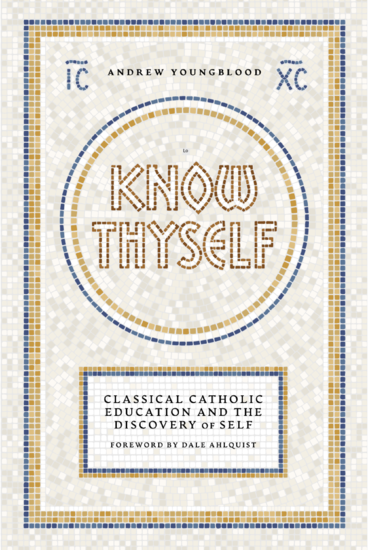
  • Know Thyself - Catholic Classical Education and the Discovery of Self - cover

    Know Thyself - Catholic...

    Andrew Youngblood

    • 0
    • 0
    • 0
    Across the United States and around the world, there has been an ongoing resurgence in classical education, including among Catholics. The classical model, rooted in the ancient Socratic method, is flourishing, and classical Catholic schools continue to multiply and grow. But classical education also has its detractors. Some parents and teachers worry that it is impractical, outdated, or, worse, judgmental.       In Know Thyself, Andrew Youngblood, an educator with decades of experience in classical learning as both a student and teacher, introduces readers to this exciting education alternative and its intellectual and spiritual benefits. Youngblood defines the essence of classical Catholic education, explores its integrated and narrative approach to learning, and presents its transformative power and beauty.       Through brief vignettes, personal anecdotes from students and teachers, and examples from the classroom, Know Thyself makes a positive case for an education journey that teaches students to see themselves through God’s eyes—and to truly know themselves and who they are called to be. 
    Show book
  • Summary of Thomas C Foster's How to Read Novels Like a Professor - cover

    Summary of Thomas C Foster's How...

    Falcon Press

    • 0
    • 0
    • 0
    Buy now to get the main key ideas from Thomas C. Foster's How to Read Novels Like a Professor 
      
    When novels became a thing around the seventeenth century, it was all thrilling. It wasn't possible for readers to say, “This is unoriginal, this has been done before, this is a good or bad novel.” Every novel was an innovation. As time progressed, a framework for the conventional novel emerged: a linear narrative, stories about people growing up or falling apart, compelling characters, and definite conclusions that provide emotional satisfaction. 
    In How to Read Novels Like a Professor (2008), Thomas C. Foster dives deep into each of these elements, using his own set of laws for the novel to help readers increase their understanding. He backs up his explanations with a wealth of vivid literary examples that will make you want to read every novel he mentions.
    Show book
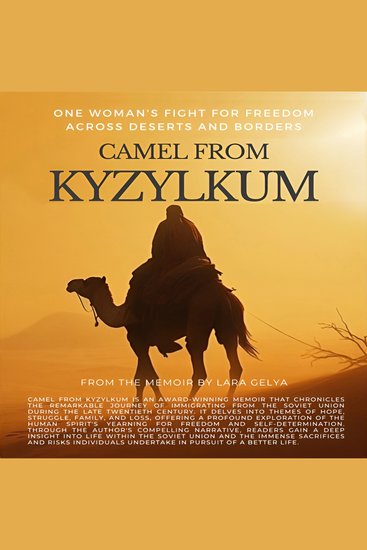
  • Camel From Kyzylkum - A Memoir of My Life Journey - cover

    Camel From Kyzylkum - A Memoir...

    Lara Gelya

    • 0
    • 0
    • 0
    Camel from Kyzylkum: A Memoir 
    What does it take to leave everything behind in search of freedom? 
    Born in Ukraine and later working in the Kyzylkum Desert of Uzbekistan, Lara Gelya spent the first half of her life behind the Iron Curtain. In 1989, at the age of thirty-nine, she fled the crumbling Soviet Union as a stateless refugee — carrying little more than hope. Her journey took her across Austria and Italy before she finally reached the United States, where she began the long and difficult process of rebuilding her life. 
    With honesty and vivid detail, Lara shares her experiences of growing up under Soviet rule, navigating cultural dislocation, and finding strength in the face of uncertainty. Camel from Kyzylkum is more than a memoir of immigration — it is a story of resilience, courage, and the universal search for freedom and belonging. 
    Perfect for listeners of historical memoirs, refugee stories, and anyone who values the enduring power of the human spirit.
    Show book
  • Manifesto for the Revitalisation of Cities - A Solution to Portugal's Housing Crisis - cover

    Manifesto for the Revitalisation...

    Miguel Rebelo

    • 0
    • 0
    • 0
    The housing crisis in Portugal serves to illustrate a problem that has implications beyond the borders of the country, shedding light on challenges that are faced by major European and global cities. The rise in housing prices, driven by real estate speculation, the growth of tourism and the influx of foreign investment, has made it increasingly challenging for many in the population, especially the middle and lower classes, to access home ownership or renting. 
    The digitalisation of work has opened the possibility for highly qualified professionals to consider where they would like to live, regardless of the physical location of their job. Cities like Lisbon and Porto have become increasingly attractive destinations, offering a good quality of life combined with a range of professional opportunities. Nevertheless, this phenomenon has placed additional strain on the real estate market, leading to rising prices and the displacement of residents to the outskirts. 
    The housing policies that have been adopted thus far have not been as effective as might have been hoped, and in some cases may even have had the opposite effect. It seems that measures such as strict rent control, poorly targeted subsidies and the massive construction of new housing without proper urban and infrastructural planning have not solved the problem, and in some cases may have made it worse. Perhaps it would be beneficial to reconsider these approaches, acknowledging their shortcomings and adapting them to reflect the current situation. 
    It may be worth considering rehabilitating vacant buildings as a viable and sustainable solution. By restoring existing buildings, we can explore ways to increase the supply of affordable housing, revitalise run-down urban areas and preserve historical and cultural heritage to promote more inclusive and sustainable cities.
    Show book