Join us on a literary world trip!
Add this book to bookshelf
Grey
Write a new comment Default profile 50px
Grey
Subscribe to read the full book or read the first pages for free!
All characters reduced
Girls of the True Blue - cover

We are sorry! The publisher (or author) gave us the instruction to take down this book from our catalog. But please don't worry, you still have more than 500,000 other books you can enjoy!

Girls of the True Blue

L. T. Meade

Publisher: Interactive Media

  • 0
  • 0
  • 0

Summary

"Girls of the True Blue" by L. T. Meade is a delightful novel set in a girls' boarding school. It revolves around the lives of a group of spirited young girls, their friendships, and the challenges they face while receiving an education. The story explores their dreams, aspirations, and the lessons they learn during their time at True Blue. With a mix of humor, camaraderie, and life's valuable experiences, the novel captures the essence of youth, friendship, and the journey to self-discovery in a school setting, making it a heartwarming and engaging read for all ages.
Available since: 09/14/2023.
Print length: 286 pages.


Other books that might interest you

  • Twenty Thousand Leagues Under the Sea - Audiobook - cover

    Twenty Thousand Leagues Under...

    Jules Verne, Classic Audiobooks,...

    • 0
    • 0
    • 0
    Twenty Thousand Leagues Under the Sea is one of Jules Verne's most iconic and visionary novels. It follows the journey of Professor Pierre Aronnax, his servant Conseil, and Canadian harpooner Ned Land as they are taken aboard the mysterious submarine Nautilus, commanded by the enigmatic Captain Nemo. What begins as a mission to investigate a sea monster turns into a deep-sea odyssey through a world of underwater wonders, shipwrecks, lost civilizations, and the hidden forces of nature.With rich imagination and early science-fiction brilliance, Verne explores the limits of technology and the depths of the ocean long before submarines were a reality. The novel is not only an adventure tale but also a philosophical reflection on freedom, vengeance, and isolation beneath the waves. It remains a timeless classic that continues to inspire readers and creators around the world.
    Show book
  • All Quiet on the Western Front - cover

    All Quiet on the Western Front

    Erich Maria Remarque

    • 0
    • 0
    • 0
    This audiobook is narrated by an AI Voice. Paul Bäumer is nineteen when his schoolmaster talks his whole class into enlisting. Within weeks the boys learn what their teachers never told them: that a generation can be destroyed by the war even when it escapes the shells. 
     
    At the front Paul and his friends fight for food, boots, and cigarettes, and are shelled for days at a time in trenches they cannot leave. Kemmerich dies in the field hospital and his good English boots pass to the next man. Kat, the old soldier who can find a roast goose in an empty countryside, becomes closer to Paul than his own family. On leave Paul sits in his childhood bedroom among his books and finds he has nothing left to say to anyone at home. 
     
    Then he is trapped in a shell hole with a French soldier he has stabbed, and has to lie beside him for a day and a night while the man dies. 
     
    First published in 1929 and banned and burned in Germany four years later, Erich Maria Remarque's novel is the greatest work of fiction to come out of the First World War and one of the most powerful anti-war books ever written. This unabridged audiobook edition presents the complete classic English translation by A. W. Wheen.
    Show book
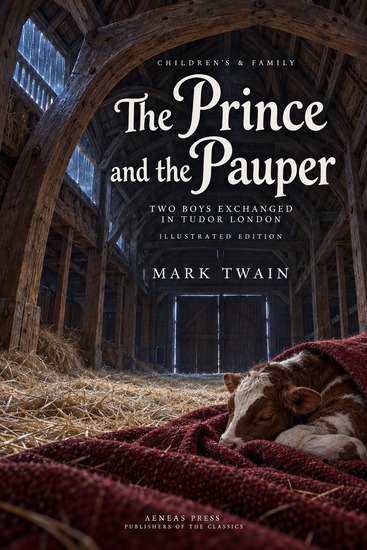
  • The Prince and the Pauper - Two Boys Exchanged in Tudor London - cover

    The Prince and the Pauper - Two...

    Mark Twain

    • 0
    • 0
    • 0
    Two boys born the same hour in London, one in a palace and one in Offal Court, change clothes for a joke and cannot change back — and each learns the law of England from the wrong side. Twain wrote it while rich and settled in Hartford, and dedicated it to his two small daughters. The prince learns what his statutes do to people; the pauper learns what a crown is worth to the man wearing it. Its 177 original illustrations have been carefully restored and coloured for this edition.
    Show book
  • The Complete Collection of Arsène Lupin - cover

    The Complete Collection of...

    Maurice Leblanc

    • 0
    • 0
    • 0
    Meet the gentleman thief who can outsmart almost anyone—and disappear before the truth is revealed.
    
    Brilliant, charming, and endlessly resourceful, Arsène Lupin is no ordinary criminal. A master of disguise and deception, he moves through a world of priceless treasures, baffling mysteries, daring robberies, and ingenious schemes. Whether challenging the authorities or outwitting his rivals, Lupin turns every encounter into a thrilling game of intelligence and nerve.
    
    Created by French author Maurice Leblanc, Arsène Lupin has become one of the most memorable figures in classic detective and adventure fiction. His stories blend mystery, suspense, humor, intrigue, and unexpected twists, inviting readers to question appearances and follow every clue.
    
    Perfect for readers who enjoy:
    
    Classic detective and mystery fiction
    Gentleman thieves and master criminals
    Clever puzzles and ingenious schemes
    Daring heists and hidden treasures
    French literature and vintage adventure stories
    Suspenseful plots and unexpected twists
    Timeless literary collections
    
    Step into the captivating world of Arsène Lupin, where nothing is quite what it seems and the cleverest mind may always be one step ahead.
    
    Discover the legendary gentleman thief in this collection of classic mystery and adventure stories.
    Show book
  • Every man his own university - cover

    Every man his own university

    Russell H. Conwell

    • 0
    • 0
    • 0
    "A distinct university walks about under each mans hat. The only man who achieves success in the other universities of the world, and in the larger university of life, is the man who has first taken his graduate course and his post-graduate course in the university under his hat. There observation furnishes a daily change in the curriculum. Books are not the original sources of power, but observation, which may bring to us all wide experience, deep thinking, fine feeling, and the power to act for oneself, is the very dynamo of power."
    Show book
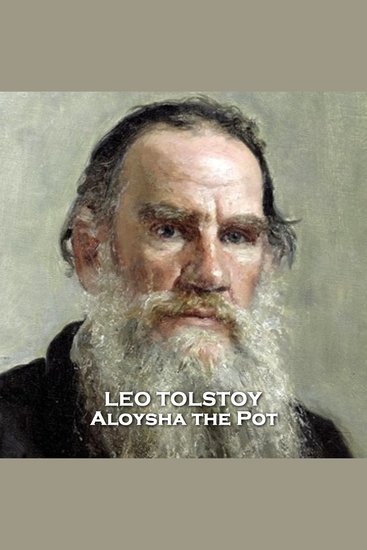
  • Aloysha the Pot - From their pens to your ears genius in every story - cover

    Aloysha the Pot - From their...

    Leo Tolstoy

    • 0
    • 0
    • 0
    Leo Tolstoy was born in 1828 in the Russian province of Tula to a wealthy noble family. As a child, he had private tutors but he showed little interest in any formal education. When he went to the University of Kazan in 1843 to study oriental languages and law, he left without completing his courses.  Life now was relaxed and idle but with some writing also taking place.  Gambling debts forced an abrupt change of path and he joined the army to fight in the Crimean War.  He was commended for his bravery and promoted but was appalled at the brutality and loss of life.  He recorded these and other earlier experiences in his diaries which formed the basis of several of his works. 
    In 1852 ‘Childhood’ was published to immediate success and was followed by ‘Boyhood’ and ‘Youth’. 
    His experience in the army and the horrors he witnessed resulted in ‘The Cossacks’ in 1862 and the trilogy ‘Sevastopol Tales’. After the war he travelled around Europe, visiting London and Paris and meeting such luminaries as Victor Hugo and Charles Darwin.  
    It was now that Tolstoy began his masterpiece, ‘War and Peace’. Published in 1869 it was an epic work that changed literature. He quickly followed this with ‘Anna Karenina’.  
    These successes made Tolstoy rich and helped him accomplish many of his dreams but also brought problems as he grappled with his faith and the lot of the oppressed poor. These revolutionary views became so popular that the authorities now kept him under surveillance.  
    He led a life of asceticism and vegetarianism and put his socialist ideals into practice by establishing numerous schools for the poor and food programmes. He also believed in giving away his wealth, which caused much discord with his wife.  
    His writing continued to bring forth classics such as ‘The Death of Ivan Ilyich’ and many brilliant and incisive short stories such as ‘How Much Land Does A Man Need’.  
    In 1901 Tolstoy was excommunicated from the Church and controversially deselected for the Nobel Prize for Literature. 
    Whilst undertaking a pilgrimage by train in October 1910 with his daughter Aleksandra he caught pneumonia in the nearby town of Astapovo.  Leo Tolstoy died on November 9th, 1910, he was 82.
    Show book