Join us on a literary world trip!
Add this book to bookshelf
Grey
Write a new comment Default profile 50px
Grey
Subscribe to read the full book or read the first pages for free!
All characters reduced
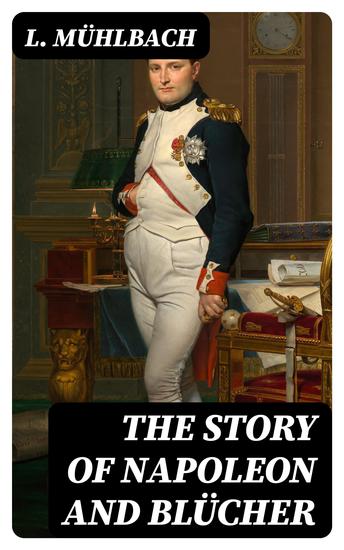
The Story of Napoleon and Blücher - Enriched edition - cover

The Story of Napoleon and Blücher - Enriched edition

L. Mühlbach

Translator F. Jordan

Publisher: DigiCat

  • 0
  • 0
  • 0

Summary

In "The Story of Napoleon and Blücher," L. Mühlbach delves into the intricate dynamics between two of history's most formidable military leaders during the Napoleonic Wars. Mühlbach employs a narrative style that is rich in detail and imbued with dramatic flair, vividly bringing to life the strategic encounters and personal rivalries that defined this tumultuous period. Set against the backdrop of early 19th-century Europe, the novel not only recounts historical events but also explores themes of honor, ambition, and the moral complexities of warfare, firmly situating itself within the genre of historical fiction that seeks to educate as much as entertain. L. Mühlbach, a pseudonym for the German author Luise Mühlbach, was renowned for her historical novels that ingeniously blend facts with imaginative storytelling. Her profound interest in history, particularly the Napoleonic era, stems from her background in literature and history, as well as the cultural zeitgeist of 19th-century Germany, which was captivated by the legacies of these towering figures. Mühlbach's ability to craft compelling narratives from historical events underscores her desire to elucidate the human motivations behind these grand figures. This book is highly recommended for readers seeking a nuanced portrayal of historic leaders through rich storytelling. Mühlbach's adept characterization and vivid settings make "The Story of Napoleon and Blücher" not only a captivating read but also an essential addition to the libraries of those interested in military history and the intricacies of European politics during the Napoleonic era.

In this enriched edition, we have carefully created added value for your reading experience:
- A succinct Introduction situates the work's timeless appeal and themes.
- The Synopsis outlines the central plot, highlighting key developments without spoiling critical twists.
- A detailed Historical Context immerses you in the era's events and influences that shaped the writing.
- A thorough Analysis dissects symbols, motifs, and character arcs to unearth underlying meanings.
- Reflection questions prompt you to engage personally with the work's messages, connecting them to modern life.
- Hand‐picked Memorable Quotes shine a spotlight on moments of literary brilliance.
- Interactive footnotes clarify unusual references, historical allusions, and archaic phrases for an effortless, more informed read.
Available since: 10/11/2022.
Print length: 530 pages.
Other books that might interest you

  • Mental Models In A Nutshell - Practical Thinking Frameworks To Amplify Your Decision Making And Simplify Your Life - cover

    Mental Models In A Nutshell -...

    Thinknetic

    • 0
    • 0
    • 0
    What would you do if there was a tool to help you make better decisions in less time? You'd jump at the chance, wouldn't you? 
    Mental models help you filter information, which allows you to see things more clearly and make better decisions. 
    Mental models are also a shortcut to finding the quickest and the best route to solve your problems, whether work-related or personal. 
    The beauty of mental models is that their variety is virtually infinite, and they help you come up with solutions for just about any issue. 
    So you're thinking about opening a business. You're not sure what kind of business will be best. The law of Supply and Demand can help. It dictates that companies provide the goods and services demanded by the public. The most profitable companies are those that do this best. 
    Armed with this knowledge, you can now narrow down your options considerably. 
    "Developing the habit of mastering the multiple models that underlie reality is the best thing you could do," according to Charlie Munger, who credits his success to the lifetime cultivation of a "latticework" of mental models on which to frame his decisions. 
    The problem with the average person's mental models is that most are not designed to handle complexity. 
    And while the conscious use of mental models is possible, they require higher-order thinking skills that few people engage in for various reasons. But that doesn't have to be you! 
    Inside you'll find:How mental models declutter your thinking and stimulate decision-making (warning: immediate impact on 4 cognitive processes!)The Master List of mental models (including the best two used by Munger)3 characteristics that help you to spot an excellent mental modelWhy we don't use mental models and what we tend to do insteadHow to make your mental toolkit resemble a Swiss army knife in 5 steps
    Show book
  • The Roman Revolution - Crisis and Christianity in Ancient Rome - cover

    The Roman Revolution - Crisis...

    Nick Holmes

    • 0
    • 0
    • 0
    It was a time of revolution. The Roman Revolution describes the little known "crisis of the third century", and how it led to a revolutionary new Roman Empire. Long before the more famous collapse of the Western Roman Empire in the fifth century, in the years between AD 235-275, barbarian invasions, civil war, and plague devastated ancient Rome. Out of this ordeal came new leaders, new government, new armies, and a new vision of what it was to be Roman. Best remembered today is the rapid rise of Christianity in this period, as Rome's pagan gods were rejected, and the emperor Constantine converted to this new religion. Less well remembered is the plethora of other changes that conspired to provide an environment well suited to a religious revolution. 


    Drawing on the latest research, Nick Holmes looks for new answers to old questions. He charts the rise of the Roman Republic and the classical Roman Empire, examining the roles played by sheer good luck and the benign climate. Focusing on the reigns of the critically important but under-researched emperors in the third century, such as Aurelian, Diocletian, and Constantine, he vividly brings to life how Rome just escaped catastrophe in the third century, and embarked on a journey that would take it into a brave new world—one which provided the foundations for modern Europe and America.
    Show book
  • Learnership - Raising the status of learning from an act to an art in your school - cover

    Learnership - Raising the status...

    James Anderson

    • 0
    • 0
    • 0
    We don't have a teaching problem in our schools; we have a learning problem.Today, we understand quality teaching better than ever. We have skilful teachers doing a great job in our classrooms. But when we have quality teaching and are still not achieving the results we're looking for, it's a sign that we don't have a teaching problem. What we have is a learning problem.Ultimately, learning is not the product of teaching, it is the product of the activity of learners. Too many of our students are passive learners who avoide challenges, failt ot act on feedback, or who waste effort instead of investing in it. To prepare students to not only succeed in school but also to have the agency they need to succeed in life, we must lead them to become skilful learners. In his fifth book, James Anderson unveils the concept of Learnership, which transforms learning from an act to an art. Within this book, you will learn how to:- evaluate the current level of learnership in your school using the Learnership Diagnostic tool- foster a culture of growth that sets students up for success in both school and life- apply the Mindset Continuum to nurture a growth mindset in your students- harness deep insights into the pivotal role of challenges, Habits of Mind, mistakes, feedback and effort in cultivating Learnershipdrive a Learnership program in your school. If you are ready to show your learners how to get more out of every learning situation, and get better at getting better, it's time to embrace Learnership.
    Show book
  • Stories on lord Ganesh series - 20 - From various sources of Ganesh purana - cover

    Stories on lord Ganesh series -...

    Anusha HS

    • 0
    • 0
    • 0
    Lord Ganesh is the son of Goddess Parvati and Lord Shiva. He is the first one to get worshipped before worshipping any other god. We can say in short that there is no Hindu who doesn't perform Lord Ganesh’s worship. In Ramayana Lord Rama had worshipped Lord Ganesh. 
    In Mahabharata Lord Krishna had also worshipped Lord Ganesh. They have become the role models to the whole world. Before the beginning of any work it is common to worship Lord Ganesh. There are many Holy hymns on Lord Ganesh. Lord Ganesh’s favorite food is modak. 
    He gets pleased if we offer Durva grass to him. He also loves red Hibiscus flower. He is called the vighnaharta because he wards off all the obstacles in our life. He is also called vighnaraja. There are infinite names to Lord Ganesh which we cannot explain. He ties a snake around his waist. 
    The vehicle of Lord Ganesh is mouse in Hindu culture. Lord Ganesh is worshipped all over India. His miracles have been described in all of the 18 Puranas. There are many forms of Lord Ganesh. 
    He has got two wives one is riddhi and the other is siddhi.Lord Ganesh has got 32 forms of incarnations. The modak which you offer to Lord Ganesh will give you good results. Lord Ganesh does not bias among his devotees. He is specially worshipped on sankashti days. On Ganesh Chaturthi people fast and perform vrath.On this day it is forbidden to see Chandra the moon.
    Show book
  • A Secure Love - What Really Makes Love Work - cover

    A Secure Love - What Really...

    Love Guru

    • 0
    • 0
    • 0
    This audiobook is narrated by an AI Voice.   
    Real love isn’t found — it’s built. 
    A Secure Love: What Really Makes Love Work reveals what healthy, lasting connection looks and feels like, based on modern attachment science and emotional intelligence. 
    In under ninety minutes, you’ll learn how to: 
    • Identify your attachment style and understand your partner’s needs. 
    • Communicate without defensiveness or withdrawal. 
    • Build emotional safety that keeps passion alive over time. 
    • Repair conflict fast and grow stronger after arguments. 
    • Create trust, intimacy, and teamwork that last a lifetime. 
    This audiobook blends relationship psychology, practical scripts, and honest stories to help you experience love that’s calm, safe, and deeply connected — not chaotic or uncertain. 
    Perfect for couples, singles, and anyone ready to understand what real security feels like in love.
    Show book
  • Social Theory - Key Ideas and Concepts Shaping Sociological Thought - cover

    Social Theory - Key Ideas and...

    Fred Grandsen

    • 0
    • 0
    • 0
    Social theory provides a framework for understanding how societies function, how individuals interact, and how social structures shape human behavior. It encompasses a wide range of perspectives that seek to explain social order, change, and the relationships between individuals and institutions. By analyzing patterns in human behavior, power dynamics, and cultural influences, social theory helps us interpret the complexities of the modern world. Sociologists use these theories to examine issues such as inequality, globalization, identity, and technological change, offering insights that inform public policy, activism, and everyday life. 
    The origins of social theory can be traced back to early philosophical inquiries about society, morality, and governance. Thinkers such as Plato, Aristotle, and Confucius considered questions about justice, social order, and the ideal state. However, modern social theory emerged during the 19th and early 20th centuries in response to major social transformations such as industrialization, urbanization, and political revolutions. Pioneering sociologists, including Karl Marx, Emile Durkheim, and Max Weber, developed foundational theories to explain the impact of these changes on social life. Their work laid the groundwork for various theoretical traditions that continue to shape sociological inquiry today. 
    Social theories can be broadly categorized into macro and micro perspectives. Macro-level theories, such as structural functionalism and conflict theory, focus on large-scale social structures and institutions. These perspectives analyze how societies maintain stability, how power is distributed, and how systemic inequalities emerge. Micro-level theories, such as symbolic interactionism, examine individual interactions and the meanings people attach to their experiences. These approaches emphasize the role of language, symbols, and everyday social interactions in shaping identity and behavior.
    Show book