Join us on a literary world trip!
Add this book to bookshelf
Grey
Write a new comment Default profile 50px
Grey
Subscribe to read the full book or read the first pages for free!
All characters reduced
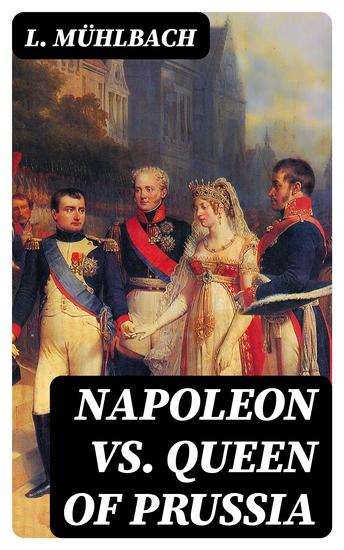
Napoleon VS Queen of Prussia - cover

Napoleon VS Queen of Prussia

L. Mühlbach

Translator F. Jordan

Publisher: DigiCat

  • 0
  • 0
  • 0

Summary

In "Napoleon VS. Queen of Prussia", L. Mühlbach masterfully intertwines history and narrative fiction to explore the tumultuous relationship between the iconic military leader Napoleon Bonaparte and the formidable Prussian queen, Louise. The author employs a vivid literary style characterized by intricate character development and a keen attention to historical detail, providing readers with a rich tableau that captures the political intrigue of early 19th-century Europe. Mühlbach's prose flows seamlessly between dramatic dialogue and insightful reflections, immersing readers in a world of power, ambition, and personal sacrifice amid the backdrop of the Napoleonic Wars. L. Mühlbach, a renowned German historical novelist, had a profound interest in 19th-century European history, which profoundly influenced her writing. Born into a time when the ramifications of Napoleon's conquests were still palpable, she aimed to bring to life the experiences of those who lived through these pivotal events. Her extensive research and deep understanding of the socio-political climate of the period lend authenticity and depth to her portrayal of Queen Louise's resilience in the face of adversity. I highly recommend this book to readers who appreciate historical fiction that combines rich character studies with intricate plots. "Napoleon VS. Queen of Prussia" not only entertains but also educates, offering insights into the broader socio-political environment of the time, making it an essential read for anyone eager to understand the complexities of this historical period.
Available since: 10/11/2022.
Print length: 541 pages.

Other books that might interest you

  • Landslide - The inside story of the 2024 election - cover

    Landslide - The inside story of...

    Tim Ross, Rachel Wearmouth

    • 0
    • 0
    • 0
    On 22 May 2024, Rishi Sunak stood outside 10 Downing Street and announced an early election, in an attempt to catch his opponents by surprise. Just minutes later, Tory hearts sank, with images of the Prime Minister soaking in the rain instantly defining his hapless campaign. The next six weeks delivered more mistakes, a betting scandal, apocalyptic Tory polls, bitter backroom arguments and finally the worst result in the Conservative Party's 190-year history.
    Keir Starmer's Labour, meanwhile, stormed to victory with one of the biggest landslides on record after fourteen years in the wilderness. But the party won with its fewest votes in almost a decade, raising questions about how popular Starmer really was. Scotland's voters abandoned the SNP, Ed Davey's Lib Dems surged to their best election ever and Nigel Farage once again blew up the Conservative Party's plans.
    This gripping account by seasoned Westminster journalists Tim Ross and Rachel Wearmouth tells the full inside story of the key tactics and powerful forces that delivered the most seismic upheaval in a generation. What role did Starmer's character play in his party's success? How did Labour's election machine engineer such a devastatingly efficient vote? Was there anything Sunak could have done to avert disaster? What does it all mean for the future of Britain?
    Blending exclusive interviews and explosive accounts from key players, Landslide sets out to answer these questions and more, revealing a dramatic and sometimes disturbing picture of British politics at a turbulent time.
    Show book
  • Thomas Cromwell: England's Mastermind - A Tudor Quick Studies Book on the rise and fall of the King's minister - cover

    Thomas Cromwell: England's...

    Heather Teysko

    • 0
    • 0
    • 0
    Welcome to Thomas Cromwell: England's Mastermind, an introduction into one of the most fascinating and enigmatic figures of Tudor England. Over the course of this series, we’ll explore Cromwell’s journey from a blacksmith’s son in Putney to the heights of power as King Henry VIII’s chief minister. Cromwell’s story is one of ambition, ingenuity, and risk—qualities that reshaped the English church, monarchy, and society in ways that still resonate today. 
    Cromwell was not a nobleman by birth, but his keen intellect and strategic thinking brought him to the center of the Tudor court, a place where ambition could be both a blessing and a curse. He helped Henry VIII break from Rome, orchestrated the dissolution of the monasteries, and navigated the dangerous waters of court politics. Yet, for all his successes, Cromwell’s rise came at a cost: he made powerful enemies, took extraordinary risks, and ultimately faced a dramatic fall from grace.
    Show book
  • Arsacid Dynasty of Armenia The: The History of the Parthian Kings Who Ruled the Ancient Kingdom of Armenia - cover

    Arsacid Dynasty of Armenia The:...

    Editors Charles River

    • 0
    • 0
    • 0
    During the reign of the Artaxiad dynasty, Armenia became a hub of trade and commerce, connecting the Silk Road and the Mediterranean world. The Armenian kings encouraged the development of agriculture, commerce, and arts, and the kingdom became renowned for its skilled artisans, writers, and philosophers. Of course, given its central location, the dynasty also faced numerous challenges, including repeated invasions by the Roman and Parthian empires, internal conflicts, and economic hardships. The dynasty’s resilience and adaptability enabled it to survive for nearly two centuries, leaving behind a rich cultural and political legacy that has endured in the region, even as its historical memory was overshadowed by its more powerful neighbors.  
    	After the collapse of the Artaxiad dynasty (at the onset of the 1st century BCE), Rome and the kingdom of Parthia engaged in a competition for political influence in the vast territory of Greater Armenia. The Parthian Arshakunis endeavored to expel Rome from the region, aiming to establish the dominance of their own lineage. The political strategy devised by Parthian King Artabanus III, however, remained unrealized, as his sons Vorodes and Arshak I, who held the throne in Great Armenia, were deposed due to the intervention of the Roman Emperor Tiberius. By inciting the Alban, Georgian, and other neighboring tribes against the Armenians, Tiberius facilitated the ascendancy of Mithridates, the brother of Iberian King Pharasmanes, to the throne of Greater Armenia in the year 36.  
    This set the pattern by which the Roman Empire sought to preserve its influence in Greater Armenia by employing foreign kings as proxies. In contrast, the Armenian people and their rulers strived to emancipate themselves from Roman hegemony and the dominance of their allies.
    Show book
  • Spectrum of Genius The: Understanding Multiple Intelligences - Elevate Your IQ! Discover audio lessons that decode the spectrum of genius for top test results - cover

    Spectrum of Genius The:...

    Landon Ashcroft

    • 0
    • 0
    • 0
    The Spectrum of Genius: Understanding Multiple Intelligences 
    ⭐⭐ Simplified Guide & Explanations Included ⭐⭐ 
    Are you eager to achieve personal growth and enhance your understanding of diverse intellectual capabilities? 
    Looking for an extensive guide that offers all the essential insights to better comprehend the range of human intelligence? 
    Your search ends here! 
    This guide serves as your definitive companion for deepening your understanding, applying your knowledge, and engaging in practical exercises. With this, you're geared for success. 
    Updated for the latest research and findings in the field of multiple intelligences. 
    Key features of this comprehensive guide: 
    - Profound insights about the diverse aspects of human intelligence 
    - Detailed explanation of various types of intelligences 
    - Effective strategies for personal development and intellectual growth 
    Our guide distinguishes itself through its comprehensive coverage, essential for mastering the concepts of multiple intelligences. Topics aren't merely touched upon; they are explored in depth with precision. 
    Please note that this guide is not affiliated with any official entity and is purely an independent resource for your benefit. 
    Designed with a clear structure and easy-to-understand language, our guide on understanding multiple intelligences ensures smooth transitions between topics. Say goodbye to dense jargon and welcome clear, precise, and technically accurate content. 
    So, why wait? Click the BUY NOW button, secure your guide, and begin your journey to better understanding your intellectual potential!
    Show book
  • Tokugawa Shogunate - Peace Isolation and the Preservation of Samurai Culture - cover

    Tokugawa Shogunate - Peace...

    Rolf Hedger

    • 0
    • 0
    • 0
    The Tokugawa Shogunate, also known as the Edo period (1603–1868), was a time of unprecedented peace and stability in Japan, following centuries of war and political fragmentation. This era began with the victory of Tokugawa Ieyasu at the Battle of Sekigahara in 1600, a decisive conflict that allowed him to consolidate power over the warring daimyo. Three years later, in 1603, he was granted the title of shogun by the emperor, officially marking the beginning of Tokugawa rule. 
    Ieyasu’s triumph at Sekigahara was not merely a military success but also a demonstration of his strategic brilliance and political foresight. By carefully forging alliances and exploiting rivalries among the daimyo, he ensured that his Tokugawa clan would emerge as the dominant force in Japan. Once in power, Ieyasu took immediate steps to secure his family’s hold over the nation. He redistributed land among the daimyo, rewarding loyal vassals and weakening potential threats. This reorganization of landholdings laid the foundation for the centralized feudal system that would define the Tokugawa era. 
    Although Ieyasu formally retired in 1605, passing the title of shogun to his son Tokugawa Hidetada, he continued to wield significant influence from behind the scenes. His retirement was a strategic move designed to solidify the legitimacy of hereditary succession, ensuring that the Tokugawa family would maintain control for generations. This transition of power set a precedent for stability, preventing the kind of succession disputes that had plagued previous shogunates.
    Show book
  • Making Faith Magnetic - Five Hidden Themes Our Culture Can't Stop Talking Aboutand How to Connect Them to Christ - cover

    Making Faith Magnetic - Five...

    Daniel Strange

    • 0
    • 0
    • 0
    How to talk about Jesus in a way that connects with modern culture. As followers of Jesus, we know that the good news is deeply attractive. But we often fear that to those on the outside, it comes across as irrelevant or even repellent. Sometimes, the Christian worldview feels so out of step with everything else going on, that we don't know how to share our faith.  However, author Daniel Strange wants to show you that the connections are there - in fact, the longings that our culture cannot help but express are the very ones that Jesus fulfils.  Building on the work of theologian J.H. Bavinck, Dan reveals five recurring themes that our culture can’t stop talking about, or, as he puts it, the “five permanent ‘itches’ that in our work, rest, and play, we have to vigorously scratch.” From TV to books to social media, these are the questions we can't stop asking and the tensions we can't stop wrestling with - and Jesus speaks powerfully into each one.  This book will help you to spot these connections in our culture, excite you about how Jesus makes sense of humankind’s deepest questions and longings, apply them to your own life first, and then equip you to speak of him to others in a way that is truly magnetic.
    Show book