Join us on a literary world trip!
Add this book to bookshelf
Grey
Write a new comment Default profile 50px
Grey
Subscribe to read the full book or read the first pages for free!
All characters reduced
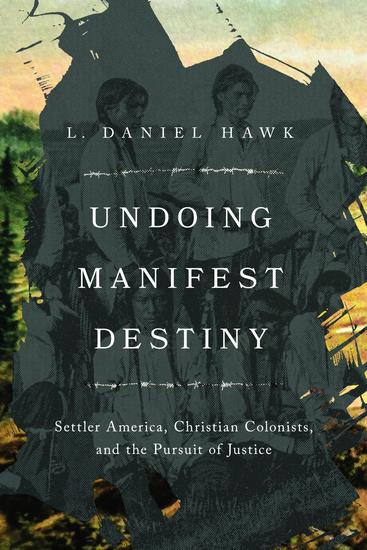
Undoing Manifest Destiny - Settler America Christian Colonists and the Pursuit of Justice - cover

Undoing Manifest Destiny - Settler America Christian Colonists and the Pursuit of Justice

L. Daniel Hawk

Publisher: IVP Academic

  • 0
  • 0
  • 0

Summary

Reckoning with the Colonial Past to Bring Justice to the Present
As White settlers spread across North America, they crafted and enacted an epic story of their God-given dominion—over the land, over Indigenous nations, and over the future. Their narrative constructed a myth of innocence that justified a massive program of violence and dispossession by suppressing a darker history. That history still reverberates today, from settler America's relations with the Indigenous nations of the United States to ways the land has been commodified as property. It's time for the whole truth to be told.
In Undoing Manifest Destiny, L. Daniel Hawk exposes the belief systems and practices that settlers developed to justify the displacement, destruction, and cultural erasure of Indigenous peoples, beginning in the early American colonial period and extending to the present day. Writing as the descendant of White settlers and as a biblical scholar, he challenges settler Christians to uncover what the settler narrative denies and to work toward addressing historic injustices.
In this book, Hawk

- combines settler colonial theory, historical analysis, and Christian theology to examine how settler America sought to erase Indigenous presence from lands taken by the United States and its colonial predecessors;
- offers a decolonizing perspective that challenges the church to acknowledge its complicity with the colonial project and to enter into dialogue directed toward setting things right; and
- highlights contemporary manifestations of colonialism in US interactions with its Indigenous citizens, demonstrating that past issues are still present and need to be addressed today.
Hawk asserts that Christians were complicit with programs of erasure, and so Christians are called to confront and heal their residue today. Joining historical research with theology and biblical scholarship, Hawk helps us recognize the myths that shape the American imagination and to engage our faith for a better way forward.
This book is an invaluable resource for scholars, educators, students, and readers invested in areas such as post- and de-colonial studies, race and ethnicity, United States history, and social justice. Deepen your understanding of history, confront unsettling truths, and work toward justice and healing with Undoing Manifest Destiny.
Available since: 02/03/2026.
Print length: 256 pages.
Other books that might interest you

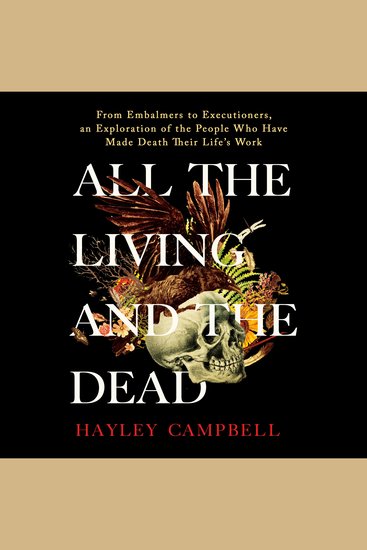
  • All the Living and the Dead - From Embalmers to Executioners an Exploration of the People Who Have Made Death Their Life's Work - cover

    All the Living and the Dead -...

    Hayley Campbell

    • 0
    • 0
    • 0
    "Journalist Hayley Campbell explores the often hidden world of those who work closely with death, finding compassion in unexpected settings. Campbell’s British accent and matter-of-fact delivery take the listener on a tour of mortuaries, postmortem experimentation, death-mask artistry, crime-scene cleaning, and executions, among others. Her morbid fascination is evident in her tone as she sheds light on curiosities surrounding a subject that is foreign to many people. Ultimately, Campbell calls for a closer relationship to death, less mystery surrounding this universal passage, and a reduction of fear through greater understanding."- AudioFile on All the Living and the Dead"Campbell is a probing investigator whose tone is always even, quietly emphasizing that death is the most natural thing in the world."- BookpageThis audiobook is read by the author.A deeply compelling exploration of the death industry and the people—morticians, detectives, crime scene cleaners, embalmers, executioners—who work in it and what led them there.We are surrounded by death. It is in our news, our nursery rhymes, our true-crime podcasts. Yet from a young age, we are told that death is something to be feared. How are we supposed to know what we’re so afraid of, when we are never given the chance to look?Fueled by a childhood fascination with death, journalist Hayley Campbell searches for answers in the people who make a living by working with the dead. Along the way, she encounters mass fatality investigators, embalmers, and a former executioner who is responsible for ending sixty-two lives. She meets gravediggers who have already dug their own graves, visits a cryonics facility in Michigan, goes for late-night Chinese with a homicide detective, and questions a man whose job it is to make crime scenes disappear.Through Campbell’s incisive and candid interviews with these people who see death every day, she asks: Why would someone choose this kind of life? Does it change you as a person? And are we missing something vital by letting death remain hidden? A dazzling work of cultural criticism, All the Living and the Dead weaves together reportage with memoir, history, and philosophy, to offer listeners a fascinating look into the psychology of Western death.A Macmillan Audio production from St. Martin's Press.
    Show book
  • Monks and Bishops - Lismore 560-1560 - cover

    Monks and Bishops - Lismore...

    Robert Hay

    • 0
    • 0
    • 0
    The Isle of Lismore has a long reputation as a holy island, beginning with the foundation of a monastery by St Moluag in the sixth century, when it became a major centre of Christianity. The Roman Catholic Bishopric of Argyll was founded on Lismore in 1200, and the medieval Cathedral Church of St Moluag was completed in 1400, the choir of which forms the basis of the present-day parish church.
    Robert Hay tells the story of Moluag's monastery, recently rediscovered by community archaeology, before exploring the rise and fall of the Bishopric of Argyll: the roles of the bishops; the years of prestige when leading families invested in elaborately carved graveslabs; the lean years when finances were strained; the struggles through decades of war, civil unrest, despoliation, famine and plague; and the final withdrawal of the bishop from Lismore to Dunoon in the mid fifteenth century. Even at the physical fringes of Scotland and Europe, the diocese was deeply affected by events on the national and international scene, with a major impact on this site of an unbroken tradition of Christian worship.
    Show book
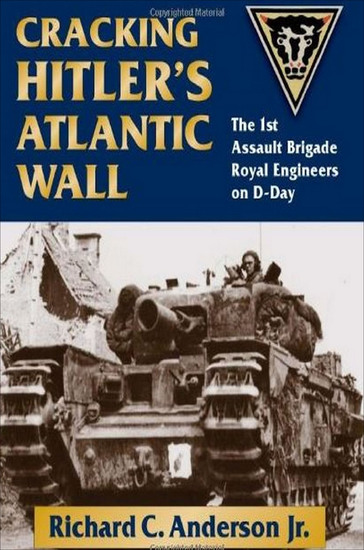
  • Cracking Hitler's Atlantic Wall - The 1st Assault Brigade Royal Engineers on D-Day - cover

    Cracking Hitler's Atlantic Wall...

    Richard C Anderson

    • 0
    • 0
    • 0
    A military historian analyzes the ingenious WWII tanks known as Hobart’s Funnies, detailing their development and their role in the D-Day campaign. When the British and Canadians landed in Normandy on June 6, 1944, they were accompanied by specialized armored vehicles designed to remove German obstacles and mines. Developed by the Royal Engineers, these tanks known as Hobart's Funnies featured a range of ingenious innovations, from carpet-laying and bridge-laying devices to a giant 290-millimeter mortar.   Examining these vehicles from technical development to combat deployment, military historian Richard C. Anderson Jr. gives a minute-by-minute account of D-Day's early hours on Sword, Juno, and Gold Beaches—the critical moments when success hinged on the assault engineers’ ability to  clear a path or breach the seawall.   Anderson also describes the events on Omaha and Utah Beaches, where U.S. troops, despite being offered these vehicles, stormed ashore without them. Through careful comparison of conditions and outcomes, Anderson assesses the vehicles’ performance and impact on D-Day's successes and failures.
    Show book
  • Minimalist Budget Money Management Skills and Minimalism & Decluttering: 3 Books in 1 - cover

    Minimalist Budget Money...

    Ryan Martinez

    • 0
    • 0
    • 0
    MINIMALISM3 Books in 1In this book you'll find:Minimalist Budget Book 1:How do you apply minimalism to your finances? The short answer is that it begins with a paradigm shift and it ends with better management of your finances.Minimalism at its core is all about living with less but still getting more. At the heart of the minimalist budget is a perspective on getting more quality out of each purchase. It requires the habit of spending money on things that really matter to you ergo a change in the point of view as to why you spend and then you change how you spend.This book will teach you about:What a minimalist budget is, its functions, and its benefitsHow you can use any budget and then tweak it to become a minimalist budgetLots of budgeting tips the minimalist wayThe financial formula for minimalist budgeting successHow to handle your emotions when you’re emotionally triggered to spend money out of controlHow to get out of debtNote that these principles are told from a very personal level and they’re drawn from the experiences of the author.Minimalist Budget Book 2:Close to half of the United States population rely on debt to sustain the quality of their lives. Now, a huge part of your ability to make those debts are based on your Credit Score. Can you image how your life would be like with a bad one? What about a stellar one? Imagine all the doors that would open to you with a credit score that’s close to “Very Good” in the official rating!This is what this book is all about – helping you achieve financial stability not just through the numbers in your bank account but also through the perceptions of society. Our goal is to put you in such a strong financial position that your next debt or mortgage will be approved without questions and even better – with a low interest rate. Here you will find not just generalized information – but a deep insight into your credit score.
    Show book
  • Communication in Relationships - Resolve Conflicts Connect With Your Partner and Restore Intimacy – Includes Questions for Couples - cover

    Communication in Relationships -...

    Natalie Brenner

    • 0
    • 0
    • 0
    Why does your partner feel so far away... when they're lying right next to you? 
    You used to laugh more. Touch more. Understand each other without saying a word. 
    Now? The silence feels heavier than the arguments. 
    And yet, deep down, you know the connection isn’t gone — it’s just buried. Under stress, routine, misunderstandings, unspoken disappointments. 
    But here’s the truth: 
    Communication isn’t just about “talking.” It’s about knowing each other — truly, deeply — even in the messiest, most vulnerable moments. 
    This audiobook is your quiet, unfiltered guide back to that connection. 
    You’ll finally stop guessing how your partner feels. You’ll stop rehearsing what to say. 
    Instead, you’ll start hearing each other again — and feeling heard, too. 
    Inside, you’ll discover how to: 
    •	Decode your partner’s emotional style — and your own 
    •	Get past surface-level “issues” to uncover what’s really going on 
    •	Use empathy to defuse tension instead of escalating it 
    •	Build trust through small, everyday moments — not big declarations 
    •	Spot the patterns that keep fueling arguments (and change them without blame) 
    •	Reconnect without needing hours of therapy or impossible compromises 
    •	Understand how childhood, past relationships, and personal goals shape your dynamic 
    •	Ask better questions that actually bring you closer 
    •	Create shared goals without losing your identity 
    •	Repair emotional intimacy — even if things feel fragile right now 
    If you're ready to drop the defenses, clear the confusion, and feel close again — for real this time…You won’t just want this. You’ll need it.
    Show book
  • The Revival - The Biggest Turning Points in History - cover

    The Revival - The Biggest...

    Kelly Mass

    • 0
    • 0
    • 0
    This 2 in 1 combo contains the following titles: 
    1 - Age of Enlightenment: Finally…finally, humanity began to wake up. Finally, they decided to take science, knowledge, politics, development, multiple angles and perspectives, and the details of our everyday lives a bit more seriously. For centuries, raw and primal urges and principles had taken hold of conquerors, officials, and governments. But there was a light at the end of the tunnel. Humanity just needed to acknowledge knowledge. It needed to value the art of studying phenomena and learning, not just spiritual notions and religion. Welcome to the book about how this happened. Welcome to a glimmer of hope in humanity’s realization of what this world is and what lies in the elements yet to be discovered. 
    2 - Renaissance: When we think of the Renaissance, we often think of paintings. And indeed, many painters and sculptors were part of the artistic transformation the Renaissance caused. But there was more. The Renaissance basically formed a period of collective enlightenment and freedoms that put an end to certain tyrannies and false notions from the Middle Ages. 
    The Renaissance is a time in European history marking the shift from the Middle Ages to modernity and covering the 15th and 16th centuries, identified by an effort to restore and exceed ideas and accomplishments of classical antiquity. It happened after the crisis of the late Middle Ages and was related to great social change. Aside from the basic periodization, advocates of a "long Renaissance" might put its start in the 14th century and its end in the 17th century.
    Show book