Join us on a literary world trip!
Add this book to bookshelf
Grey
Write a new comment Default profile 50px
Grey
Subscribe to read the full book or read the first pages for free!
All characters reduced
Wanderers - cover

Wanderers

Knut Hamsun

Translator W. J. Alexander Worster

Publisher: DigiCat

  • 0
  • 0
  • 0

Summary

In "Wanderers," Knut Hamsun crafts a profound exploration of human existence through the lens of two wandering souls in the Norwegian landscape. The narrative unfolds with an impressionistic style, merging the psychological depth characteristic of Hamsun's works with vivid natural descriptions. This novel is both a reflection of the early 20th-century modernist movement and a poignant meditation on alienation, identity, and the search for meaning amidst the backdrop of a changing world. Hamsun's introspective prose invites readers to ponder the fluidity of life and the profound connections humans create with both each other and their environment. Knut Hamsun, a Nobel Prize-winning author, was deeply influenced by his own experiences of wanderlust and existential questioning. Hailing from Norway, Hamsun drew inspiration from his rural upbringing and personal struggles with societal expectations. His early years, characterized by poverty and a relentless search for artistic truth, shaped his philosophical outlook, enabling him to convey complex emotional landscapes in his writing. This background is essential for understanding the depth and nuance of "Wanderers," as it mirrors his own internal conflicts and triumphs. For readers seeking an introspective journey that intertwines lyrical prose with poignant themes of solitude and connection, "Wanderers" is an essential read. Hamsun's exploration of the human psyche and the existential dilemmas faced by his characters will resonate deeply, appealing to those who appreciate the intricate dance between nature and the human spirit.
Available since: 09/16/2022.
Print length: 222 pages.
Other books that might interest you

  • The Dunwich Horror — Part 6 of 10 - cover

    The Dunwich Horror — Part 6 of 10

    H. P. Lovecraft

    • 0
    • 0
    • 0
    Welcome to Timeless Terrors No. 62, continuing H. P. Lovecraft’s escalating tale of cosmic terror: The Dunwich Horror. 
    Dunwich teeters on the edge of catastrophe. Wilbur Whateley’s rapid transformation and unholy knowledge have pushed him toward a desperate quest for the Necronomicon’s deepest secrets. As he ventures beyond Dunwich to obtain what he lacks, the true danger may no longer lie with Wilbur himself—but with what he and his grandfather have kept hidden in the sealed upper rooms of the Whateley farmhouse. 
    The invisible presence upstairs grows louder, larger, and more impossible to contain. Rumblings shake the hills at night. Strange footprints appear near the barns. Doors rattle without wind. The villagers feel the dread in their bones: something is waking… and nothing can stop it. 
    Narrated by Amazon-bestselling horror author Jonathan Dunne, this installment brings Lovecraft’s mounting dread to life, revealing the widening cracks between our world and ancient, indifferent powers lurking beyond it. 
    This is Part 6 of a 10-part complete audiobook. Stay tuned — the nightmare is about to break open.
    Show book
  • The Great God Pan - cover

    The Great God Pan

    Arthur Machen

    • 0
    • 0
    • 0
    A forbidden experiment. A woman transformed. A horror that slips quietly into the world—and never leaves.
    When a scientist conducts a dangerous ritual meant to lift the veil between worlds, he unleashes something ancient, wild, and terrifying. Years later, strange deaths, dark rumors, and a mysterious young woman begin to weave together into a truth too monstrous to comprehend. As the shadows deepen, those who seek answers find themselves staring into the face of a myth that was never meant for human eyes.
    
    Celebrated as "one of the most disturbing works of supernatural fiction ever written," Machen's novella influenced writers like H. P. Lovecraft and remains a cornerstone of cosmic and psychological horror. Its unsettling atmosphere and slow, creeping dread continue to haunt readers over a century later.
    
    If you love eerie mysteries, gothic tension, and stories that linger in the mind long after the final page, this classic will grip you with its quiet, devastating power.
    
    Open the book—if you dare—and glimpse the terror behind the world you think you know.
    Show book
  • Sense and Sensibility - cover

    Sense and Sensibility

    Jane Austen

    • 0
    • 0
    • 0
    Sense and Sensibility is a graceful and emotionally rich novel that explores the balance between reason and passion, restraint and romance. Set in early 19th-century England, the story follows the Dashwood sisters—Elinor and Marianne—whose contrasting temperaments shape their experiences of love, heartbreak, and personal growth.
    
    Elinor, guided by sense, values self-control, duty, and thoughtful judgment, while Marianne, driven by sensibility, embraces emotion, spontaneity, and romantic idealism. As both sisters face disappointment, social expectations, and the complexities of courtship, they must learn from each other's strengths and weaknesses. Their journeys reveal that neither reason nor emotion alone is enough to ensure happiness.
    
    With elegant prose, gentle humor, and keen social insight, Jane Austen crafts a timeless story about family, love, and maturity. Sense and Sensibility remains a beloved classic that celebrates emotional growth, moral integrity, and the enduring power of compassion and understanding.
    Show book
  • Alice's Adventures in Wonderland - cover

    Alice's Adventures in Wonderland

    Lewis Carroll

    • 0
    • 0
    • 0
    What if curiosity led you into a world where nothing makes sense—and everything matters?
    
    First published in 1865, Alice's Adventures in Wonderland is one of the most beloved and imaginative books ever written. When young Alice follows a white rabbit down a rabbit hole, she enters a fantastical world filled with curious creatures, absurd logic, and unforgettable characters.
    
    From the Mad Hatter's tea party to the Queen of Hearts' croquet ground, Lewis Carroll's playful language and inventive storytelling create a dreamlike journey that delights readers of all ages. Beneath the nonsense lies sharp wit, wordplay, and gentle satire that continues to fascinate both children and adults.
    
    This timeless classic celebrates imagination, curiosity, and the joy of seeing the world differently.
    
    Inside this eBook, you'll experience:
    
    One of the most famous fantasy stories of all time
    
    Whimsical characters and unforgettable scenes
    
    Clever wordplay and playful logic
    
    A foundational work of children's and fantasy literature
    
    Read aloud to children, rediscovered by adults, and studied worldwide, Alice's Adventures in Wonderland remains a magical journey that never grows old.
    
    Fall down the rabbit hole and rediscover a story that has enchanted generations. Buy now and enjoy one of the greatest classics in world literature.
    Show book
  • Rip Van Winkle - cover

    Rip Van Winkle

    Washington Irving

    • 0
    • 0
    • 0
    Embark on a timeless journey through the whimsical world of "Rip Van Winkle" by Washington Irving, now available as an enchanting audiobook. In this classic tale, listeners will be transported to the idyllic Catskill Mountains, where the affable Rip Van Winkle encounters the mysterious figure of Henry Hudson and experiences a remarkable adventure that defies time itself. 
    Listeners will delight in Irving's rich storytelling and vivid descriptions as they follow Rip's unexpected slumber, awakening decades later to a world transformed by the passage of time. Through Rip's eyes, we witness the changes in society and technology, as well as the enduring values of friendship, community, and the pursuit of happiness. 
    Perfect for fans of classic literature and fantastical storytelling, "Rip Van Winkle" offers a charming blend of humor, imagination, and timeless wisdom. Whether you're a longtime admirer of Irving's work or discovering it for the first time, this audiobook promises to captivate and entertain. 
    So, if you're ready to embark on a journey of adventure and discovery, start listening to "Rip Van Winkle" today and immerse yourself in the magical world of Washington Irving's beloved tale. Start Listening to "Rip Van Winkle" today!
    Show book
  • Stephen Archer - From their pens to your ears genius in every story - cover

    Stephen Archer - From their pens...

    George MacDonald

    • 0
    • 0
    • 0
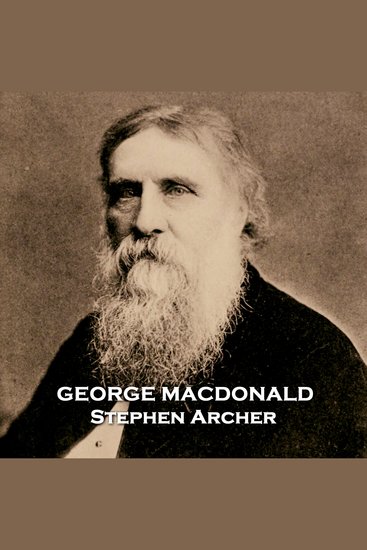
    George MacDonald was born on December 10th 1824 at Huntly, Aberdeenshire, Scotland.  
    The MacDonald family had proud and long historical roots. His father, was a farmer, was a direct descendant of one of the families that suffered in the infamous massacre of 1692 when the Campbells set upon the MacDonalds. 
    George grew up with the Congregational Church, with its atmosphere of Calvinism to which George never really attached himself. A story often told is that the young George on hearing that life was already mapped out and pre-destined burst into tears and was only comforted by the re-assurance that he was one of the elect. 
    When he was only 8, his mother Helen died. His father re-married 7 years later in 1839. The next year George was successful in obtaining a bursary to study at King’s College in Aberdeen and from which he also received his M.A.  
    In 1846 George was first published, anonymously, but his poem was there in print in the Scottish Congregational Magazine. 
    In 1848 he attended Highbury Theological College to study for the Congregational ministry.  That same year he became engaged to Louisa Powell. An enduring relationship that would see them as life long companions coupled with a marriage of over fifty years. 
    By 1850 George was appointed as the pastor of Trinity Congregational Church in Arundel. His sermons were however sometimes at odds with the Church and their more segmented views.  
    It is also at this time that George’s health becomes a major concern.  In November he suffered what would be termed ‘a severe haemorrhage’.  However Louisa was by his side and her support and nursing ensured his recovery. 
    On March 8th 1851 George and Louisa married.  As a Christmas gift to friends later that year he had printed his translation of Twelve of the Spiritual Songs of Novalis. 
    The year of 1852 started on a very bright note with the birth of his daughter on January 4th – Lilia.  
    Meanwhile George preached that with God’s universal love and the possibility that none would, ultimately, fail to unite with God were deemed to be almost heretical by the Church elders and as a punishment his salary was cut in half in June of 1852. 
    In May 1853 George could no longer reconcile with the Church’s demands and he resigned from the pulpit. Interestingly in his later novels, such as Robert Falconer and Lilith, there is common theme for distaste at the idea that God's electing love is limited to some and denied to others running through. 
    Happier news for 1853 was the birth of his daughter Mary Josephine born on July 23rd. 
    And with this the family decided to move to Manchester where he continued his ministerial work but his health again deteriorated. Another daughter, Caroline Grace was born on September 16th 1854.  In 1855 his collection of poems ‘Within and Without’ was published.  
    On 20th January 1856 his son Greville was born. The year brought further good news when Lady Byron decided to become his patron. However his health once more deteriorated and the family moved to Algiers to recuperate over the winter. 
    The following spring he was back in London and teaching at the University of London. 
    On August 31st 1857 a fourth daughter, Irene, was born and the family decided to settle in Hastings. 
    1858 brought bitter sweet times. His brother and Father both died but another daughter, Winifrid Louisa was born and his classic work ‘Phantastes’ was published. 
    The following year, 1859, George returned again to London and became the Professor of English Literature at Bedford College. 
    The following few years brought several more children into the ever growing family and a growing literary reputation. 
    In 1869 George accepted the editorship of Good Words for the Young and embarked on a lecture tour of Scotland. 
    In 1871 ‘At the Back of the North Wind’ was published followed by such other classics as Wilfrid Cumbermede, The Princess and the Goblin and in 1876, Exotics. 
    In 1877 came the beginning of a new chapter in
    Show book