Join us on a literary world trip!
Add this book to bookshelf
Grey
Write a new comment Default profile 50px
Grey
Subscribe to read the full book or read the first pages for free!
All characters reduced
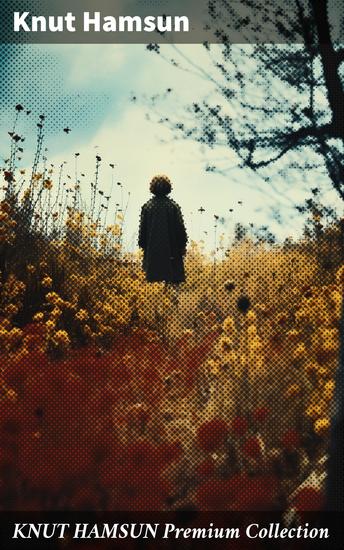
KNUT HAMSUN Premium Collection - Growth of the Soil Hunger Shallow Soil Pan Mothwise Under the Autumn Star The Road Leads On A Wanderer Plays On Muted Strings - cover

KNUT HAMSUN Premium Collection - Growth of the Soil Hunger Shallow Soil Pan Mothwise Under the Autumn Star The Road Leads On A Wanderer Plays On Muted Strings

Knut Hamsun

Translator George Egerton, William W. Worster, Paula Wiking

Publisher: Good Press

  • 0
  • 0
  • 0

Summary

Knut Hamsun's "KNUT HAMSUN Premium Collection" compiles some of the most pivotal works from this Nobel laureate, showcasing his unique literary style characterized by psychological depth and a rich, symbolic narrative. Hamsun's writing profoundly reflects the existential crises of early 20th-century Europe, combining a stream-of-consciousness technique with vivid imagery and a deep sense of place. The collection encapsulates his exploration of themes like isolation, nature, and the complexity of human emotions, immersing the reader in the inner lives of his characters. Hamsun often drew upon his own rural Norwegian upbringing, which profoundly influenced his portrayal of the natural world and the struggles of mankind within it. Knut Hamsun (1859-1952) was a pioneering figure in modernist literature, renowned for his avant-garde approach and explorations of psychological states. Growing up in a poor farming community, Hamsun faced numerous hardships that shaped his worldview and literary voice. His experiences traveling through Europe and his interest in philosophy heavily influenced his work, allowing him to address the profound disconnections of modern life with a penetrating gaze and lyrical prose. This collection is highly recommended for anyone interested in the evolution of modern literature, as it offers invaluable insights into the human psyche and societal tensions of the time. Hamsun's rich narratives invite readers to engage deeply with the text and explore the intricate interplay of individual desire and the broader world.
Available since: 12/09/2023.
Print length: 1729 pages.


Other books that might interest you

  • The Golden State Killer Case - cover

    The Golden State Killer Case

    William Thorp

    • 0
    • 0
    • 0
    In 2018, police announced that they had finally arrested the "Golden State Killer," a man responsible for over 140 burglaries, fifty rapes, and at least thirteen murders committed in California throughout the 1970s and '80s. That man turned out to be a former California police officer, Joseph James DeAngelo Jr. 


    Just two months earlier, the publication of I'll Be Gone in the Dark by Michelle McNamara had rocked the world of true crime. Published two years after her death, the book charts McNamara's obsessive search for the prolific criminal who had been known over the years as the East Area Rapist, the Original Night Stalker, and the Visalia Ransacker, among other epithets. McNamara is credited with coining the "Golden State Killer" moniker and heightening public awareness of the—at the time—still unsolved case. 


    William Thorp dives into the investigation, exploring the dark side of sunny California, the advances in forensic innovation that made solving this case possible, and the story inside the story—one of an amateur sleuth who dedicated the last years of her life to understanding how one of the country's worst criminals could have spent so many decades undetected.
    Show book
  • We Tell Ourselves Stories - Joan Didion and the American Dream Machine - cover

    We Tell Ourselves Stories - Joan...

    Alissa Wilkinson

    • 0
    • 0
    • 0
    In this riveting cultural biography, New York Times film critic Alissa Wilkinson examines Joan Didion's influence through the lens of American mythmaking. As a young girl, Didion was infatuated with John Wayne and his on-screen bravado, and was fascinated by her California pioneer ancestry and the infamous Donner Party. The mythos that preoccupied her early years continued to influence her work as a magazine writer and film critic in New York, offering glimmers of the many stories Didion told herself that would come to unravel over the course of her career. But out west, show business beckoned. 


    We Tell Ourselves Stories eloquently traces Didion's journey from New York to her arrival in Hollywood as a screenwriter at the twilight of the old studio system. She spent much of her adult life deeply embroiled in the glitz and glamour of the Los Angeles elite, where she acutely observed—and denounced—how the nation's fears and dreams were sensationalized on screen. Meanwhile, she paid the bills writing movie scripts like A Star Is Born, while her books propelled her to celestial heights of fame. 


    Peering through a scrim of celluloid, Wilkinson incisively dissects the cinematic motifs and machinations that informed Didion's writing—and how her writing, ultimately, demonstrated Hollywood's addictive grasp on the American imagination.
    Show book
  • KNOW ABOUT "Martin Luther King Jr" - A Significant Role in American History and the Civil Rights Movement - cover

    KNOW ABOUT "Martin Luther King...

    Saurabh Singh Chauhan

    • 0
    • 0
    • 0
    This is small part of the introduction of the book: KNOW ABOUT "Martin Luther King Jr" A Significant Role in American History and the Civil Rights Movement by Saurabh Singh Chauhan. 
    Welcome to the captivating journey through the life and legacy of one of America's most iconic figures, Martin Luther King Jr. In the following pages, we will embark on an exploration of his remarkable contributions to American history and the civil rights movement. Born on January 15, 1929, in Atlanta, Georgia, Martin Luther King Jr. emerged as a beacon of hope during a tumultuous era. His unwavering dedication to justice, equality, and nonviolent protest left an indelible mark on society, transforming the course of history and inspiring generations to come. This biography aims to illuminate the various facets of Martin Luther King Jr.'s life – from his early years in the segregated South to his pivotal role in breaking down racial barriers and advocating for civil rights. Through his eloquent speeches, passionate activism, and strategic leadership, King became a driving force in the fight against racial discrimination and social injustice. As we delve into the chapters that follow, we will journey through his formative experiences, the influences that shaped his worldview, the challenges he confronted, and the triumphs he achieved. We will witness the rise of his nonviolent philosophy, inspired by the teachings of Mahatma Gandhi, and its profound impact on the civil rights movement's strategies. 
    Show book
  • For the Boys - The True Account of a Combat Nurse in Patton's Third Army - cover

    For the Boys - The True Account...

    N.C.R. Davis

    • 0
    • 0
    • 0
    A month after her 24th birthday, Lt. Mary Elizabeth Balster collapses among the rubble of a shelled supply room. On the night of November 30, 1944, holed up in the Heinrich Himmler Barracks in Morhange, France, Lt. Balster's evac receives a typical patient load, but this time one of the admissions is a 19-year-old tanker she'd nursed back to health five months before in Normandy. The charge nurse on Surgical gently informs the lieutenant that the private is critical. Rising determined to save him, Balster limps toward the shelled supply room determined to search for any blood plasma bottles still intact. 


    Recaptured from her mother's reminiscences and letters home, N. C. R. Davis takes listeners through every heat-of-battle harrowing moment as Balster lived it, achieving a rare glimpse of one nurse's point of view during the latter part of the European conflict. 


    The book mixes Lt. Balster's observations, memories, and dreams to tell the story of a richly rebellious woman trying to navigate her life while nursing wounded and dying frontline soldiers. Her strong-willed, beguiling personality fosters the grit necessary for her success as a combat nurse, but these same characteristics cause two men to fall in love with her. And the personal cost of war comes to a heartrending conclusion, as she must choose one man over the other.
    Show book
  • Odyssey of the North An - cover

    Odyssey of the North An

    Jack London

    • 0
    • 0
    • 0
    An Odyssey of the North  is a  short storiy by Jack London that explore the wild and rugged nature of the northern coast of British Columbia. This storiy is filled with adventure and capture the beauty of nature and the mysteries of the sea. 
    Naass, a young Aleut man, wins a young woman of the tribe, Unga, only to have her stolen from him on the night of their marriage celebration by a seven-foot-tall, yellow-haired white man, Axel Gunderson. Naass spends years tracking his nemesis, determined to claim his bride and take vengeance...
    Show book
  • Gentle Breathing - From their pens to your ears genius in every story - cover

    Gentle Breathing - From their...

    Ivan Bunin

    • 0
    • 0
    • 0
    Ivan Alekseyevich Bunin was born on 22nd October 1870 in Voronezh province, in the South-West of the Russian Empire. 
    His early life was plagued by his Father’s gambling habits which caused his education to be erratic and the family to lose most of their wealth. 
    Bunin published his first poem in 1887 in St Petersburg and later in Oryol he worked for the local paper and became its editor, handily allowing him to publish his own poems and short stories.  There he met and married Varvara Pashchenko.  Ivan Bunin's debut book of poetry ‘Poems (1887–1891)’ was published in 1891. 
    This poetry and his translation of Longfellow garnered him his first Pushkin Prize.  Now he switched to writing prose and his novella ‘Antonov Apples’ is regarded as his first masterpiece.  Many more would follow. 
    The October Revolution of 1905 found Bunin in the Crimea.  Scenes of ‘class struggle’ he saw more as the oppressed people's craving for anarchy and destruction. 
    In November 1906 he began a passionate affair with Vera Muromtseva, within a few months they were touring through Egypt and Palestine.  ‘The Bird's Shadow’ collection was the result.   
    His second Pushkin Prize came in 1909 for Poems (1903–1906) and further translations.  He was now elected to the prestigious Russian Academy. 
    More widespread fame came in 1910 with ‘The Village’, a controversial and bleak portrayal of Russian country life.  Travel too beckoned them back to the Middle East, Ceylon (now Sri Lanka) and for winters in Capri with their friend Maxim Gorky.  
    That friendship suddenly ended in April 1917 as the revolution began to ferment in war-ravaged Russia.  After the Bolsheviks took power and the upheavals continued, he decided to leave Russia, finally achieving that in early 1920.  
    It would take some time to heal the wounds and stress he had been under and for his writing to begin again.  Settled in France, Bunin published many of his previous works and collections of novellas.  He also made regular contributions to the Russian emigre press.  
    Although reluctant to become involved in politics, Bunin was now feted as both a writer and the figurehead of non-Bolshevik Russian values and traditions.  In 1933 he became the first Russian to be awarded the Nobel Prize for Literature ‘for following through and developing with chastity and artfulness the traditions of Russian classic prose.’  
    In 1938 Bunin began working on the celebrated cycle of nostalgic, and erotically themed stories known Dark Avenues (or Dark Alleys).  
    As World War II broke out he chose to remain in Grasse spending the war at his remote Villa Jeanette, high in the mountains.  
    Ivan Bunin was a staunch anti-Nazi, and often, under difficult conditions, sheltered fugitives after Vichy was occupied by the Germans.  He wrote but did not publish during these years until on August 23rd the Nazi’s fled Grasse without a fight.  The next day the Americans came.  
    In May 1945 he returned to Paris and, apart from convalescing at times in Juan-les-Pins, he stayed for the rest of his life. 
    After 1948, with his health deteriorating, Bunin concentrated upon writing his memoirs and a book on Chekhov.  His last years were overshadowed by bitterness and despair at the situation in Russia and the treatment of its peoples.  He was suffering now from asthma, bronchitis and chronic pneumonia. 
    Ivan Alekseyevich Bunin died in a Paris attic flat on 8th November 1953.  Heart failure, cardiac asthma and pulmonary sclerosis were given as the causes of death.  He was 83.
    Show book