Join us on a literary world trip!
Add this book to bookshelf
Grey
Write a new comment Default profile 50px
Grey
Subscribe to read the full book or read the first pages for free!
All characters reduced
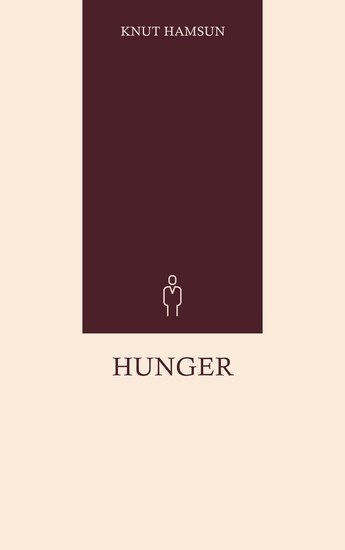
Hunger - cover

Hunger

Knut Hamsun

Publisher: CLXBX

  • 0
  • 0
  • 0

Summary

Hunger by Knut Hamsun is a groundbreaking psychological novel that delves into the depths of human desperation, pride, and artistic ambition. First published in 1890, this haunting and intensely personal work is widely regarded as one of the first modernist novels, reshaping the landscape of European literature with its raw interiority and unfiltered portrayal of the human mind.

Set in a rapidly changing urban landscape, the story follows a struggling writer who wanders the streets in relentless poverty. Isolated, starving, and clinging to his fragile dignity, he battles not only physical deprivation but also the turbulent fluctuations of his own thoughts and emotions. His hunger becomes more than a bodily condition—it transforms into a consuming force that distorts perception, fuels hallucinations, sharpens pride, and erodes rationality.

Unlike traditional narratives of poverty, Hunger offers no sentimental comfort and no easy moral framework. Hamsun plunges readers directly into the protagonist's consciousness, capturing the erratic rhythm of his thoughts with startling immediacy. The novel's stream-of-consciousness style allows us to experience the oscillation between arrogance and humility, hope and despair, lucidity and delirium. In doing so, Hamsun creates a character who is at once deeply flawed and profoundly human.

The unnamed narrator's fierce sense of pride prevents him from accepting help, even when survival is at stake. He rejects charity, sabotages opportunities, and clings stubbornly to his dream of literary success. His inner monologue reveals a mind constantly negotiating with itself—justifying choices, inventing stories, and seeking meaning amid suffering. Through this psychological lens, Hamsun examines themes of alienation, identity, creativity, and the fragile boundary between sanity and madness.

What makes Hunger revolutionary is its focus on the subjective experience of existence. Rather than relying on plot-driven events, the novel explores the minute shifts in mood and perception that define the narrator's reality. The external world fades in importance as the internal landscape becomes the true stage of action. This innovative approach influenced generations of writers, anticipating the modernist techniques later embraced by literary giants of the twentieth century.

At its core, Hunger is a meditation on the relationship between suffering and artistic creation. It questions whether deprivation sharpens the creative spirit or destroys it, and whether pride is a form of self-preservation or self-destruction. Hamsun's spare yet evocative prose heightens the intensity of every moment, immersing readers in a visceral experience that is both unsettling and unforgettable.

More than a story of poverty, Hunger is an exploration of the human psyche under extreme strain. Its raw honesty and psychological depth continue to resonate with readers, offering a timeless reflection on ambition, isolation, and the relentless struggle for meaning in an indifferent world.
Available since: 03/03/2026.
Print length: 216 pages.

Other books that might interest you

  • The Luna's ChoiceII - cover

    The Luna's ChoiceII

    Kat Silver

    • 0
    • 2
    • 0
    Ayla's life has revolved around taking care of her mother and younger sister since the death of her father. She became the primary financial support when their mother started to fall apart and fall into some damaging habits. But Ayla was glad to play that role for her family, especially her little sister, Kylee. She made sure Kylee had everything she wanted from life and adored her. That was until she met her fated mate, Theo, the future Alpha who had already announced that he was taking Kylee as his chosen mate. In an attempt to spare her sister a broken heart, she ends up in another pack, where she finds that her family history is much more complicated than she ever knew. And it is that history that has now put her life in danger.
     
    Theo didn't know if he was ready to become Alpha. He thought he had a couple more years to learn what it took to be a good Alpha to his pack. But when his father decides to step down early due to failing health, Theo believes having a strong Luna by his side during the transition is vital to its success. So, when he finds his fated mate in the sister of the woman he had already chosen to be his Luna, he feels he has no choice but to reject her. He had been led to believe that she was a cold and selfish delinquent who abandoned Kylee and their mother. He couldn't possibly have someone like that as his Luna. But when he can't sever their bond, he quickly starts to question whether he had been completely wrong about Ayla and instead had managed to run his destined future straight into the arms of another Alpha or worse.
     
    The Luna's ChoiceII
    Show book
  • Persian Letters - cover

    Persian Letters

    Montesquieu

    • 0
    • 1
    • 0
    In "Persian Letters," Montesquieu employs a unique epistolary format to explore and critique European society through the eyes of Persian travelers, Usbek and Rica. The narrative is rich with satire and philosophical insight, showcasing Montesquieu's masterful use of irony as he juxtaposes Eastern and Western customs. This work not only serves as a vehicle for societal critique but also as an early examination of cultural relativism, allowing readers to engage with complex ideas about freedom, authority, and morals within an emerging modern worldview. Montesquieu, a prominent Enlightenment thinker, was deeply influenced by the political and social environments of his time, including the absolutism of France and the rise of individual freedoms. His background in law and his keen observations of governance led to a profound understanding of the mechanisms of power, informing his exploration of despotism versus republicanism in "Persian Letters." This work reflects the intellectual currents of the 18th century, showcasing how Montesquieu's queries about justice and society resonate with contemporary issues of globalization and multiculturalism. "Persian Letters" is a must-read for those interested in Enlightenment literature, sociology, and political philosophy. Montesquieu's skillful combination of wit and wisdom encourages readers to reflect critically on their own beliefs and societal structures. This timeless text prompts dialogues about cultural perception, making it invaluable for scholars and general readers alike.
    Show book