Join us on a literary world trip!
Add this book to bookshelf
Grey
Write a new comment Default profile 50px
Grey
Subscribe to read the full book or read the first pages for free!
All characters reduced
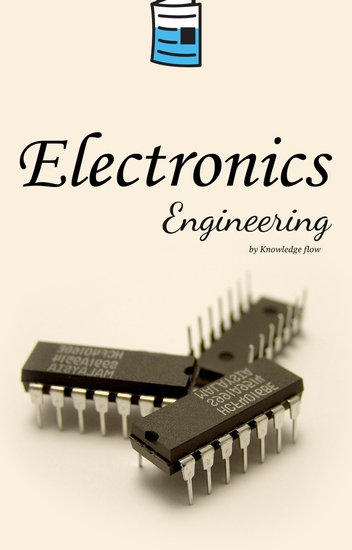
Electronics Engineering - cover

Electronics Engineering

Knowledge Flow

Publisher: Knowledge Flow

  • 0
  • 0
  • 0

Summary

Knowledge flow provides learning book of Electronics Engineering. This book is for all science and engineering students, graduates and professionals across the world. This Electronics Engineering book covers the complete chapters of electronics and other key concepts of electronics in a very efficient way.
 
Contents:
 
1. Introduction to Electronics Engineering
 
2. Electricity
 
3. Magnetism
 
4. Semiconductors
 
5. Diodes
 
6. Resistors
 
7. Transistors
 
8. Capacitors
 
9. Ohm’s and Kirchhoff's Laws
 
10. Series and Parallel Circuits
 
11. Logic Gates
Available since: 06/03/2014.
Print length: 65 pages.

Other books that might interest you

  • The Heart And Heart Disease - A Personal Perspective - cover

    The Heart And Heart Disease - A...

    Owen Jones

    • 0
    • 0
    • 0
    Six Interesting Facts about the Heart 
    1. Heart and circulatory diseases cause a quarter of all deaths in the UK, that’s more than 170,000 deaths each year – an average of 480 deaths each day or one every three minutes in the UK⁵. 
    2. There are around 7.6 million people living with a heart or circulatory disease in the UK: 4 million men and 3.6 million women⁵. 
    3. Coronary heart disease (CHD) is the most common type of heart disease. It is the most common cause of heart attack and was the single biggest killer of both men and women worldwide in 2019⁵. 
    4. In the US, heart disease is the leading cause of death for men, women, and people of most racial and ethnic groups¹. One person dies every 33 seconds in the United States from cardiovascular disease¹. 
    5. About 695,000 people in the United States died from heart disease in 2021—that’s 1 in every 5 deaths¹. 
    6. The most common type of heart disease in the USA is coronary artery disease (CAD), in which the major blood vessels to the heart become narrow or blocked with cholesterol and fatty build-up. CAD affects 18.2 million adults, and shockingly, the Centers for Disease Control and Prevention (CDC) reports that every two in ten deaths from CAD happen in people under 65 years old².
    Show book
  • Pickaxe Principles - Thriving in the AI Gold Rush - cover

    Pickaxe Principles - Thriving in...

    Simon Moritz

    • 0
    • 0
    • 0
    This audiobook is narrated by an AI Voice.   
    Feeling lost in the AI Gold Rush? You’re not alone—and you're not too late. 
    That feeling cuts across every role—from entrepreneurs and executives to intrapreneurs and parents guiding the next generation. The good news? We don’t have to chase every shiny tool. We can dig deeper, together. 
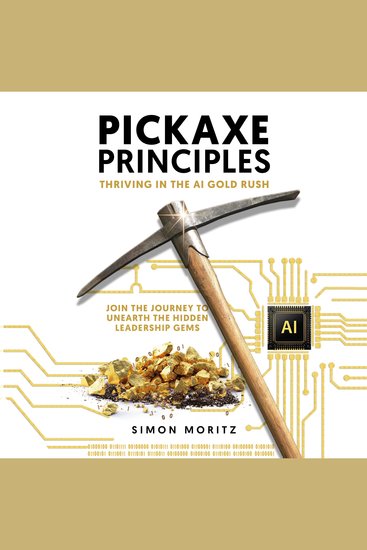
    Pickaxe Principles is an essential toolkit for courageous, value-driven leadership in the age of AI and the Fourth Industrial Revolution. 
    Written by innovation architect Simon Moritz—who helped launch Sweden’s first autonomous 5G bus and co-architected the national Drive Sweden Innovation Cloud, bringing together industry, government, and academia to shape the future—this book blends real-world experience with timeless truths. It’s an invitation to ask the big questions together: 
    How do we create real value in an AI-driven world? 
    How do we stay relevant—without losing our humanity? 
    Where do we begin when everything is constantly changing? 
    Packed with real stories, collaborative strategies, and 24 Karat Takeaways, this book delivers golden insights to guide our next steps. 
    Complete with diagrams, tools, and leadership frameworks, it offers a clear starting point—no matter our role or industry. 
    Inside, we’ll explore how to: 
    Discover the signals in the noise 
    Build ecosystems that bridge silos and spark trust 
    Turn complexity into collaboration 
    Lead with courage and long-term vision 
    Unearth the gold in people and teams 
    This isn’t just about keeping up. 
    It’s about digging deep—together. 
    There’s gold in people. 
    There’s gold in you. 
    The pickaxe is our mindset. 
    And the best time to dig is now. 
    Grab your pickaxe—let’s create a future worth striving for.
    Show book
  • Standing at the Water's Edge - A Cancer Nurse Her Four-Year-Old Son and the Shifting Tides of Leukemia - cover

    Standing at the Water's Edge - A...

    Janice Post-White

    • 0
    • 0
    • 0
    Janice Post-White was an oncology nurse who thought she knew what life with cancer was about--until her four-year-old son was diagnosed with leukemia. While he drew pictures to process his emotions, she buried her feelings and threw herself into managing a dual role as a medical professional and mother. Her memoir shares her son's perspective as a young cancer patient and teen survivor and explores her own personal and professional insights on survivorship, resilience, healing and what facing death can teach us about living.
    Show book
  • Blockchain Basics - A Beginner's Guide to Distributed Ledger Technology - cover

    Blockchain Basics - A Beginner's...

    Craig Dames

    • 0
    • 0
    • 0
    Blockchain technology has become one of the most revolutionary innovations of the 21st century, offering a new way to securely store and share data. At its core, a blockchain is a distributed ledger that records transactions across multiple computers in such a way that the registered transactions cannot be altered retroactively. This provides a level of security and transparency that is not possible with traditional, centralized databases. 
    The concept of blockchain was first introduced in 2008 by an individual or group under the pseudonym Satoshi Nakamoto. It was initially designed as the underlying technology behind Bitcoin, the first decentralized cryptocurrency. However, its potential goes far beyond just digital currencies. Blockchain can be applied to a wide range of industries, including healthcare, finance, supply chain management, and more, providing a secure, transparent, and efficient way to handle data. 
    A blockchain consists of a series of "blocks," which contain records of transactions. Each block is linked to the previous one, forming a chain. This chain of blocks is distributed across a network of computers, known as nodes, ensuring that all copies of the ledger are synchronized and identical. When a new transaction occurs, it is verified and added to the blockchain by the network participants. This decentralized nature eliminates the need for a central authority, making blockchain a powerful tool for fostering trust in a wide range of applications.
    Show book
  • Control Alcohol Consumption Hypnotherapy: Control & Stop Drinking Alcohol With Hypnosis - cover

    Control Alcohol Consumption...

    LightHeart Hypnotherapy

    • 0
    • 0
    • 0
    Have you lost control over alcohol? Is alcohol controlling you? Are you worried about what alcohol abuse is doing to your life, relationships, and health? Are you tired of friends and family expressing concern over your behavior? If so, it’s time to take back control and break free from the wretched prison that your alcohol addiction has become. This is your opportunity to grab the steering wheel of life and begin to steer in the right direction. It’s just a matter of knowing how to do it. 
      
    This audio has been constructed to help people be aware of and reduce their alcohol intake.  
    Our team of experienced hypnotherapists has designed our self-hypnosis audio therapy download to help ‘program’ your subconscious mind so that you can begin to think, feel and act like a person fully in control. Imagine what it would be like to:Wake up every morning feeling refreshed and full of life!Manage stress and anxiety without turning to alcohol!Attend a party or social event and avoid drinking alcohol!Spend time with family and loved ones and be fully in the moment with them. 
    All you need to do for our hypnotherapy to work is give yourself a quiet space where you can avoid distractions for 60 minutes.
    Show book
  • Charles Babbage and Alan Turing: The Lives and Careers of the English Mathematicians Who Revolutionized Modern Computer Science - cover

    Charles Babbage and Alan Turing:...

    Editors Charles River

    • 0
    • 0
    • 0
    Today, the world is in the midst of the transformative and ever-developing Digital Age, otherwise referred to as the “Age of Information.” It has been an unprecedented, remarkable, and explosive era marked by social media and computer-generated imagery (and with it, deep fakes), among other novel, previously unimaginable concepts. The bulky monitors and blocky towers of personal computers and laptops, which were once upon a time considered fashionable, futuristic contraptions, have since been replaced with a sleek and stylish array – both multi-functional and specialized – of aerodynamic, minimalistic devices, ranging from smartphones and tablets to lightweight laptops and full-fledged gaming set-ups packed with powerhouse processors. 
    While many are familiar with those facts, and a recent movie revived interest in Alan Turing’s achievements with computing during World War II, it was Charles Babbage who was the first to conceive the notion of a programmable and automatic universal computer, which, on top of its ability to calculate any mathematical equation at an unmatched speed, could also be used for a seemingly infinite number of other applications. In other words, he envisioned the precursor to the modern computer. 
    Given that he was the one who envisioned a concept so momentous that it ultimately led to the creation of what is now considered the world's first computer, many might be mistaken for thinking Alan Turing was the kind of suave, pipe-puffing dandy that many might associate with such a grand and futuristic idea. In reality, he was nothing of the sort. Turing was hardly the kind of two-dimensional, stereotypically bookish character whose light bulb suddenly went off during an experiment binge either. On the contrary, Alan was a gauche and grief-stricken 17-year-old schoolboy who would channel all the pain and confusion from his poignant heartbreak into his tireless research, paving the path for the deeply transformative Computer Age.
    Show book