Join us on a literary world trip!
Add this book to bookshelf
Grey
Write a new comment Default profile 50px
Grey
Subscribe to read the full book or read the first pages for free!
All characters reduced
Prague - cover

We are sorry! The publisher (or author) gave us the instruction to take down this book from our catalog. But please don't worry, you still have more than 500,000 other books you can enjoy!

Prague

Klaus H. Carl

Publisher: Parkstone International

  • 0
  • 0
  • 0

Summary

The Czech capital has a fascinating history of intrigue. It is a mixture of a past torn between Germany and the Austro-Hungarian Empire with remarkable monuments and a people whose soul rises above the events of the moment. It is the history of Central Europe in a nutshell, where Renaissance, Baroque, Gothic and Stalinist architecture compete side by side for attention.
Available since: 05/17/2024.
Print length: 56 pages.

Other books that might interest you

  • The Human Brain - Anatomy Functions and Disorders - cover

    The Human Brain - Anatomy...

    Ava Westwood

    • 0
    • 0
    • 0
    The human brain is the command center of the body, responsible for processing information, regulating bodily functions, and enabling cognitive abilities such as thinking, memory, and emotions. As the most complex organ in the human body, the brain contains billions of neurons that communicate through intricate networks, allowing for seamless coordination of voluntary and involuntary actions. Understanding the structure and function of the brain is essential for gaining insights into neurological health, mental well-being, and the mechanisms underlying various cognitive and motor processes. 
    The brain is divided into three primary regions: the cerebrum, cerebellum, and brainstem. The cerebrum, the largest part of the brain, is responsible for higher cognitive functions such as reasoning, problem-solving, language, and sensory perception. It is further divided into four lobes—frontal, parietal, temporal, and occipital—each with distinct roles in processing information. The cerebellum, located at the back of the brain, is crucial for coordinating movement, maintaining balance, and fine motor control. The brainstem, connecting the brain to the spinal cord, regulates vital autonomic functions such as breathing, heart rate, and digestion, ensuring the body’s survival. 
    Neurons, the fundamental units of the brain, communicate through electrical and chemical signals. This intricate communication network enables the processing of sensory inputs, the initiation of motor responses, and the storage of memories. Supporting cells known as glial cells play a crucial role in maintaining brain health by providing nutrients, removing waste, and protecting neurons from damage. Neurotransmitters, chemical messengers in the brain, facilitate signal transmission between neurons and influence mood, behavior, and cognitive functions.
    Show book

  • Ottoman Empire’s Worst Defeats The: The History and Legacy of the Decisive Battles that Checked the Ottomans’ Expansion into Europe - cover

    Ottoman Empire’s Worst Defeats...

    Editors Charles River

    • 0
    • 0
    • 0
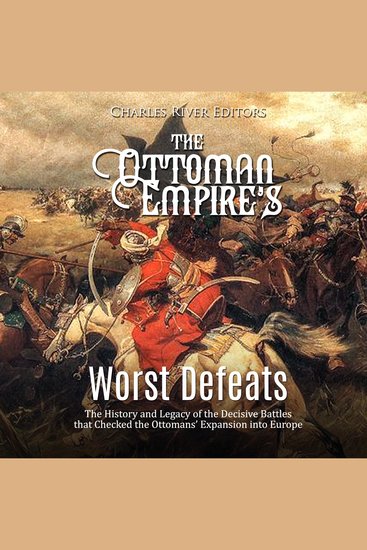
    In the wake of taking Constantinople, the Ottoman Empire would spend the next few centuries expanding its size, power, and influence, bumping up against Eastern Europe and becoming one of the world’s most important geopolitical players. It was a rise that would not truly start to wane until the 19th century. 	The long agony of the “sick man of Europe,” an expression used by the Tsar of Russia to depict the falling Ottoman Empire, could almost blind people to its incredible power and history. Preserving its mixed heritage, coming from both its geographic position rising above the ashes of the Byzantine Empire and the tradition inherited from the Muslim Conquests, the Ottoman Empire lasted more than six centuries. Its soldiers fought, died, and conquered lands on three different continents, making it one of the few stable multiethnic empires in history, and likely one of the last. Thus, it’s somewhat inevitable that the history of its decline is at the heart of complex geopolitical disputes, as well as sectarian tensions that are still key to understanding the Middle East, North Africa and the Balkans.  
    	When studying the fall of the Ottoman Empire, historians have argued over the breaking point that saw a leading global power slowly become a decadent empire. The defeat in the Battle of Lepanto stopped the Ottomans from pushing further into the Mediterranean, and the Battle of Vienna in 1683 was certainly an important turning point for the expanding empire, as the defeat of Grand Vizier Kara Mustafa Pasha at the hands of a coalition led by the Austrian Habsburg dynasty, Holy Roman Empire and Polish-Lithuanian commonwealth marked the end of Ottoman expansionism. It was also the beginning of a slow decline during which the Ottoman Empire suffered multiple military defeats, found itself mired by corruption, and had to deal with the increasingly mutinous Janissaries (the Empire’s initial foot soldiers).
    Show book
  • The Power of Citizenship - Why John F Kennedy Matters to a New Generation - cover

    The Power of Citizenship - Why...

    Scott D. Reich

    • 0
    • 0
    • 0
    Fifty years after John F. Kennedy's death, we find ourselves enmeshed in an era of political division and cynicism, where politicians talk past one another and the spirit of “Ask not what your country can do for you—ask what you can do for your country"" is less visible than it should be. We seem to have forgotten that we're all on the same team. Fortunately, Scott D. Reich has given us The Power of Citizenship, a timely book to bring us back on track. 
    Reich asserts that the most powerful element of Kennedy's legacy is his emphasis on the theme of citizenship, and that a rededication to the values Kennedy promoted will shine a bright path forward for our country. Evoking the hopes and aspirations of the 1960s, Reich recaptures the excitement of the Kennedy era. But what truly sets this book apart is the unique way it blends the romance of Camelot with the new frontiers of today—not only identifying modern challenges, but also offering a tangible blueprint for how we can improve our public discourse, be good citizens, and lift our nation to new heights of greatness. 
    Part history and part call to action, The Power of Citizenship hones in on the very essence of what made JFK so inspirational and timeless, reminding us once again that we must ask what we can do for our country. This is a must-read for Americans of all generations.
    Show book
  • Palmistry - Your Plain & Simple Guide to Reading Destiny in Your Hands - cover

    Palmistry - Your Plain & Simple...

    Sasha Fenton

    • 0
    • 0
    • 0
    Your Plain & Simple Guide to Reading Destiny in Your Hands.   This delightful and practical guide demonstrates how easy it is to read hands for fun and insight. The basic premise here is that our hands provide a glimpse of our personalities, health, strengths, and weaknesses—and even what may happen to us in the future. Each line, mound, and finger is a clue that can easily be deciphered if you have the right information.   In Palmistry, Fenton covers the basics of hand reading, including the lines, mounts, fingers, and thumb. She shows readers how to judge someone’s character, health, love and relationship interests, moneymaking ability, and long-term destiny.   Chapters include:  The Map of the Hand  The Phalanges (bones between the fingers and joints)  The Major Lines  The Minor Lines  Love and Relationships  How to Make Handprints    With this plain and simple guide, you’ll be reading hands like a pro in no time!   This book was previously published as Palmistry Plain & Simple.
    Show book
  • 24 Hours in Ancient Athens - A Day in the Life of the People Who Lived There - cover

    24 Hours in Ancient Athens - A...

    Philip Matyszak

    • 0
    • 0
    • 0
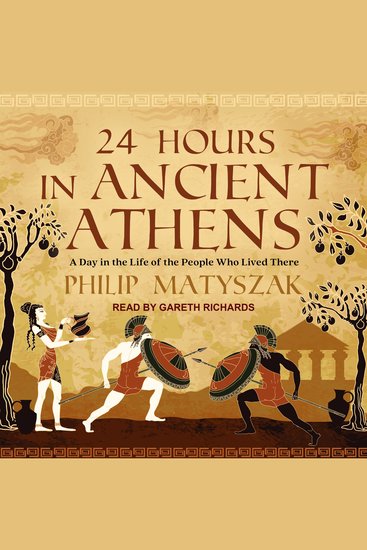
    Athens, 416 BC. A tenuous peace holds. The city-state's political and military might are feared throughout the ancient world; it pushes the boundaries of social, literary, and philosophical experimentation in an era when it has a greater concentration of geniuses per capita than at any other time in human history. Yet even geniuses go to the bathroom, argue with their spouse, and enjoy a drink with friends. 


    Few of the city's other inhabitants enjoy the benefits of such a civilized society, though—as multicultural and progressive as Athens can be, many are barred from citizenship. No, for the average person, life is about making ends meet, whether that be selling fish, guarding the temple, or smuggling lucrative Greek figs. 


    During the course of a day we meet twenty-four Athenians from all strata of society—from the slave-girl to the councilman, the vase painter to the naval commander, the housewife to the hoplite—and get to know what the real Athens was like by spending an hour in their company. We encounter a different one of these characters every chapter, with each chapter forming an hour in the life of the ancient city. We also get to spy on the daily doings of notable Athenians through the eyes of regular people as the city hovers on the brink of the fateful war that will destroy its golden age.
    Show book
  • Engage and Thrive: Culturally Responsive Teaching for Diverse Students - Elevate Your Classroom! Dive into engaging audio lessons for mastering Culturally Responsive Teaching - cover

    Engage and Thrive: Culturally...

    Julian F. Northwood

    • 0
    • 0
    • 0
    Engage and Thrive: Culturally Responsive Teaching for Diverse Students 
    ⭐⭐ Simplified Guide & Explanations Included ⭐⭐ 
    Are you looking to progress in your career and solidify your knowledge by successfully empowering diverse students through culturally responsive teaching? 
    Seeking a comprehensive guide that provides all necessary elements to excel in engaging and teaching diverse students? 
    Your search ends here! 
    This guide serves as your definitive companion for deepening your understanding, applying your skills, and engaging in hands-on exercises. With this, you're geared for success. 
    Updated for the latest strategies and techniques in culturally responsive teaching. 
    Key features of this enriched guide: 
    - Profound insights about culturally responsive teaching practices 
    - Detailed explanations on how to empower diverse students 
    - Fruitful strategies for lesson preparation and classroom engagement 
    Our guide distinguishes itself through comprehensive coverage, which is essential for your teaching success. Concepts aren't merely skimmed; they are delved into with precision. 
    Designed with a clear structure and easy-to-understand language, our guide on culturally responsive teaching ensures smooth transitions between topics. Say goodbye to dense jargon and welcome clear, precise, and technically accurate content. 
    So, why wait? Click the BUY NOW button, secure your guide, and begin your journey to successfully empowering diverse students through culturally responsive teaching!
    Show book