Join us on a literary world trip!
Add this book to bookshelf
Grey
Write a new comment Default profile 50px
Grey
Subscribe to read the full book or read the first pages for free!
All characters reduced
Dubai - cover

We are sorry! The publisher (or author) gave us the instruction to take down this book from our catalog. But please don't worry, you still have more than 500,000 other books you can enjoy!

Dubai

Klaus H. Carl

Publisher: Parkstone International

  • 0
  • 0
  • 0

Summary

Saint-Exupéry might have had the Little Prince say that he liked the desert because that is where camels can hide out. Dubai is one of the seven Gulf Emirates and has become a high-tech avantgarde metropolis where superlatives are superfluous. Major wonders of architectural imagination and scale include the National Bank of Dubai, Clock Tower, Creek Side and Dubai Internet City. It also operates the world's largest man-made harbour in Jebel Ali, which features a major water desalination plant. It is the world's third largest trans-shipment hub after Hong Kong and Singapore. Nonetheless, Dubai preserves close ties to the past, based on Bedouin tradition, camel racing, falconry, pearl diving and the world of palm groves. The land thrived before the era of oil derricks and is now preparing to live again after they leave as it invests in higher education that heartily welcomes women. Time-honoured legends of Arab cavalries that swept across the deserts still survive in horse races that display equestrian tradition against a background of exclusive state-of-the-art driving machines: Welcome to this sneak preview of the 21st Century!
Available since: 05/17/2024.
Print length: 57 pages.

Other books that might interest you

  • A Rare Recording of US General Billy Mitchell - cover

    A Rare Recording of US General...

    General William "Billy" Lendrum...

    • 0
    • 0
    • 0
    William "Billy" Lendrum Mitchell (December 29, 1879 - February 19, 1936) was a United States Army officer, regarded as the father of the United States Air Force. After serving in France during World War I, Mitchell was appointed deputy director of the Air Service, calling for increased investment in air power which he believed would be vital in future wars. His advocacy antagonized leaders of the US Army and Navy. However, Mitchell demonstrated through a series of Air Force bombing exercises conducted against Naval ships in 1921 and 1923 that his ideas on the superiority of airpower were indeed correct.
    Show book
  • The Gospel Crux - The Hidden Torah of Jesus - cover

    The Gospel Crux - The Hidden...

    J K Vaidyan

    • 0
    • 0
    • 0
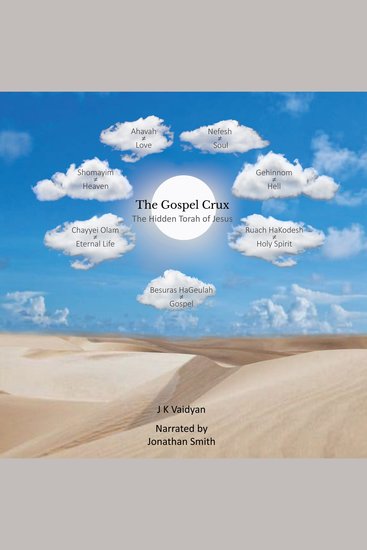
    The Gospel Crux is a fresh look at the teachings of Jesus in the context of their Hebrew origins.The current versions are not working. If they were, the world around us would not keep going to pieces every now and then. Lost in translation, disoriented through cultural appropriation and transmitted across millennia, the versions handed down to us are both enhanced and redacted, far removed from its original context and blurred by the passage of time.Hebrew is a language rich in metaphors and literary devices like synonymous parallelism and hyperbole that emphasize and reinforce key messages. It does not easily lend itself to translation into Greek, Latin or English. The Gospel Crux re-interprets Hebrew words and metaphors used by Jesus to explore what his teachings would have meant to those hearing him firsthand. Words and phrases like Gospel, Heaven, Hell, Love, Soul, Holy Spirit and Eternal Life take on new meanings when viewed from this frame of reference.A key example is the command to love your neighbor as yourself. When asked “who is my neighbor”, Jesus relates the parable of the Good Samaritan. All the characters are strangers to each other. Love does not show up in this parable. Acts of service and of going the extra mile for a stranger are our takeaways. Jesus tops it up with the instruction to go and do likewise.This brings us to the concept of self. “Deny yourself. Take up your cross and follow me.” This is our understanding of what Jesus had said. “Deny yourself” is not two words. “Deny your Self” has three words. And the cross is the execution stake of self-negation. When all of this is read and understood together it reveals a well-kept secret of Jewish, Buddhist, Hindu and Lao Tzu’s philosophies. That our “I” is a story we tell ourselves.Through this alternate rendering of the words of Jesus, The Gospel Crux explores how we can find the peace of God that surpasses all understanding in our lives; the truth that will set your “I” free.
    Show book
  • Government Is Unnatural Anarchy Is Natural - A practical analysis therein Naturosophy - cover

    Government Is Unnatural Anarchy...

    Cory Edmund Endrulat

    • 0
    • 0
    • 0
    Chapter 1: The Natural: You will learn about what it means for something to be considered natural. 
    Chapter 2: Government: You will learn what constitutes the nature of government and why it may be considered "unnatural." This is the main bulk of the book. Within this section, the world's biggest lie is exposed, in order to put an end to countless decades of suffering. 
    Chapter 3: Anarchy: You will learn what constitutes the real definition of "anarchy" many people do not learn about, and why it may be considered "natural." We come to understand that our reality is not the way it actually is supposed to be. 
    Chapter 4: Moral Suasion: You will learn about what it means to share this knowledge, how to put it into action and why it will benefit society immensely. It becomes apparent that morality and nature are core to our human existence moving forward. 
    Back of book: It's dangerous to question mankind when nature is disregarded. This is an honest evaluation for an honest world. People claim that they care about nature then proceed to claim that we cannot live without government. They then claim that we can't live with anarchy. Yet, there are lies so strong and evident that proves government to be unnatural, and therefore unfit to exist. Also, truths so strong and evident that proves anarchy to be natural, the way of life that must be understood and embraced. Many lives are in the hands of the few who create evil; but you are of the many, and with this knowledge you allow the many to be empowered to disregard the few. Nature will never be disregarded again, evil will never gain power again. It starts with your nature, if you are willing to use it in reading this book. You can liberate the world for all of time, for true freedom, health and happiness. Nature is all of time and we must learn to use our time wisely, if we care.
    Show book
  • Doorknob Bombshells in Therapy - The Deadline the Brain and Why It Is Important to End on Time - cover

    Doorknob Bombshells in Therapy -...

    Daniela V. Gitlin

    • 0
    • 0
    • 0
    What should a therapist do when a patient reveals critical information at the end of a session? 


    It's a near-universal experience among mental health practitioners: a patient drops a bombshell—a critical disclosure that moves the treatment forward—on their way out, with a hand on the doorknob. This "doorknob moment" creates a stressful dilemma for clinicians, especially when the patient is distraught. Should the clinician end the session on time, or run over and be late for the next patient? 


    Here, seasoned psychiatrist Daniela V. Gitlin provides clinicians with a clear, evidence-based answer. By conceptualizing the functional differences between patient and therapist in the treatment relationship as a metaphor for the functional differences between right and left cerebral hemispheres, Gitlin's argument yields a comprehensive explanation for why doorknob moments occur, why they are necessary to prevent treatment stagnation, and why ending on time makes patients feel safer to deliver them.
    Show book
  • Digging Through the Bible - Understanding Biblical People Places and Controversies through Archaeology - cover

    Digging Through the Bible -...

    Richard A Freund

    • 0
    • 0
    • 0
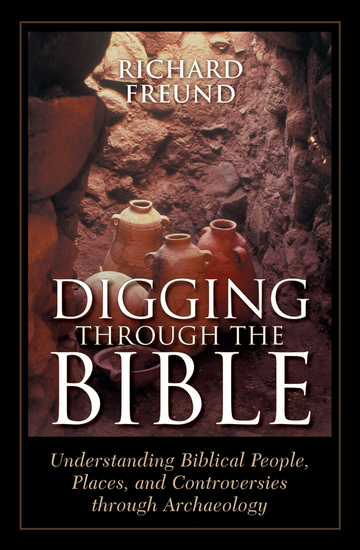
    A “masterful and eminently readable” journey through the fascinating insights and revelations of Biblical archeology (Publishers Weekly, starred review). Many of our religious beliefs are based on faith alone, but archaeology gives us the opportunity to find evidence about what really happened in the distant past—evidence that can have a dramatic impact on what and how we believe. In Digging Through the Bible, archaeologist and rabbi Richard Freund takes readers through digs he has led in the Holy Land, searching for evidence about key biblical characters and events.  Digging Through the Bible presents overviews of the evidence surrounding figures such as Moses, Kings David and Solomon, and Mary the mother of Jesus, as well as new information that can help us more fully understand the life and times in which these people would have lived. Freund also presents new evidence about finding the grave of the Teacher of Righteousness mentioned in the Dead Sea Scrolls, and gives a compelling argument about how the Exodus of the Israelites may have taken place in three separate waves over time, rather than in a single event as presented in the Bible.
    Show book
  • Iron Imperator - Roman Grand Strategy under Tiberius - cover

    Iron Imperator - Roman Grand...

    Iskander Rehman, Sir Peter Stothard

    • 0
    • 0
    • 0
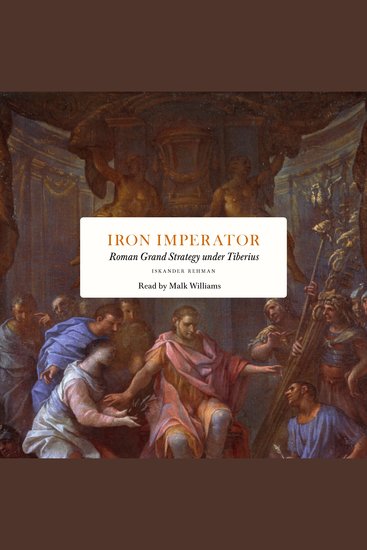
    One of the most enigmatic figures of antiquity, Tiberius lacked the imperial splendour of his great predecessor Augustus and the excesses of many of his successors, and has been overlooked by history. Yet this compelling study offers a portrait of a complex and contradictory man, both emperor and exile, tyrant and recluse. 
    Drawing on a wealth of ancient sources as well as contemporary classical scholarship, Iskander Rehman engages in a nuanced and multidisciplinary examination of Tiberius’ philosophical, intellectual and military influences, and the effectiveness of his foreign policy. Analysing key conflicts, Rehman evaluates the reach and efficacy of Rome’s grand strategy, applying the lessons of the past to contemporary security challenges and modern global defence policy. 
    The book has a preface written by Sir Peter Stothard, British author, journalist and critic.
    Show book