Join us on a literary world trip!
Add this book to bookshelf
Grey
Write a new comment Default profile 50px
Grey
Subscribe to read the full book or read the first pages for free!
All characters reduced
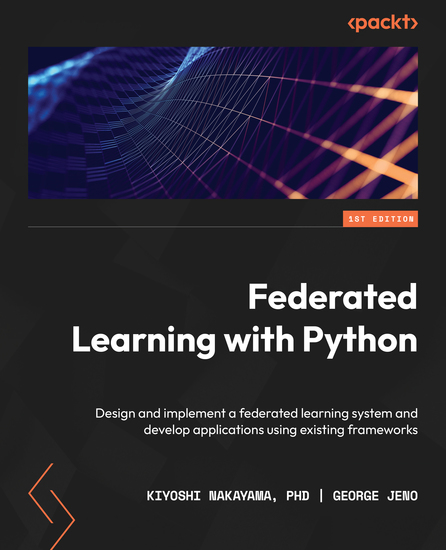
Federated Learning with Python - Design and implement a federated learning system and develop applications using existing frameworks - cover

Federated Learning with Python - Design and implement a federated learning system and develop applications using existing frameworks

Kiyoshi Nakayama PhD, George Jeno

Publisher: Packt Publishing

  • 0
  • 0
  • 0

Summary

Federated learning (FL) is a paradigm-shifting technology in AI that enables and accelerates machine learning (ML), allowing you to work on private data. It has become a must-have solution for most enterprise industries, making it a critical part of your learning journey. This book helps you get to grips with the building blocks of FL and how the systems work and interact with each other using solid coding examples.
FL is more than just aggregating collected ML models and bringing them back to the distributed agents. This book teaches you about all the essential basics of FL and shows you how to design distributed systems and learning mechanisms carefully so as to synchronize the dispersed learning processes and synthesize the locally trained ML models in a consistent manner. This way, you’ll be able to create a sustainable and resilient FL system that can constantly function in real-world operations. This book goes further than simply outlining FL's conceptual framework or theory, as is the case with the majority of research-related literature.
By the end of this book, you’ll have an in-depth understanding of the FL system design and implementation basics and be able to create an FL system and applications that can be deployed to various local and cloud environments.
Available since: 10/28/2022.
Print length: 326 pages.
Other books that might interest you

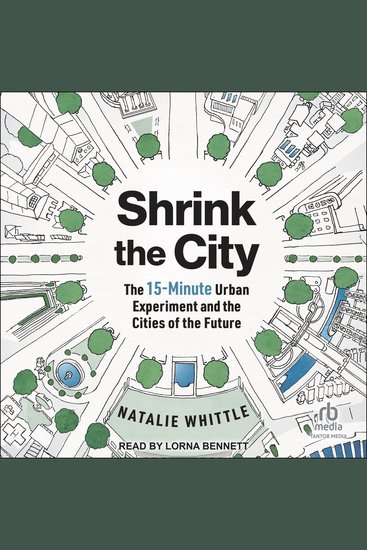
  • Shrink the City - The 15-Minute Urban Experiment and the Cities of the Future - cover

    Shrink the City - The 15-Minute...

    Natalie Whittle

    • 0
    • 0
    • 0
    Cities define the lives of all those who call them home: where we go, how we get there, how we spend our time. But what if we rethink the ways we plan, live in, and move around our cities? What if we didn't need a car to reach the grocery store? What if we could get back the time we would have spent commuting and put it to other uses? 


    In this fascinating, carefully researched and reported book, longtime Financial Times journalist Natalie Whittle investigates the 15-minute city idea—its pros, cons, and its potential to revolutionize modern living. 


    From Paris, Melbourne, and Rotterdam to Charlotte, North Carolina, and Tempe, Arizona, cities worldwide are being guided by the 15-minute city's ideals—with varying results. By looking at these examples, Whittle considers: 


    ● what really happens when a city expands bike lanes and pedestrian areas—and disincentivizes long commutes 


    ● which approaches to building affordable housing are actually effective 


    ● how neighborhoods of varying wealth are affected by 15-minute city policies 


    This timely book serves as a call to reflect on our cities and neighborhoods—and it outfits us with insights on how to make them more sustainable, safe, and welcoming.
    Show book
  • Cheese Trekking - How Microbes Landscapes Livestock and Human Cultures Shape Terroir - cover

    Cheese Trekking - How Microbes...

    Trevor Warmedahl

    • 0
    • 0
    • 0
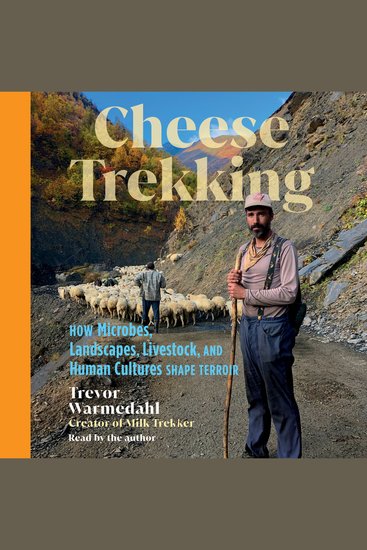
    Cheese Trekking recounts the author’s experiences visiting pastoral communities and cheesemakers in various countries and explains how cheeses can be local manifestations while also representing global archetypes, strategies that have been adopted in many places. It describes the constellations (a range of complementary milk foods that utilize all byproducts of cheesemaking) of various regions through a wide-angle lens. The central premise is that milk has a terroir, born from the plants and ecology of a landscape, that is concentrated via ruminant digestion and lactation and carries through the barns and milk sheds to be steered by human hands and cultural practices into foods. There is a growing international movement to return to the roots of natural cheesemaking, at the core of which is a philosophy of working with rather than against microbes and nature; the sacredness of motherhood, milk, and life itself; and the ethics involved in dairying, given its intimate involvement with the killing, and eating of livestock. It offers firsthand evidence that humans can be stewards of landscapes, shepherds of microbes, and keepers of genetic wealth in the form of heritage livestock breeds, while crafting delicious, safe, nutrient-dense milk foods.
    Show book
  • Machine Learning Pipelines - A Comprehensive Guide to Building and Deploying Intelligent Systems - cover

    Machine Learning Pipelines - A...

    Chuck Sherman

    • 0
    • 0
    • 0
    "Machine Learning Pipelines: A Comprehensive Guide to Building and Deploying Intelligent Systems" is a detailed, hands-on guide that equips data scientists, machine learning engineers, and AI practitioners with the knowledge and skills needed to build, optimize, and deploy robust machine learning pipelines. This book takes you through every step of the pipeline development process, from data collection to model deployment, ensuring that your intelligent systems are efficient, scalable, and production-ready. 
    The book also features real-world examples, code snippets, and case studies that demonstrate how to apply these concepts in practical settings, allowing you to build intelligent systems that are reliable, maintainable, and capable of evolving with new data and requirements. 
    "Machine Learning Pipelines" will provide you with the tools and frameworks necessary to efficiently build and deploy machine learning solutions at scale. With this comprehensive guide, you’ll be empowered to create intelligent systems that deliver high-quality, actionable insights in real time.
    Show book
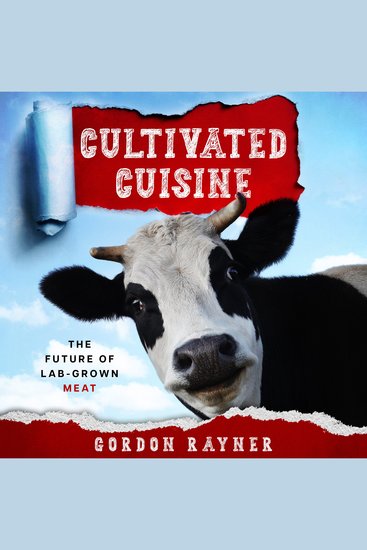
  • Cultivated Cuisine - The Future of Lab-Grown Meat - cover

    Cultivated Cuisine - The Future...

    Gordon Rayner

    • 0
    • 0
    • 0
    Dive into the Future of Feasting: Where Science Meets Your Dinner Plate 
     
    Prepare to be transported to a future where dinner grows in a lab, not a field. "Cultivated Cuisine: The Future of Lab-Grown Meat" offers a cutting-edge exploration of the revolutionary world of cellular agriculture. Attention: The book takes a thrilling plunge into the complexities of lab-grown meat, examining its scientific origins, environmental implications, and potential to redefine our food system. 
    Author Gordon Rayner, a biologist by education and agribusiness professional by experience, unravels this innovative food technology with dexterity and wit. He skillfully bridges the divide between hard science and accessible storytelling, offering a comprehensive guide that enlightens as much as it entertains. 
     
    Imagine a world where the burger on your plate is just as juicy and flavorful as the one from your favorite barbecue joint but without the associated environmental or ethical concerns. That's the promise of cultured meat that Rayner interrogates from every angle. 
     
    Whether you're a food enthusiast curious about sustainable trends, a science geek hungry for innovative topics, or a concerned citizen seeking balanced information on the future of food, this book is a must-read. Feast on a hearty serving of knowledge – sink your teeth into "Cultivated Cuisine: The Future of Lab-Grown Meat" today!
    Show book
  • Two Minds - Who Really Decides Inside Your Head - cover

    Two Minds - Who Really Decides...

    Theo Whessler

    • 0
    • 0
    • 0
    Every day, your brain makes hundreds of decisions before your conscious mind even realizes a choice is being made. You trust your instincts, believe your memories, and feel certain about your judgments — but neuroscience reveals that much of what you call "thinking" is something else entirely: a fast, automatic, largely hidden machinery that runs ahead of awareness, shaped by fatigue, arbitrary numbers, vivid stories, and the simple fact of what you happen to own. In Two Minds: Who Really Decides Inside Your Head, neuroscientist Theo Whessler translates fifteen years of laboratory research into a compact, precise, and deeply practical guide to the brain's most consequential errors. Drawing on landmark experiments in neuroscience, cognitive psychology, and behavioral economics — from Benjamin Libet's unsettling discovery that the brain initiates action before conscious intention appears, to Kahneman and Tversky's systematic mapping of human irrationality, to Philip Tetlock's decades-long study of why experts predict worse than algorithms — Whessler builds a unified picture of how the mind actually works, and where it reliably goes wrong. At the heart of the book are the "Seven Traps of the Brain": seven persistent failures that strike under uncertainty, time pressure, and social influence. Anchoring pulls your estimates toward irrelevant numbers you didn't choose. Hindsight bias rewrites your memory of the past until the outcome seems inevitable. Loss aversion makes you cling to what you own and fear giving it up twice as much as you valued gaining it. Base-rate neglect causes you to ignore statistical reality in favor of a vivid story. Overconfidence distorts your planning until budgets double and timelines triple. Framing changes your decision without changing a single fact. And confabulation — the brain's most intimate trick — ensures that when you explain why you did something, you are usually telling a story rather than reporting a cause. Whessler does not stop at diagnosis. Each trap is explained through its neurobiological mechanism, identified through recognizable signs in everyday behavior, and countered with a concrete checking procedure. Readers learn to use the outside view to forecast more accurately, run premortems to expose what optimism conceals, apply structured checklists to override expert overconfidence, and redesign their decision environments so that better choices become the default path. Written for people who make consequential decisions — investors, executives, analysts, clinicians, and anyone who wants to stop repeating the same cognitive mistakes — Two Minds is sharp, evidence-based, and immediately applicable. It does not promise to eliminate bias, because the science makes clear that this is impossible. It promises something more useful: after this book, you will recognize the traps before you fall into them, and you will have the tools to build a life and a workplace where your best thinking has a fighting chance.
    Show book
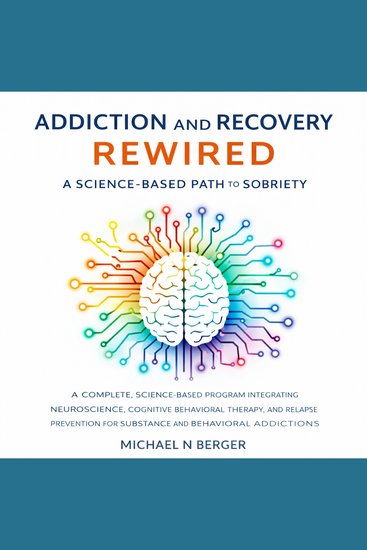
  • Addiction and Recovery Rewired: A Science-Based Path to Sobriety - A Complete Science-Based Program Integrating Neuroscience Cognitive Behavioral Therapy and Relapse Prevention for Substance and Behavioral Addictions - cover

    Addiction and Recovery Rewired:...

    Michael N Berger

    • 0
    • 0
    • 0
    Willpower is not the answer. Design is everything.
     
    If you or someone you love has tried to quit drinking, gambling, scrolling, or using—only to relapse again and again—you know the shame of being told to “just try harder.” But the real problem isn't your willpower. It's your brain.
     
    Addiction and Recovery Rewired integrates the latest neuroscience, cognitive behavioral therapy (CBT), and relapse prevention engineering into a step‑by‑step program that works for both substance addictions (alcohol, opioids, cannabis) and behavioral addictions (gambling, pornography, gaming, social media, shopping).
     
    You will discover:
     
    Why your prefrontal cortex—the brain's CEO—gets hijacked and how to rebuild it.
     
    The 15‑minute craving wave and how to surf it instead of fighting it.
     
    A 2‑Minute Interruption Protocol to break the ritual of use before it starts.
     
    How to design your home, phone, and daily routines so sobriety becomes the path of least resistance.
     
    A week‑by‑week neurochemical roadmap for the first 90 days—and what to expect when anhedonia (the inability to feel pleasure) lasts longer.
     
    Family dynamics: how to stop enabling, set a Non‑Negotiable Contract, and repair trust.
     
    Why community is medicine and how to find your recovery tribe—whether in 12‑step, SMART Recovery, or online.
     
    No more white‑knuckling. No more shame. Just a science‑based, compassionate path to a life you don't want to escape.
     
    You don't quit an addiction. You replace it with a life worth staying sober for.
    Show book