Join us on a literary world trip!
Add this book to bookshelf
Grey
Write a new comment Default profile 50px
Grey
Subscribe to read the full book or read the first pages for free!
All characters reduced
Salammbo - cover

Salammbo

محمود وهبة

Publisher: BookRix

  • 0
  • 0
  • 0

Summary

Salammbo is a historical novel by Gustave Flaubert. It is set in Carthage during the 3rd century BC, immediately before and during the Mercenary Revolt which took place shortly after the First Punic War. Flaubert's main source was Book I of Polybius's Histories. It was not a particularly well-studied period of history and required a great deal of work from the author, who enthusiastically left behind the realism of his masterpiece Madame Bovary for this tale of blood and thunder.

After the First Punic War, Carthage is unable to fulfill promises made to its army of mercenaries, and finds itself under attack. The fictional title character, a priestess and the daughter of Hamilcar Barca, an aristocratic Carthaginian general, is the object of the obsessive lust of Matho, a leader of the mercenaries. With the help of the scheming freed slave, Spendius, Matho steals the sacred veil of Carthage, the Zaïmph, prompting Salammbô to enter the mercenaries' camp in an attempt to steal it back. The Zaïmph is an ornate bejewelled veil draped about the statue of the goddess Tanit in the sanctum sanctorum of her temple: the veil is the city's guardian and touching it will bring death to the perpetrator.
Available since: 12/19/2023.
Print length: 424 pages.

Other books that might interest you

  • Young Lions Hunt - cover

    Young Lions Hunt

    Andrew Mackay

    • 0
    • 0
    • 0
    Alan, Sam, Alice and Aurora continue to attack German forces who are taking part in Operation Thor: the invasion of Scotland. The Partisans discover that the Fascist Government has begun a program to exterminate all disabled orphan children and that an SS Death Squad is coming to Britain with a secret list of targets to eliminate. The Resistance plan to sabotage Operation Sea lion anniversary celebrations. Young Lions Hunt is the third book in the Young Lions series and is a fast paced, gritty war novel set in an alternative history of the Second World War.
    Show book
  • Quando Dormo (When I Sleep) - cover

    Quando Dormo (When I Sleep)

    Edward Izzi

    • 0
    • 0
    • 0
    Dr. David Fazio is a maternity physician at Chicago-Western Medical Hospital. He is a handsome, divorced baby doctor who has more than his share of personal flaws. But Dr. Fazio has one good moral quality going for him: He is a pro-life obstetrician. In a state where late-term abortions are now legal, he is being strongly encouraged by the hospital to perform abortions to any patient requesting one. Dr. Fazio has one other problem...he has horrific sleep issues and has been known to be a sleepwalker. He wakes up one morning with severe burns on his hands, while a family planning clinic one block away has burned down to the ground with casualties. The authorities are now suspicious, as the "Abortion Arsonist" is burning down clinics in Chicagoland, and Dr. Fazio has no clue who it is. Every time Dr. Fazio sleeps, he has no concept of where he'll wake up or any memory of what damage he may have done the night before...
    Show book
  • The End of the Young Family Feud - cover

    The End of the Young Family Feud

    Lucy Maud Montgomery

    • 0
    • 0
    • 0
    Lucy Maud Montgomery (November 30, 1874 – April 24, 1942), published as L. M. Montgomery, was a Canadian author best known for a series of novels beginning in 1908 with Anne of Green Gables. The book was an immediate success. The title character, orphan Anne Shirley, made Montgomery famous in her lifetime and gave her an international following.
    The End of the Young Family Feud: A week before Christmas, Aunt Jean wrote to Elizabeth, inviting her and Alberta and me to eat our Christmas dinner at Monkshead. We accepted with delight. Aunt Jean and Uncle Norman were delightful people, and we knew we should have a jolly time at their house.
    Show book
  • When Lambs Eat Lions - cover

    When Lambs Eat Lions

    Jerrimiah Stonecastle

    • 0
    • 0
    • 0
    A tall, mysterious white man moves into a neighborhood that is caught in a turf war between three rival gangs. He becomes a threat to the gangs when the residents begin to lose their fear of the gangs and they begin to lose members. 
    They plot to take this bible thumping interloper out, but soon discover they had made a mistake of biblical proportions. 
    Who or what is he? 
    The residents think he’s an angel sent from heaven. 
    The gangs think he’s a demon sent from hell. 
    The local clergy think he’s the Lamb returning as the Lion to usher in the End of Days. 
    Or is he something else?
    Show book
  • The Sorrows of Young Werther - cover

    The Sorrows of Young Werther

    Johann Wolfgang von Goethe

    • 0
    • 0
    • 0
    Enter the tormented heart of a young man overwhelmed by passion, beauty, and the crushing pain of unreturned love. In The Sorrows of Young Werther, Goethe presents the personal letters of Werther, a tender, idealistic artist who falls deeply for Charlotte—an alluring woman already engaged to someone else. 
    As Werther’s admiration turns into fixation, his thoughts on love, nature, art, and suffering become more intense and consuming. Framed by the scenic beauty of the German countryside, his emotional journey unfolds into a moving exploration of yearning, heartbreak, and the blurry boundary between romantic idealism and emotional collapse. 
    A defining work of the Sturm und Drang era and a seminal piece of Romantic literature, The Sorrows of Young Werther is far more than a love story—it’s a raw, lyrical outpouring from a soul in turmoil. It moved a generation and shocked Europe with its emotional candor and heartbreaking conclusion. 
    Whether you see it as a tragic love story or a reflection of your own quiet desires, Werther’s voice will linger long after you’ve turned the last page.
    Show book
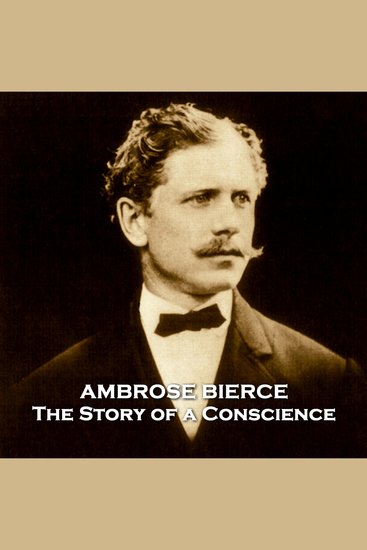
  • The Story of a Conscience - War story exploring honour and duty - cover

    The Story of a Conscience - War...

    Ambrose Bierce

    • 0
    • 0
    • 0
    Ambrose Gwinnett Bierce was born on 24th June 1842 at Horse Cave Creek in Meigs County, Ohio. His parents were poor but they introduced him to literature at an early age, instilling in him a deep appreciation of books, the written word and the elegance of language.  
     
    Growing up in Koscuisko County, Indiana poverty and religion were defining features of his childhood, and he would later describe his parents as “unwashed savages” and fanatically religious, showing him little affection but always quick to punish. He came to resent religion, and his introduction to literature appears to be their only positive effect. 
     
    At age 15 Bierce left home to become a printer’s devil, mixing ink and fetching type at The Northern Indian, a small Ohio paper. Falsely accused of theft he returned to his farm and spent time sending out work in the hopes of being published. 
     
    His Uncle Lucius advised he be sent to the Kentucky Military Institute. A year later he was commissioned as an Officer.  As the Civil War started Bierce enlisted in the 9th Indiana Infantry Regiment.  
     
    In April 1862 Bierce fought at the Battle of Shiloh, an experience which, though terrifying, became the source of several short stories. Two years later he sustained a serious head wound and was off duty for several months. He was discharged in early 1865.  
     
    A later expedition to inspect military outposts across the Great Plains took him all the way to San Francisco. He remained there to become involved with publishing and editing and to marry, Mary Ellen on Christmas Day 1871.  They had a child, Day, the following year.  
     
    In 1872 the family moved to England for 3 years where he wrote for Fun magazine. His son, Leigh, was born, and first book, ‘The Fiend’s Delight’, was published. 
    They returned to San Francisco and to work for a number of papers where he gained admiration for his crime reporting. In 1887 he began a column at the William Randolph Hearst’s San Francisco Examiner.  
     
    Bierce’s marriage fell apart when he discovered compromising letters to his wife from a secret admirer. The following year, 1889 his son Day committed suicide, depressed by romantic rejection. 
     
    In 1891 Bierce wrote and published the collection of 26 short stories which included ‘An Occurrence at Owl Creek Bridge’.  Success and further works including poetry followed.  
     
    Bierce with Hearst’s resources helped uncover a financial plot by a railroad to turn 130 million dollars of loans into a handout. Confronted by the railroad and asked to name his price Bierce answered “my price is $130 million dollars. If, when you are ready to pay, I happen to be out of town, you may hand it over to my friend, the Treasurer of the United States”.  
     
    He now began his first foray as a fabulist, publishing ‘Fantastic Fables’ in 1899.  But tragedy again struck two years later when his second son Leigh died of pneumonia relating to his alcoholism. 
     
    He continued to write short stories and poetry and also published ‘The Devil’s Dictionary’.  
     
    At the age of 71, in 1913 Bierce departed from Washington, D.C., for a tour of the battlefields where he had fought during the civil war. At the city of Chihuahua he wrote his last known communication, a letter to a friend. It’s closing words were “as to me, I leave here tomorrow for an unknown destination,” Ambrose Bierce then vanished without trace.
    Show book