Join us on a literary world trip!
Add this book to bookshelf
Grey
Write a new comment Default profile 50px
Grey
Subscribe to read the full book or read the first pages for free!
All characters reduced
The Prophet - cover

The Prophet

Kahlil Gibran

Publisher: Delhi Open Book

  • 0
  • 0
  • 0

Summary

A book of twentysix poetic essays written in English, Kahlil Gibran?s The Prophet is full of religious inspirations. With the twelve illustrations drawn by the author himself, the book took more than eleven years to be formulated and perfected and is Gibran?s bestknown work. It represents the height of his literary career as he came to be noted as 'the Bard of Washington Street.' Captivating and vivified with feeling, The Prophet has been translated into forty languages throughout the world and is considered the most widely read book of the twentieth century. Its first edition of 1300 copies sold out within a month.
Available since: 05/28/2024.
Print length: 42 pages.

Other books that might interest you

  • The Wonderful Wizard Of Oz - cover

    The Wonderful Wizard Of Oz

    L. Frank Baum

    • 0
    • 0
    • 0
    The Wonderful Wizard of Oz is the classic American children's novel about the adventures of Dorothy, a young girl who along with her dog Toto is swept away by a cyclone to the magical Land of Oz. It was written by L. Frank Baum and published in May 1900. Dorothy lives with her Aunt Em, Uncle Henry, and Toto on a farm in the Kansas prairie. One day, Dorothy and Toto are caught up in a cyclone that deposits her farmhouse into Munchkin Country in the magical Land of Oz. The falling house has killed the Wicked Witch of the East, the evil ruler of the Munchkins. The Good Witch of the North arrives with three grateful Munchkins and gives Dorothy the magical Silver Shoes that once belonged to the Wicked Witch. The Good Witch tells Dorothy that the only way she can return home is to go to the Emerald City and ask the great and powerful Wizard of Oz to help her. The Library of Congress has declared it "America's greatest and best-loved homegrown fairy-tale." Its groundbreaking success and the success of the Broadway musical adaptation led Baum to write thirteen additional Oz books which serve as sequels to the first story. The 1939 film musical adaptation starring Judy Garland is considered by many to be one of the greatest films in cinema history. L. Frank Baum (died 1919) was a prominent voice of the late 19th and early 20th century. Their work has endured across generations and continues to be read and studied worldwide. As a work of classic literary fiction, The Wonderful Wizard Of Oz exemplifies the narrative craft and social insight that defined great storytelling of its era. Literary fiction of this period was characterized by careful attention to character psychology, social milieu, and the moral questions that animated public discourse.
    Show book
  • A Lost Masterpiece - From their pens to your ears genius in every story - cover

    A Lost Masterpiece - From their...

    Mary Chavelita Dunne Bright...

    • 0
    • 0
    • 0
    The bookshelves of British literature are incredible collections that have gathered together centuries of very talented authors.  From these Isles their fame spread and whilst among their number many are now forgotten or neglected their talents endure.  Among them is Mary Chavelita Dunne Bright.
    Show book
  • The Canterville Ghost - cover

    The Canterville Ghost

    Oscar Wild

    • 0
    • 0
    • 0
    It's a disaster! Sir Simon, the vaunted Canterville Ghost, has had years of success haunting the family mansion, centuries of wailing moans, rattling chains and phantasmagoria... and what should the Canterville family do, but sell up the house! But it gets worse! They've sold the house to Americans! And they aren't impressed by his tricks! They tell him to oil his chains! They throw pillows at his head! They ambush him in the parlour! They even removed the much vaunted bloodstain of Lady Caterville with detergent cleaner! What is a self respecting spook to do!? This can't go on!  
    Published in 1887 by Oscar Wilde and Narrated by Michael Ward.
    Show book
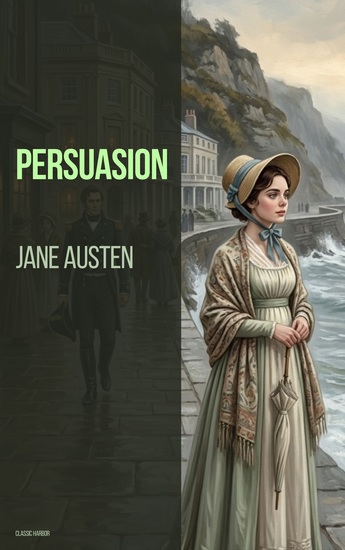
  • Persuasion - cover

    Persuasion

    Jane Austen

    • 0
    • 0
    • 0
    Some loves are never forgotten, and some choices shape the heart forever.
    Discover Persuasion, Jane Austen's final completed novel and one of the most elegant and emotionally powerful works of classic romance literature.
    First published in 1818, Persuasion tells the story of Anne Elliot, a thoughtful and gentle woman whose life is shaped by family expectations, past decisions, and a love that never truly disappeared. Years after a painful separation, an unexpected reunion brings questions of memory, loyalty, and second chances.
    With Austen's refined wit, graceful storytelling, and deep understanding of human emotions, this timeless novel explores themes of love, patience, personal growth, social pressure, and the courage to follow one's own heart.
    Unlike many traditional romances, Persuasion presents a mature reflection on relationships and the passage of time. Through unforgettable characters and beautifully crafted dialogue, Jane Austen creates a moving story about hope, forgiveness, and the possibility of finding happiness again.
    Celebrated as one of Austen's most beloved masterpieces, Persuasion continues to captivate readers worldwide and remains a treasured work of English literature.
    Experience Jane Austen's heartfelt tale of enduring love and rediscover a classic story of romance, resilience, and emotional transformation.
    Add Persuasion to your collection today and enjoy one of the greatest romance novels ever written.
    Show book

  • Paradise Lost - cover

    Paradise Lost

    John Milton

    • 0
    • 0
    • 0
    Paradise Lost is an epic poem in blank verse by the 17th-century English poet John Milton (1608–1674). The first version, published in 1667, consists of ten books with over ten thousand lines of verse. A second edition followed in 1674, arranged into twelve books (in the manner of Virgil's Aeneid) with minor revisions throughout. It is considered by critics to be Milton's major work, and it helped solidify his reputation as one of the greatest English poets of his time.
    The poem concerns the biblical story of the Fall of Man: the temptation of Adam and Eve by the fallen angel Satan and their expulsion from the Garden of Eden. Milton's purpose, stated in Book I, is to "justify the ways of God to men."
    Show book
  • The Spike - From their pens to your ears genius in every story - cover

    The Spike - From their pens to...

    George Orwell

    • 0
    • 0
    • 0
    Eric Arthur Blair was born on 25th June 1903 in Motihari, Bihar, in what was then British India. When Eric was one his mother took him to England and they settled at Henley-on-Thames in Oxfordshire.  
    His education was at the nearby convent school before moving on to St Cyprian's School at Eastbourne and finally Eton where his academic studies were sidelined in favour of work on college publications. 
    University could not be achieved without a scholarship, which depended on good grades, and so it was decided that Eric should join the Imperial Police. Now 19 he chose a posting in Burma, then a province of British India. He was appointed an Assistant District Superintendent in November 1922. In Burma, he was an outsider. However, he acquired a moustache and some local tattoos—small badly drawn blue circles on his knuckles. 
    In 1927 he contracted dengue fever and returned to England to convalesce. At home he reappraised his life and resigned his job to become a writer. His police experiences were later used for ‘Burmese Days’.  
    By 1932 he had a literary agent who secured him an offer to publish a non-fiction work ‘Down and Out in London and Paris’ for a £40 advance, through the radical and socialist Victor Gollancz publishing house.  It was published in January 1933 as ‘by George Orwell’, it was modestly successful. 
    ‘Burmese Days’ (1934) and ‘A Clergyman's Daughter’ (1935) were published whilst Orwell kept on with writing ‘Keep the Aspidistra Flying’.  In January 1936, he set out by public transport to research life for the ordinary man and woman in Wigan. From these experiences emerged ‘The Road to Wigan Pier’. He also caught the eye of Special Branch who kept him under surveillance until the year before the release of ‘Nineteen Eighty-Four’. 
    Later in December 1936 Orwell set out to fight in the Spanish Civil War. Initially stationed at Alcubierre 1,500 feet above sea level, in the depth of winter on the Aragon Front. Military action was scant as was the lack of munitions, food and firewood. In April, Orwell returned to Barcelona and was caught up in the Barcelona May Days and its factional in-fighting. Returning to the Aragon Front he was almost immediately hit by a sniper's bullet through the throat. The bullet barely missed the artery but he survived.  His experiences were expressed in ‘Homage to Catalonia’ (1938) but, out of fashion with its times, it was a commercial failure.  
    When World War Two started Orwell was declared ‘unfit for any kind of military service’ but finally obtained ‘war work’ with the BBC's Eastern Service.  In September 1943, after two years Orwell left the BBC to concentrate on a new idea: ‘Animal Farm’.  
    By April 1944 ‘Animal Farm’ was ready for publication. It was a huge and resounding success.   
    Orwell left London for the island of Jura in April 1947 to work on ‘Nineteen Eighty-Four’. Once more health became an issue and in December a chest specialist was summoned from Glasgow who diagnosed tuberculosis.  By the end of July Orwell was able to return to Jura to finish ‘Nineteen Eighty-Four’. It was published the following June to immediate critical and popular acclaim. 
    By Christmas Orwell's health had again begun to decline. Early on the morning of 21st January, an artery burst in Orwell's lungs. It was fatal. He was dead at 46.
    Show book