Join us on a literary world trip!
Add this book to bookshelf
Grey
Write a new comment Default profile 50px
Grey
Subscribe to read the full book or read the first pages for free!
All characters reduced
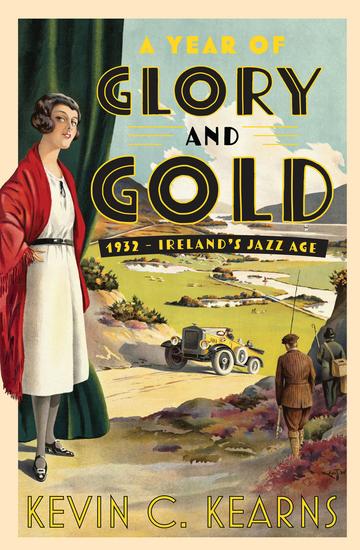
A Year of Glory and Gold - 1932 - Ireland's Jazz Age - cover

A Year of Glory and Gold - 1932 - Ireland's Jazz Age

Kevin C. Kearns

Publisher: Gill Books

  • 0
  • 0
  • 0

Summary

The 1930s in Ireland is often thought of as a bleak period of economic stagnation and unemployment. But 1932, hailed by the Irish Press as a 'new era', was an early glimmer of the modernity and success Ireland would later reach: a sequence of events and achievements that included technological advances in travel, agriculture, home appliances and entertainment; Olympic gold medals and the meteoric rise of boxing phenomenon Jack Doyle; a spectacular Eucharistic Congress; sweepstakes and a so called gold rush; as well as the election of Éamon de Valera and transformations in politics and culture.
The soundtrack scoring all this change was the jazz craze, which landed in Ireland in the early 1930s and flourished throughout the country, loosening the conservative social and moral order of the time. Jazz brought new forms of dress, lifestyle and behaviour, exciting and exhilarating a younger generation for the future, while leaving an older generation wary of such rapid change.
A Year of Glory and Gold is an energetic and exuberant biography of a bright year in Ireland's history, combining deep archival research with spirited storytelling by one of Ireland's best-loved social historians.
Available since: 08/17/2023.
Print length: 368 pages.


Other books that might interest you

  • The Art of War - cover

    The Art of War

    Sun Tzu

    • 0
    • 0
    • 0
    The Art of War (Chinese: 孫子兵法; lit. 'Sun Tzu's Military Method') is an ancient Chinese military treatise dating from the Late Spring and Autumn Period (roughly 5th century BC). The work, which is attributed to the ancient Chinese military strategist Sun Tzu ("Master Sun"), is composed of 13 chapters. Each one is devoted to a different set of skills (or "art") related to warfare and how it applies to military strategy and tactics. For almost 1,500 years it was the lead text in an anthology that was formalized as the Seven Military Classics by Emperor Shenzong of Song in 1080. The Art of War remains the most influential strategy text in East Asian warfare and has influenced both Far Eastern and Western military thinking, business tactics, legal strategy, lifestyles and beyond.
    The book contains a detailed explanation and analysis of the 5th-century BC Chinese military, from weapons and strategy to rank and discipline. Sun also stressed the importance of intelligence operatives and espionage to the war effort. Considered one of history's finest military tacticians and analysts, his teachings and strategies formed the basis of advanced military training for millennia to come.
    The book was translated into French and published in 1772 (re-published in 1782) by the French Jesuit Jean Joseph Marie Amiot. A partial translation into English was attempted by British officer Everard Ferguson Calthrop in 1905 under the title The Book of War. The first annotated English translation was completed and published by Lionel Giles in 1910. Military and political leaders such as the Chinese communist revolutionary Mao Zedong, Japanese daimyō Takeda Shingen, Vietnamese general Võ Nguyên Giáp, and American military general Norman Schwarzkopf Jr. are all cited as having drawn inspiration from the book.
    Show book
  • Walk and Talk Therapy - A Clinician’s Guide to Incorporating Movement and Nature into Your Practice - cover

    Walk and Talk Therapy - A...

    LCSW-C Jennifer Udler

    • 0
    • 0
    • 0
    Feeling restricted by her office-bound clinical practice, licensed clinical social worker Jen Udler decided to take therapy outdoors. Walking on local nature trails with her clients proved to be the breakthrough Jen was looking for. The calming presence of nature provided a varied backdrop, offering natural metaphors for each client's experience, while the rhythmic movement cultivated deeper connections between mind and body. 


    In Walk and Talk Therapy: A Clinician's Guide to Incorporating Movement and Nature into Your Practice, Jen presents the many benefits of an outdoor psychotherapy practice and provides tools for clinicians to develop their own version, no matter where or with whom they practice. 


    Inside, you'll find answers for your questions about how to take your therapy practice outside, including: 


    ● Advice on foundational concerns such as ethics and safety 


    ● Tips to preserve confidentiality in a public setting 


    ● Practical considerations like timing, note taking, and the inherent unpredictability of the great outdoors 


    Learn how you can harness the unique beauty of each passing season to help your clients discover a healing sense of direction and meaning.
    Show book
  • Pre-Socratic Thinkers - The Birth of Philosophical Thought and Early Naturalism (5 in 1) - cover

    Pre-Socratic Thinkers - The...

    Hector Davidson

    • 0
    • 0
    • 0
    This book contains the following five titles: 
    - Anaxagoras  
    - Anaximander  
    - Heraclitus  
    - Pythagoras  
    - Thales  
    Take advantage of this discounted bundle now!
    Show book
  • How to Recognize Toxic Social Circles - cover

    How to Recognize Toxic Social...

    Olivia Werner

    • 0
    • 0
    • 0
    [How to Recognize Toxic Social Circles] delves into the subtle architecture of harmful relationships with devastating precision and intimate understanding. Through meticulously crafted metaphors - from the economy of emotional labor to the theater of performance - this groundbreaking work illuminates the invisible structures that shape our social dynamics. Like a skilled cartographer mapping uncharted territory, the book guides readers through the complex landscape of human connection, revealing how toxicity disguises itself in familiar comforts and traditional patterns. With prose that cuts through denial like morning light through fog, it transforms abstract concepts of manipulation and control into tangible patterns readers will recognize in their own lives, offering not just recognition but the first steps toward liberation. This isn't merely a book about toxic relationships; it's a mirror reflecting the intricate choreography of power we've been dancing to without realizing it.
    Show book
  • Matisse at War - cover

    Matisse at War

    Christopher C. Gorham

    • 0
    • 0
    • 0
    In 1940, with the Nazis sweeping through France, Henri Matisse found himself at a personal and artistic crossroads. His marriage had ended, he was gravely ill, and after decades at the forefront of modern art, he was beset by doubt. As scores of famous figures escaped the country, Matisse took refuge in Nice, with his companion, Lydia. By defiantly remaining, Matisse was a source of inspiration for his nation. 


    While enemy agents and Resistance fighters played cat-and-mouse in the alleyways of Nice, Matisse's son, Jean, engaged in sabotage efforts with the Allies. In Paris, under the swastika, Matisse's estranged wife worked for the Communist underground. His daughter, Marguerite, active in the French Resistance, was arrested and tortured by the Gestapo, sentenced to Ravensbruck concentration camp—and miraculously escaped when her train was halted by Allied bombs. His younger son, Pierre helped Jewish artists escape to New York; even his grandson risked his life by defying the Germans and their Vichy collaborators. Amidst this chaos, Matisse responded to the dark days of war by inventing a dazzling new paper technique that led to some of his most iconic pieces, including The Fall of Icarus, his profile of Charles De Gaulle, Monsieur Loyal, and his groundbreaking cut-out book, Jazz. His wartime works were acts of resistance, subtly patriotic, and daringly new.
    Show book
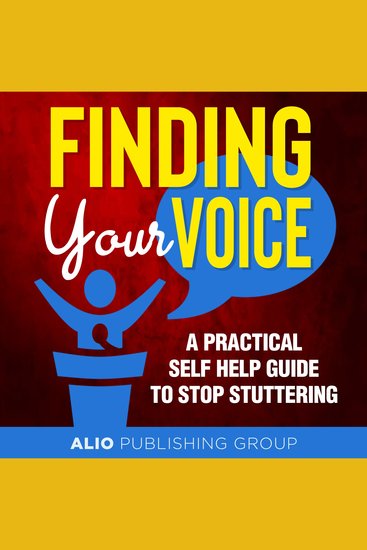
  • Finding Your Voice - A Practical Self Help Guide to Stop Stuttering - cover

    Finding Your Voice - A Practical...

    ALIO Publishing Group, Dominick...

    • 0
    • 0
    • 0
    Based on a work originally written by practicing psychoanalyst Dominick A. Barbara (M.D., F.A.P.A.), and revised by ALIO Publishing. This book is presented from the viewpoint of a stutterer and successful therapist (note: the author himself stuttered until the age of 30). It begins with a brief discussion on the facts behind stuttering, the problems faced by stutterers, and the "Demosthenes complex". Finally, outlined are steps toward achieving a cure for stuttering. Techniques offered include tools for motivating oneself, developing a positive attitude, overcoming fear, and controlling the situation. This information may prove beneficial for speech clinicians, as well as clients, however the material is easily accessible to individuals of all ages and backgrounds, with or without additional resources or treatment. We all have a voice that deserves to be heard; if you're not satisfied with your public speaking skills, or struggle to articulate your words correctly, then order this audiobook today!
    Show book