Join us on a literary world trip!
Add this book to bookshelf
Grey
Write a new comment Default profile 50px
Grey
Subscribe to read the full book or read the first pages for free!
All characters reduced
The Tyranny of Human Rights - From Jacobinism to the United Nations - cover

The Tyranny of Human Rights - From Jacobinism to the United Nations

Kerry R. Bolton

Publisher: Antelope Hill Publishing LLC

  • 0
  • 0
  • 0

Summary

In The Tyranny of Human Rights: From Jacobinism to the United Nations Bolton examines the manner by which "Enlightenment" doctrines shaped liberalism and the bloody progenies of Jacobinism and Bolshevism. Bolton demonstrates that the inevitable consequences of these doctrines being predicated on the fallacy of universal equality is the need for increasingly draconian laws, pervasive indoctrination, and, where these are insufficient, "color revolution" and war. Like the Jacobin doctrine of "liberty, equality, fraternity," these measures, undertaken in the name of "human rights," "equality," and "social justice," are largely directed toward the destruction of European peoples. The ultimate aim behind the humanitarian facade is a world state where people, resources, technology, and capital can be moved about without any hindrance from nation states, races, cultures, and even families. 

Extensively sourced, with forewords by Dr. Tomislav Sunić and Prof. Edward Dutton, Antelope Hill Publishing is proud to present The Tyranny of Human Rights: From Jacobinism to the United Nations by renowned author Kerry R. Bolton. This latest contribution by Bolton is a vital tool in understanding the nefarious machine of international human rights.
Available since: 03/25/2022.

Other books that might interest you

  • The Pilgrims - History and Background of the Early English Settlers on the American Continent - cover

    The Pilgrims - History and...

    Kelly Mass

    • 0
    • 0
    • 0
    The Pilgrims, also known as the Pilgrim Fathers, were a group of English settlers who made the historic journey across the Atlantic on the Mayflower and founded the Plymouth Colony in what is now Plymouth, Massachusetts. The colony was named after the port of Plymouth in England, which had been the final departure point for their voyage. The Pilgrims were part of a religious movement rooted in the Puritan faith, but with distinct beliefs that set them apart from other Puritans at the time. 
    The Pilgrims were part of a religious group called the Brownists, or Separatists, who believed that the Church of England was beyond reform. They shared many of the same Calvinist and Puritan religious convictions as the broader Puritan community, particularly in their emphasis on personal piety, Bible study, and the rejection of Catholic practices. However, unlike other Puritans, the Pilgrims felt that the Church of England was corrupt and that their congregations should be completely separate from it. This belief led them to seek religious freedom in places where they could practice their faith without interference from the English state church, which they saw as a violation of their spiritual beliefs. 
    Initially, the Pilgrims found refuge in Holland, where they lived for several years in the city of Leiden. The Netherlands offered a more tolerant environment for religious dissenters, allowing them to practice their faith freely. However, the Pilgrims faced challenges in Holland, including economic difficulties and concerns about the erosion of their cultural identity. They eventually decided to seek a new home in the New World, where they could establish a society that would align with their religious principles.
    Show book
  • Tarascan Empire - The Fierce Rivals of the Aztecs and Masters of West Mexico - cover

    Tarascan Empire - The Fierce...

    Rolf Hedger

    • 0
    • 0
    • 0
    The Tarascan Empire flourished in the rugged and resource-rich region of western Mexico, primarily in what is now the state of Michoacán. Unlike the arid landscapes of central Mexico dominated by the Aztecs, the Tarascan homeland was defined by volcanic highlands, fertile valleys, and vast lakes, particularly Lake Pátzcuaro, which played a central role in their civilization. The geography of this region not only shaped their way of life but also provided a natural defense against external threats, including the expansionist ambitions of the Aztecs. 
    The varied landscape of Michoacán consisted of towering mountains, deep forests, and fertile plateaus. This diverse terrain allowed the Tarascans to develop a robust agricultural system, cultivating maize, beans, squash, and chili peppers, which formed the foundation of their diet. The presence of rivers and lakes further supported fishing and provided fresh water, making settlements around these water bodies highly strategic. Lake Pátzcuaro, in particular, was not only an economic and social hub but also held deep religious significance. It was believed to be the gateway to the underworld in Tarascan mythology, reinforcing its central role in spiritual life. 
    Natural resources played a crucial role in the rise of the Tarascan Empire. The region was rich in minerals, especially copper and obsidian, which were vital for both tools and weaponry. Unlike the Aztecs, whose military strength relied on wooden clubs and stone blades, the Tarascans developed advanced metalworking techniques, producing copper axes, bronze weapons, and intricate ornaments. This technological advantage gave them a distinct edge in warfare and trade, allowing them to maintain independence from their more dominant neighbors.
    Show book
  • What Do Women Want? - Adventures in the Science of Female Desire - cover

    What Do Women Want? - Adventures...

    Anonymous

    • 0
    • 0
    • 0
    When it comes to sex, common wisdom holds that men roam while women crave closeness and commitment. But in this provocative, headline-making book, Daniel Bergner turns everything we thought we knew about women's arousal and desire inside out. Drawing on extensive research and interviews with renowned behavioral scientists, sexologists, psychologists, and everyday women, he forces us to reconsider long-held notions about female sexuality. 
    This bold and captivating journey into the world of female desire explores answers to such thought-provoking questions as: Are women perhaps the less monogamous sex? What effect do intimacy and emotional connection really have on lust? What is the role of narcissism—the desire to be desired—in female sexuality? Are political gains for women ("No means no") detrimental in the bedroom? And is the hunt for a "female Viagra" anything but a search for the cure for monogamy? 
    Bergner goes behind the scenes of some of the most groundbreaking experiments on sexuality today and confronts us with controversial, sometimes uncomfortable findings. Incendiary, profoundly insightful, and brilliantly illuminating, What Do Women Want? will change the conversation about women and sex, and is sure to spark dynamic discussion for years to come.
    Show book
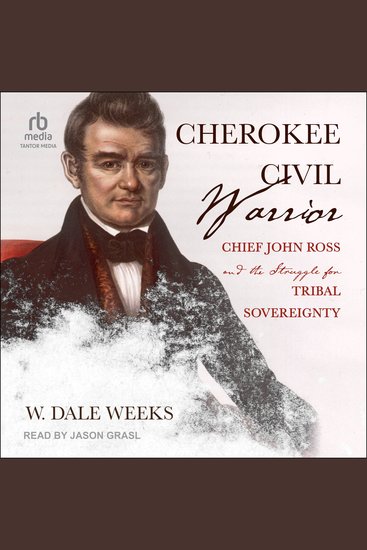
  • Cherokee Civil Warrior - Chief John Ross and the Struggle for Tribal Sovereignty - cover

    Cherokee Civil Warrior - Chief...

    W. Dale Weeks

    • 0
    • 0
    • 0
    John Ross served the Cherokee Nation in a public capacity for nearly fifty years, thirty-eight as its constitutionally elected principal chief. Historian W. Dale Weeks describes Ross's efforts to protect the tribe's interests amid systematic attacks on indigenous culture throughout the nineteenth century. At the outset of the Civil War, Ross called for all Cherokees to remain neutral in a war they did not support—a position that became untenable when the US withdrew its forces from Indian Territory. The vacated forts were quickly occupied by Confederate troops, who pressured the Cherokees to align with the South. 


    Viewed from the Cherokee perspective, these events can be seen in their proper context, as part of the history of US "Indian policy," failed foreign relations, and the Anglo-American conquest of the American West. This approach also clarifies President Lincoln's acknowledgment of the federal government's abrogation of its treaty obligation and his commitment to restoring political relations with the Cherokees—a commitment abruptly ended when Andrew Johnson sought to punish the Cherokees for their perceived disloyalty. 


    Centering a Native point of view, this book recasts and expands what we know about John Ross, the Cherokee Nation, its commitment to maintaining its sovereignty, and the Civil War era in Indian Territory.
    Show book
  • The Communist Manifesto - cover

    The Communist Manifesto

    Karl Marx, Friedrich Engels

    • 0
    • 0
    • 0
    "Workers of the world, unite! You have nothing to lose but your chains!"
    
    A Call to Revolution
    
    First published in 1848, Karl Marx and Friedrich Engels' Communist Manifesto is considered a foundational work of political theory.
    
    This political work remains pertinent today since it questions capitalism and urges the working class to overthrow the capitalist system and impose communism, a society without classes.
    
    This manifesto—with echoes of Russian history—remains essential to comprehending the forces influencing the world we live in today.
    
    "The history of all hitherto existing society is the history of class struggles"
    This manifesto, deeply rooted in Marxism and relevant to the Russian Revolution and the Cold War, is an essential read for those interested in politics and history books alike.
    
    This communist manifesto book is a faithful reprint, preserving its original power and relevance. It's an essential piece of history that resonates in today's world, making it a perfect addition to any collection of political books or a thoughtful gift for anyone passionate about communism and Russian history.
    
    Order now to own a classic that still moves a global ideology today.
    
    Title Details
    
    - Original 1848 Text
    - Historical Context
    - Political Philosophy
    Show book
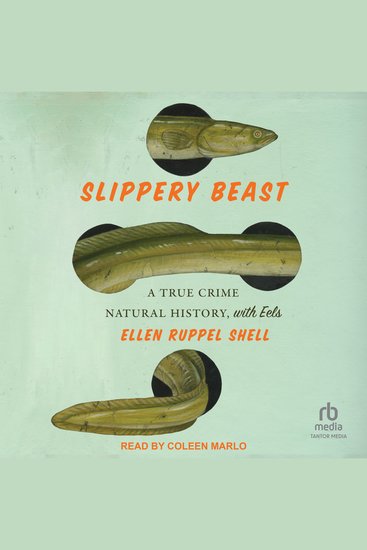
  • Slippery Beast - A True Crime Natural History with Eels - cover

    Slippery Beast - A True Crime...

    Ellen Ruppel Shell

    • 0
    • 0
    • 0
    What is it about eels? Depending on who you ask, they are a pest, a fascination, a threat, a pot of gold. Eels emerged some 200 million years ago, weathered mass extinctions and continental shifts, and were once among the world's most abundant freshwater fish. But since the 1970s, their numbers have plummeted. Because eels—as unagi—are another thing: delicious. 


    In Slippery Beast, journalist Ellen Ruppel Shell travels in the world of "eel people," pursuing a fascination with this mysterious creature. Despite centuries of study by thinkers from Aristotle to Leeuwenhoek to Sigmund Freud, much about eels remains unknown. Eels cannot be bred reliably in captivity and infant eels are unbelievably valuable. A pound of the tiny, translucent, bug-eyed "elvers" caught in the fresh waters of Maine can command $3,000 or more on the black market. Illegal trade in eels is an international scandal measured in billions of dollars every year. In Maine, federal investigators have risked their lives to bust poaching rings. 


    Ruppel Shell follows the elusive eel from Maine to the Sargasso Sea, stalking riversides, fishing holes, laboratories, restaurants, courtrooms, and America's first commercial eel "family farm." This is an enthralling, globe-spanning look at an animal that you may never come to love, but which will never fail to astonish you.
    Show book