Join us on a literary world trip!
Add this book to bookshelf
Grey
Write a new comment Default profile 50px
Grey
Subscribe to read the full book or read the first pages for free!
All characters reduced
The Book of the Dead - History of the Ancient Egyptian Mortuary Texts Collection - cover

The Book of the Dead - History of the Ancient Egyptian Mortuary Texts Collection

Kelly Mass

Publisher: Efalon Acies

  • 0
  • 0
  • 0

Summary

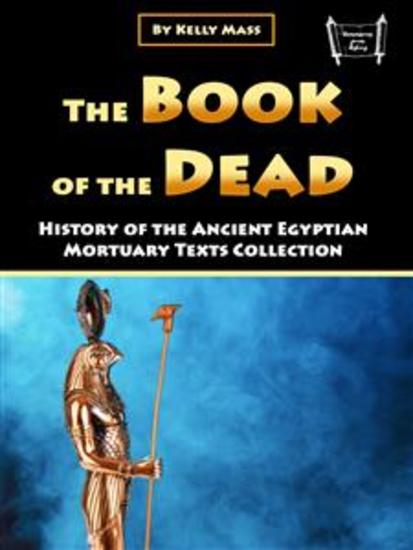
The ancient Egyptian mortuary text known as the Book of the Dead had its heyday from the onset of the New Kingdom (around 1550 BCE) until approximately 50 BCE. Crafted on papyrus, this collection of magical spells, coined as the "Book," aimed to guide the departed through the Duat, or underworld, into the realm beyond. It represented an amalgamation of texts contributed by various priests over nearly 1,000 years.

Stored within the deceased's coffin or burial chamber, the Book of the Dead marked a continuation of funerary literature, succeeding the Pyramid Texts and Coffin Texts, which were inscribed on items rather than papyrus. Some spells within the book dated back to the third millennium BCE, while others emerged during the Third Intermediate Period (11th to 7th centuries BCE). These spells, once inscribed on tomb walls and sarcophagi, eventually found their place in the Book of the Dead.
Available since: 12/12/2023.

Other books that might interest you

  • The Land Is Sung - Zulu Performances and the Politics of Place - cover

    The Land Is Sung - Zulu...

    Thomas M. Pooley

    • 0
    • 0
    • 0
    What does it mean to belong? In The Land is Sung, musicologist Thomas M. Pooley shows how performances of song, dance, and praise poetry connect Zulu communities to their ancestral homes and genealogies. For those without land tenure in the province of KwaZulu-Nata, performances articulate a sense of place. Migrants express their allegiances through performance and spiritual relationships to land are embodied in rituals that invoke ancestral connection while advancing well-being through intergenerational communication. Engaging with justice and environmental ethics, education and indigenous knowledge systems, musical and linguistic analysis, and the ethics of recording practice, Pooley's analysis draws on genres of music and dance recorded in the midlands and borderlands of South Africa, and in Johannesburg's inner city. His detailed sound writing captures the visceral experiences of performances in everyday life. The book is richly illustrated and there is a companion website featuring both video and audio examples.
    Show book
  • Black Flora - Inspiring Profiles of Floriculture's New Vanguard - cover

    Black Flora - Inspiring Profiles...

    Teresa J. Speight

    • 0
    • 0
    • 0
    Discover the growing community of Black floriculture leading the new vanguard in flowers.Black Flora is the first book to feature profiles of contemporary Black experts innovating in the world of flowers. Author and longtime gardener, Teresa Speight, offers a beautiful intersection of flowers and community. This book is a homecoming, one that unearths the floral legacies of the past and present, while providing a source of inspiration for younger generations of plant-lovers seeking examples of successful Black floral artists and entrepreneurs. Black Flora showcases a range of floral expertise and as visionary horticulturalist and garden historian, Abra Lee, reflects in her foreword, the community represented in Black Flora has an important significance both today, and in garden history.  Both a celebration of now and a vision for the future, Black Flora honors floriculture’s creative vanguard.
    Show book
  • Practice of Coaching - Mastering the Art of Empowering Others to Fulfill Their Potential - cover

    Practice of Coaching - Mastering...

    Bradley Stansbury

    • 0
    • 0
    • 0
    Practice of Coaching: Mastering the Art of Empowering Others to Fulfill Their PotentialEmbark on a remarkable exploration into the realm of empowerment and personal growth with "Practice of Coaching: Mastering the Art of Empowering Others to Fulfill Their Potential." This audiobook is your gateway to unlocking the profound impact that coaching can have on individuals seeking to reach new heights.Navigate the intricate landscape of coaching as you uncover the strategies and techniques that empower others to tap into their innate potential. Through expert guidance and real-life examples, you'll learn to ignite the sparks of transformation, fostering a sense of purpose and accomplishment in those you guide.From honing active listening skills to crafting effective coaching frameworks, each chapter offers a key to unlocking human potential. Whether you're a seasoned coach or an aspiring one, this audiobook equips you with the tools to create a supportive and inspiring environment where growth and fulfillment flourish."Practice of Coaching" is your compass in the realm of empowerment, leading you toward a fulfilling journey of guiding others to fulfill their aspirations. Embrace the art of empowerment, master the techniques of transformative coaching, and watch as your guidance paves the way for individuals to unleash their fullest potential. With each chapter, you'll not only shape the lives of others but also leave an indelible mark on their journey toward meaningful achievement.
    Show book
  • Mississippian Culture - Forgotten Cities of North America - cover

    Mississippian Culture -...

    Rolf Hedger

    • 0
    • 0
    • 0
    The Mississippian culture, a sophisticated and influential civilization, thrived in the southeastern United States from approximately 800 CE to 1600 CE. This culture, named after the Mississippi River, was centered around the river valleys and floodplains of the American Midwest, particularly in areas that are now parts of modern-day Illinois, Missouri, Arkansas, and Mississippi. It is best known for its massive earthworks, especially mounds, which were used for both ceremonial and burial purposes. The Mississippian people developed a complex society that was marked by large-scale agriculture, intricate trade networks, and powerful political and religious institutions. 
    The origins of the Mississippian culture can be traced back to the earlier Woodland period, during which smaller villages and simple mound-building practices began to emerge. By around 800 CE, however, the Mississippian culture had fully developed, distinguished by its highly organized cities, monumental architecture, and wide-reaching trade connections. The Mississippians were expert farmers, cultivating staple crops such as maize, beans, and squash, which allowed their settlements to flourish and grow in both size and complexity. 
    One of the most notable features of the Mississippian culture was its social and political structure. The culture was organized around large chiefdoms, with powerful leaders who held both political and religious authority. These chiefs often resided in large, fortified towns that served as hubs of trade, governance, and religious activity. The largest and most famous of these urban centers was Cahokia, located near present-day St. Louis, Missouri. At its height, Cahokia had a population of over 10,000 people, making it one of the largest urban centers in pre-Columbian North America.
    Show book
  • Brooding Over Bloody Revenge - Enslaved Women's Lethal Resistance - cover

    Brooding Over Bloody Revenge -...

    Nikki M. Taylor

    • 0
    • 0
    • 0
    From the colonial through the antebellum era, enslaved women in the US used lethal force as the ultimate form of resistance. By amplifying their voices and experiences, Brooding over Bloody Revenge strongly challenges assumptions that enslaved women only participated in covert, non-violent forms of resistance, when in fact they consistently seized justice for themselves and organized toward revolt. Nikki M. Taylor expertly reveals how women killed for deeply personal instances of injustice committed by their owners. The stories presented, which span centuries and legal contexts, demonstrate that these acts of lethal force were carefully pre-meditated. Enslaved women planned how and when their enslavers would die, what weapons and accomplices were necessary, and how to evade capture in the aftermath. Original and compelling, Brooding Over Bloody Revenge presents a window into the lives and philosophies of enslaved women who had their own ideas about justice and how to achieve it.
    Show book
  • Hillbilly Nationalists Urban Race Rebels and Black Power - Interracial Solidarity in 1960s-70s New Left Organizing - cover

    Hillbilly Nationalists Urban...

    James Tracy, Amy Sonnie

    • 0
    • 0
    • 0
    Some of the most important and little-known activists of the 1960s were poor and working-class radicals. Inspired by the Civil Rights movement, the Black Panthers, and progressive populism, they started to organize significant political struggles against racism and inequality during the 1960s and into the 1970s. 


    Historians of the period have traditionally emphasized the work of white college activists who courageously took to the streets to protest the war in Vietnam and continuing racial inequality. Poor and working-class whites have often been painted as spectators, reactionaries, and, even, racists. But authors James Tracy and Amy Sonnie disprove that narrative. 


    Through over ten years of research, interviewing activists along with unprecedented access to their personal archives, Tracy and Sonnie tell a crucial, untold story of the New Left. Their deeply sourced narrative history shows how poor and working-class individuals from diverse ethnic, rural and urban backgrounds cooperated and drew strength from one another. The groups they founded redefined community organizing, and transformed the lives and communities they touched.
    Show book