Join us on a literary world trip!
Add this book to bookshelf
Grey
Write a new comment Default profile 50px
Grey
Subscribe to read the full book or read the first pages for free!
All characters reduced
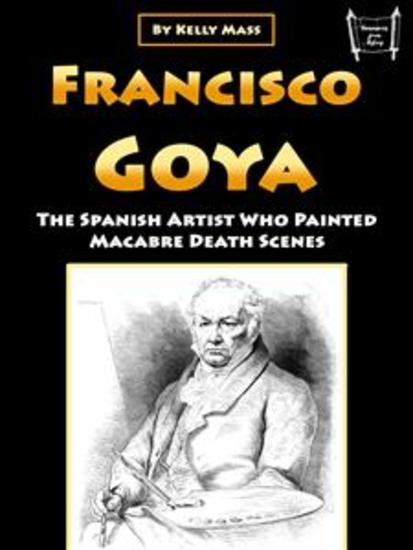
Francisco Goya - The Spanish Artist Who Painted Macabre Death Scenes - cover

Francisco Goya - The Spanish Artist Who Painted Macabre Death Scenes

Kelly Mass

Publisher: Efalon Acies

  • 0
  • 0
  • 0

Summary

Francisco José de Goya y Lucientes, a prominent figure in the realm of Spanish artistry, distinguished himself as a painter and printmaker. His legacy solidifies him as a pivotal force in the late eighteenth and early nineteenth-century Spanish art scene, earning him recognition as the foremost Spanish painter of his era.

Hailing from Fuendetodos, Aragon, Goya's artistic journey commenced under the tutelage of José Luzán y Martinez at the tender age of 14. His pursuit of mastery led him to the vibrant artistic hub of Madrid, where he further honed his skills under the guidance of Anton Raphael Mengs. In 1773, Goya entered into matrimony with Josefa Bayeu, a union marked by a tapestry of joys and sorrows, as the couple navigated the complexities of numerous pregnancies, with only one offspring, a resilient son, reaching adulthood.

The turning point in Goya's career materialized in 1786 when he ascended to the prestigious role of court painter to the Spanish Crown. This marked a phase where his artistic palette mirrored the opulence of the Spanish aristocracy and royalty. His canvas came alive with portraits that captured the essence of his subjects, while Rococo-style tapestry cartoons adorned the royal palace, a testament to his multifaceted artistic prowess.

Goya's oeuvre seamlessly blended the influences of both the 19th and 20th centuries, encapsulating the zeitgeist of contemporary historical tumult. Positioned as the bridge between the Old Masters and the dawn of modern artistry, Goya's work resonates with a timeless allure, echoing the complexities of the human experience against the backdrop of societal shifts.
Available since: 01/05/2024.

Other books that might interest you

  • BDSM Femdom MMFF Swingers Party Couple Sharing - Bisexual Foursome Menage Group Dominant Sex Mistress Dominating Male Sub - cover

    BDSM Femdom MMFF Swingers Party...

    Punish Mistress

    • 0
    • 0
    • 0
    Chrissie had always had strict control over her submissive boyfriend in every way, but now she wants to take it to another level. 
    She invites him to a lifestyle party and she's willing to share the fun with another couple, a couple with an even more dominant and kinky mistress. The question is, will this mistress want to dominate all three including Chrissie, and how far will she push Chrissie's boyfriend's limit along with her own very obedient sub-husband?  
    Find out now . . .
    Show book
  • Those About To Die - cover

    Those About To Die

    Daniel P. Mannix

    • 0
    • 0
    • 0
    Putting the games in the context of Rome's rise and dramatic fall, Mannix captures all the history, planning, and savage pageantry that went into creating the first spectator sports. 


    The games began in 238 BC as nearly county fair–like entertainment, with trick riding, acrobats, trained animals, chariot racing, and athletic events. The contests then evolved into slave fights thanks to wealthy patricians Marcus and Decimus Brutus, who wanted to give their father an unforgettable funeral by reviving an old tradition. What the brothers wrought, Rome devoured, demanding even greater violence to satisfy the bloodlust of the crowd. Architectural wonders in themselves, massive arenas like Circus Maximus and the Colosseum were built, able to host sea battle reenactments on actual water. Successful gladiators found fame, fortune—and freedom. 


    But as Rome begin to fall in the fifth century, so did the games, devolving into nothing more than pointless massacres. In the end, millions of humans and animals were sacrificed in barbaric displays. What were once ceremonies given in honor of gods met an inglorious fate, yet they still captivate the imagination of people today. 


    Contains mature themes.
    Show book
  • White Thinking - Behind the Mask of Racial Identity - cover

    White Thinking - Behind the Mask...

    Lilian Thuram

    • 0
    • 0
    • 0
    What does it mean to be white? Beyond just a skin colour, is it also a way of thinking? If so, how did it come about, and why? 
     
    In this book, drawing on history, personal experience and activist literature, the former footballer and World Champion Lilian Thuram looks at the origins and workings of white thinking, how it divides us and how it has become ubiquitous and accepted without challenge. He demonstrates how centuries of white bias and denial justified slavery and colonialism, and have reinforced norms and structures of oppression, limiting the roles and horizons of both non-whites and whites alike. 
    Crucially, while White Thinking is a critique of ingrained structural inequities, it calls for an inclusive approach to solving the problem, and aims to raise awareness and imagine a new world in which all of humanity is given equal weight. 
    “White Thinking patiently demonstrates… how European societies, through their creation of Black people, also invented White people.” LE MONDE 
    “Strikes another blow in his battle against racial stereotypes.” LA VIE 
    “This book is not interested in repentance or white guilt but in the ability to face up to historical reality and to the fact that others might have a very different understanding of that history.” REVUE DES DEUX MONDES 
    “He is almost unique amongst retired sportspeople, having left his old life behind him in the dressing room. Today, the activist has replaced the footballer.” LIBÉRATION
    Show book
  • The Ladder - cover

    The Ladder

    Cathy Newman

    • 0
    • 0
    • 0
    FROM THE BESTSELLING AUTHOR OF BLOODY BRILLIANT WOMEN 
    A Times Best Book of the Year 
    The Ladder brings together discussions between women – about work, love, growth, challenge, the big decisions and the stories of their lives. 
    Offering inspiration and wise counsel from some of the world’s most acclaimed and influential women, this book is an insight and a trove of solidarity, turning over ideas of change, anger, illness, imposter syndrome, self-knowledge, purpose, how to not panic in a crisis and how to stop worrying you’re boring when there isn’t one. 
    Amidst these pages are discussions with women who have achieved extraordinary things in their fields and pursuits, from politicians like Nicola Sturgeon and Angela Rayner to scientists like Dame Jocelyn Bell Burnell, activists like Rosamund Kissi-Debrah, film-makers like Waad Al-Kateab, religious leaders like Rose Hudson-Wilkin and broadcasters like Joan Bakewell. 
    In The Ladder, Cathy Newman presents a powerful exploration of feminism and social studies, offering a unique blend of autobiography and non-fiction. The book is a testament to the power of women in various fields, from science to arts and entertainment, and a beacon of self-help and personal growth. 
    For fans of Elizabeth Gilbert (Eat Pray Love), Florence Given (Women Don't Owe You Pretty), Mary Portas (Work Like a Woman), Kimothy Joy (Extraordinary Wing Women), and Lissa Evans (Picnic on Craggy Island). 
    HarperCollins 2024
    Show book
  • Seduction - Influencing Someone through Charm or Persuasion - cover

    Seduction - Influencing Someone...

    Cito Harder

    • 0
    • 0
    • 0
    Seduction is often perceived as an art form, one that blends charm, charisma, and influence. However, behind its allure lies a deep psychological foundation that shapes how and why individuals are drawn to one another. The psychology of seduction is rooted in our basic emotional and social needs, particularly the desire for connection, validation, and attraction. Understanding these underlying psychological mechanisms can shed light on how seduction functions both consciously and subconsciously in human interactions. 
    At its core, seduction taps into the psychological principle of attraction, which is influenced by a combination of innate and learned factors. Human beings are social creatures, and our brains are wired to respond to others in ways that promote bonding and intimacy. This attraction is not purely physical but can also be emotional, intellectual, and even social. For example, people often find others more attractive when they share similar interests, values, or experiences, which creates a sense of commonality and trust. This bond of similarity is a psychological catalyst in seduction, where individuals may use shared interests to create a sense of connection and mutual understanding. 
    Another psychological aspect of seduction lies in the concept of power dynamics. Seduction often involves a delicate balance of influence and control. The person who is seducing may use charm or persuasion to gain an upper hand, while the target of the seduction may either knowingly or unknowingly submit to the allure. Power, in this context, does not always have to be overt or manipulative. Sometimes, it can be subtle—through small gestures, compliments, or actions that invoke a sense of attraction or desire.
    Show book
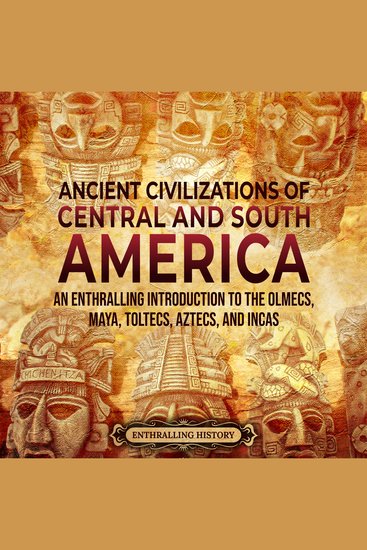
  • Ancient Civilizations of Central and South America: An Enthralling Introduction to the Olmecs Maya Toltecs Aztecs and Incas - cover

    Ancient Civilizations of Central...

    Enthralling History

    • 0
    • 0
    • 0
    If you want to discover the enthralling history of ancient civilizations of Central and South America, then keep reading… 
    Central and South America were full of great civilizations. This book discusses five of the most famous: the Olmecs, Toltecs, Aztecs, Incas, and Maya. These civilizations first showed up in Central and South America over one thousand years ago, and some descendants of these tribes are still living in these regions today!        
    Each of these civilizations added something to history. In this book, we will look at areas of ancient Mesoamerican and South American life, such as how commoners and kings lived, what their buildings looked like, and what caused the civilizations to come to an end. Each chapter will also include beautiful pictures to help show their artwork, writing, and beautiful architectural feats.              
    Of course, we know more about some civilizations than others. The Olmecs are almost a complete mystery, the Toltecs are a little less mysterious, the Maya left behind great written records, and the Spanish were able to talk to and write about both the Aztecs and Incas!  
    Some of the fascinating things you will learn in this book include the following:Did the Maya calendar actually predict the end of the world?How did the Olmecs make their giant head sculptures?How did the Toltecs influence other civilizations?Why are some ancient leaders also gods in some Mesoamerican religions?Who was Montezuma II?How did the Spanish conquistadors impact these civilizations?What led to their decline? 
     Scroll up and click the “add to cart” button to read this captivating introduction to pre-Columbian civilizations!
    Show book