Join us on a literary world trip!
Add this book to bookshelf
Grey
Write a new comment Default profile 50px
Grey
Subscribe to read the full book or read the first pages for free!
All characters reduced
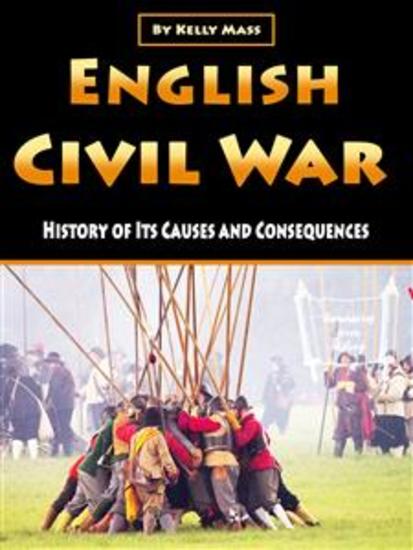
English Civil War - History of Its Causes and Consequences - cover

English Civil War - History of Its Causes and Consequences

Kelly Mass

Publisher: Efalon Acies

  • 0
  • 0
  • 0

Summary

The English Civil War (1642–1651) was a series of conflicts and political struggles between Parliamentarians ("Roundheads") and Royalists ("Cavaliers") in England, with wider ramifications across Scotland and Ireland. The primary issues at stake were England's governance and matters of religious freedom.[2] The war consisted of three phases, with the first (1642–1646) and second (1648–1649) wars fought between supporters of King Charles I and the Long Parliament, while the third (1649–1651) saw battles between supporters of King Charles II and the Rump Parliament. The Scottish Covenanters and Irish Confederates also played significant roles. Ultimately, the Parliamentarians emerged victorious after the Battle of Worcester on 3 September 1651.

The unique aspect of these civil wars was that they were not solely about determining who would rule, but also concerned the governance of the entire British Isles, including England, Scotland, and Ireland. The outcomes included the trial and execution of Charles I in 1649, the exile of his son Charles II in 1651, and the establishment of the Commonwealth of England under the personal rule of Oliver Cromwell from 1653 (as the Commonwealth of England, Scotland, and Ireland) and briefly his son Richard (1658–1659). The Church of England's monopoly on worship was ended in England, and the victors in Ireland consolidated the Protestant Ascendancy. Additionally, the wars set the precedent that an English monarch cannot govern without Parliament's consent, a concept further enshrined with Parliamentary sovereignty during the Glorious Revolution in 1688.
Available since: 01/16/2024.
Other books that might interest you

  • The Shakespeare Conundrum - Examining the True Identity of the Literary Genius - cover

    The Shakespeare Conundrum -...

    John Harpoon

    • 0
    • 0
    • 0
    The question of who wrote the works attributed to William Shakespeare has intrigued scholars, historians, and literary enthusiasts for centuries. Despite being one of the most celebrated figures in the world of literature, Shakespeare’s true identity remains a subject of mystery. The sheer volume of his works, their profound depth, and the complexity of their themes have led many to wonder whether the man from Stratford-upon-Avon was truly the author of the plays and sonnets that bear his name. This uncertainty has given rise to one of the most enduring and controversial debates in literary history: the Shakespeare authorship question. 
      
    The core of this mystery lies in the limited biographical information available about Shakespeare’s life. Born in 1564 in Stratford-upon-Avon, Shakespeare’s early years remain largely undocumented, with no personal manuscripts or letters bearing his signature. The surviving records of his life mainly consist of legal documents, such as his marriage license, business transactions, and his will. While these historical artifacts confirm his existence and some of his professional endeavors, they provide little insight into his intellectual and literary development. For a figure of his stature, this absence of personal evidence is startling, leading some to question whether the “Stratford man” could have truly written the works attributed to him. 
      
    In the absence of definitive evidence, a number of alternative theories have emerged, suggesting that another writer, or group of writers, may have been responsible for Shakespeare’s remarkable body of work. These theories have ranged from the claim that the works were penned by an aristocrat such as Francis Bacon, to the suggestion that the true author was the playwright Christopher Marlowe, whose death in 1593 has been disputed by some.
    Show book
  • Great Escapes during the World Wars: The History of the Most Legendary Prisoner Breakouts in World War I and World War II - cover

    Great Escapes during the World...

    Editors Charles River

    • 0
    • 0
    • 0
    War has always led to prisoners. In ancient times, many were turned into slaves by the victorious armies, while in medieval Europe, they were often returned to their families in return for a ransom, leading to fortune or poverty depending upon which side one was on. By the Napoleonic era, as armies grew in size and professionalism, many were kept in camps for the duration of the fighting, their captors not wanting to restore their enemies' manpower while the fate of nations hung in the balance. 
    Prisoners were taken across the world, and prisoners of war were typically comprised of two classes: officers and other ranks. Officers were often treated well, as there was still a sort of aristocratic courtesy among officers, particularly among the Germans, British, French, and somewhat less so for the Russians, Italians, and Turks. Concepts such as honor still held considerable currency, and bravery was greatly admired. Enemy officers as a class often had more in common with each other than with the millions of draftees in their armies, so enlisted men as POWs generally were not as well treated. 
    	Regardless of rank though, throughout the war, many of these men did not sit idle. Many spent their time preparing elaborate escape plans in the hopes of returning to their home nations and back to the fight.  
    The Second World War was full of escape stories, some bold, some tragic, and most filled with courage and ingenuity. The greatest number of successful escapes was made by Allied troops in Europe, including soldiers left behind after the fall of France and airmen shot down in bombing raids, but escapes happened across the world, from Canadian trains to German castles, and from the mountains of Italy to the wilds of Australia. Axis as well as Allied troops made their bids for freedom, keeping both sides on their toes. Everybody was looking to make the next great escape.
    Show book
  • Liar's Circus - A Strange and Terrifying Journey into the Upside-Down World of Trump’s MAGA Rallies - cover

    Liar's Circus - A Strange and...

    Anonymous

    • 0
    • 0
    • 0
    ""A brilliant, riveting, funny, terrifying journey into the beating heart of Trumpland."" —Liza Mundy, author of Code Girls 
    In this daring work of immersive journalism, based on hundreds of hours of reporting, Carl Hoffman journeys deep inside Donald Trump’s rallies, seeking to understand the strange and powerful tribe that forms the president’s base.  
    Hoffman, who has written about the most dangerous and remote corners of the world, pierced this alternate society, welcomed in and initiated into its rites and upside-down beliefs, and finally ushered to its inner sanctum. Equally freewheeling and profound, Liar’s Circus tracks the MAGA faithful across five thousand miles of the American heartland during a crucial arc of the Trump presidency stretching from the impeachment saga to the dawn of the coronavirus pandemic that ended the rallies as we know it. 
    Trump’s rallies are a singular and defining force in American history—a kind of Rosetta stone to understanding the Age of Trump. Yet while much remarked upon, they are, in fact, little examined, with the focus almost always on Trump’s latest outrageous statement. But who are the tens of thousands of people who fill these arenas? What do they see in Trump? And what curious alchemy—between president and adoring crowd—happens there that might explain Trump’s rise and powerful hold over both his base and the GOP? 
    To those on the left, the rallies are a Black Mass of American politics at which Trump plays high priest, recklessly summoning the darkest forces within the nation. To the MAGA faithful, the rallies are a form of pilgrimage, a joyous ceremony that like all rituals binds people together and makes them feel a part of something bigger than themselves. Both sides would acknowledge that this traveling roadshow is the pressurized, combustible core of Trump’s political power, a meeting of the faithful where Trump is unshackled and his rhetoric reaches its most extreme, with downstream consequences for the rest of the nation. 
    To date, no reporter has sought to understand the rallies as a sociological phenomenon examined from the bottom up. Hoffman has done just this. He has stood in line for more than 170 hours with Trump's most ardent superfans and joined them at the very front row; he has traveled from Minnesota to Texas, Louisiana, Mississippi, and New Hampshire immersing himself in their culture.   
    Liar’s Circus is a revelatory portrait of Trump’s America, from one of our most intrepid journalists. 
    Show book
  • Human History: 1000 Interesting Facts About Humans from Ancient Times to the Present - cover

    Human History: 1000 Interesting...

    Ahoy Publications

    • 0
    • 0
    • 0
    Dive into the fascinating history of the world with 1,000 interesting facts! 
    1000 Interesting Facts About Human History is an in-depth exploration of human history from 200,000 BCE to the present day. Discover how early humans migrated across landmasses, the inventions revolutionized society and helped propel humanity forward, the rise of powerful civilizations, and wars that changed our global landscape forever. 
    This guide also covers other major events, such as the American Civil Rights Movement and the decolonization of Africa and Asia. This audiobook is chock-full of interesting information that will help you cement your knowledge of world history. 
    Here’s a sneak peek at what you can expect to find within this audiobook:An overview of early human migrationsDetails on some of the first inventions and the creation of citiesA look into ancient cultures, such as Egypt and MesopotamiaA detailed timeline of major events that affected history, such as the rise of Christianity, the unification of Germany, and the Industrial RevolutionEvents that are not often talked about in public schools, such as the Arab SpringModern events, like the refugee crisis and the rise of social mediaAnd so much more! 
    Scroll up and click the “add to cart” button to learn about key moments in human history!
    Show book
  • Anxiety - A Very Short Introduction - cover

    Anxiety - A Very Short Introduction

    Jason Freeman, Daniel Freeman

    • 0
    • 0
    • 0
    Are we born with our fears or do we learn them? Why do our fears persist? What purpose does anxiety serve? How common are anxiety disorders, and which treatments are most effective? What's happening in our brain when we feel fear? And what are Colombian worry dolls? 


    This Very Short Introduction draws on the best scientific research to offer a highly accessible explanation of what anxiety is, why it is such a normal and vital part of our emotional life, and the key factors that cause it. Insights are drawn from psychology, neuroscience, genetics, epidemiology, and clinical trials. Providing a fascinating illustration of the discussion are two interviews conducted specifically for the book, with the actor, writer, director, and television presenter Michael Palin and former England football manager Graham Taylor. 


    The book covers in detail the six major anxiety disorders: phobias; panic disorder and agoraphobia; social anxiety; generalized anxiety disorder; obsessive compulsive disorder; and post-traumatic stress disorder. With a chapter devoted to each disorder, Daniel and Jason Freeman take you through the symptoms, prevalence, and causes of each one. A final chapter describes the treatments available for dealing with anxiety problems.
    Show book
  • The Amazing Grandpa Tata - cover

    The Amazing Grandpa Tata

    Dhan Reddy

    • 0
    • 0
    • 0
    Many children are lucky enough to go fishing. The luckiest ones get to go fishing with their grandpas! Dinesh is one of the luckiest ones. In author Dhan Reddy’s How Grandpa Tata Caught a Ginormous Fish without a Hook, Grandpa is never happy with the size of fish he is given to eat. No matter how large, it’s just not big enough. So one night, he and his grandson, Dinesh, go in search of a really big fish. Unlike most of us, they don’t take a fishing pole and bait. No, Grandpa takes a piglet! So how does one catch a really big fish with a piglet? How Grandpa Tata Caught a Ginormous Fish without a Hook, based on a story the author’s grandfather often told when she was a child, is a funny tale of going out and getting what you want—if you’re willing to go beyond what others do.
    Show book