Join us on a literary world trip!
Add this book to bookshelf
Grey
Write a new comment Default profile 50px
Grey
Subscribe to read the full book or read the first pages for free!
All characters reduced
Cleopatra - The Influential Egyptian Queen During Julius Caesar’s Reign - cover

Cleopatra - The Influential Egyptian Queen During Julius Caesar’s Reign

Kelly Mass

Publisher: Efalon Acies

  • 0
  • 0
  • 0

Summary

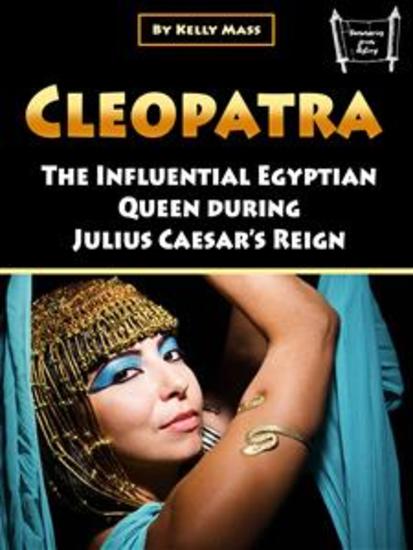
Cleopatra VII Philopator stands as the final reigning monarch of the Ptolemaic Kingdom of Egypt, holding sway from 51 to 30 BC. As a descendant of Ptolemy I Soter, a Macedonian Greek general, and comrade of Alexander the Great, who laid the foundation for the Ptolemaic dynasty, Cleopatra's lineage echoed the intricate tapestry of Hellenistic rule.

Following her demise, Egypt's destiny intertwined with the Roman Empire, spelling the end of the penultimate Hellenistic kingdom and the era that had endured since Alexander's reign (336–323 BC). Remarkably, Cleopatra distinguished herself as the sole Ptolemaic ruler to master the Egyptian language, even as her primary tongue remained Koine Greek.

Her historical journey began against the backdrop of familial and political strife. Cleopatra's entrance into the political arena unfolded when her father, Ptolemy XII Auletes, sought refuge in Rome in 58 BC. An uprising in Egypt allowed Berenice IV, Cleopatra's rival daughter, to ascend the throne during this tumultuous period. Ptolemy's return in 55 BC, backed by Roman military intervention, led to Berenice's demise. Upon Ptolemy's death in 51 BC, Cleopatra and her brother Ptolemy XIII embarked on a joint reign, marred by internal discord that escalated into open civil war.

The political landscape further convulsed with the arrival of Julius Caesar on the scene. After Caesar's victory over Pompey in 48 BC, Pompey sought refuge in Egypt, only to be ambushed and executed by Ptolemy XIII. The ensuing power struggle resulted in Cleopatra's encounter with Caesar, sparking a complex web of alliances and conflicts. The Battle of the Nile in 47 BC witnessed the demise of Ptolemy XIII, leaving Cleopatra in a precarious position. Amid these tumultuous events, Cleopatra's half-sister Arsinoe IV faced exile for her involvement in the siege.
Available since: 12/09/2023.
Other books that might interest you

  • World of Guinness - cover

    World of Guinness

    Rory Guinness

    • 0
    • 0
    • 0
    The perfect gift book for Guinness lovers, served here.
    How did a beer from Dublin become a globally renowned symbol of Ireland?
    In 1759, Arthur Guinness left behind his family's small brewery in County Kildare to seek his fortunes in Dublin. After acquiring the ill-equipped St James' Gate brewery, he soon began to produce the Guinness stout that has become world famous.
    Rory Guinness, a direct descendant of the brewery's founder, has written the insider's guide to the world of Guinness. He surveys the family history, the unique brewing process, the brewery's distinctive industrial architecture and the beer's legendary advertising, revealing how Guinness and its people became interwoven into the fabric of Dublin life and created a brewing legacy that stretches around the world.
    This is also the story of a remarkable resurgence, because Guinness is now the bestselling beer in the UK, while Guinness Zero is reaching new markets. It is the official beer of the English Premier League, and a long-term partner of rugby's men's and women's Six Nations Championship.
    World of Guinness is a revised, expanded and redesigned edition of Rory Guinness's classic short introduction, illustrated with archival images, new photography of the Guinness Storehouse in Dublin and a selection of Guinness's witty advertisements. It is published in hardback for the first time and makes a perfect gift.
    Show book
  • Nazca Civilization - The Enigmatic Lines and the Desert Kingdom of Peru - cover

    Nazca Civilization - The...

    Rolf Hedger

    • 0
    • 0
    • 0
    The Nazca civilization emerged along the southern coast of present-day Peru, a harsh and arid region that required ingenuity and adaptation for survival. Flourishing between approximately 100 BCE and 800 CE, the Nazca people built upon the cultural and technological advancements of their predecessors, most notably the Paracas culture. The transition from the Paracas to the Nazca was marked by shifts in artistic expression, religious practices, and innovations in agriculture that allowed the new civilization to thrive in the desert landscape. 
    One of the defining characteristics of the Nazca civilization was its ability to adapt to the unforgiving environment. The region’s climate was dry, with little rainfall, yet the Nazca found ways to harness the limited water supply to sustain their agricultural economy. They engineered underground aqueducts known as puquios, a sophisticated irrigation system that transported water from underground sources to the surface, ensuring a steady supply for crops. This ingenuity allowed them to cultivate maize, beans, squash, and cotton, which became essential to their diet and economy. 
    The Nazca culture was also shaped by its geography. The valleys of the Rio Grande de Nazca provided fertile land where the civilization’s settlements and ceremonial centers flourished. Unlike the grand urban centers of the Andean highlands, the Nazca people lived in smaller, dispersed communities that relied on a combination of agriculture and trade. These communities were connected by a shared cultural and religious framework that revolved around the worship of powerful deities linked to nature, fertility, and water.
    Show book
  • Wicked Strange - Your Guide to Ghosts Monsters Oddities and Urban Legends from New England - cover

    Wicked Strange - Your Guide to...

    Jeff Belanger

    • 0
    • 0
    • 0
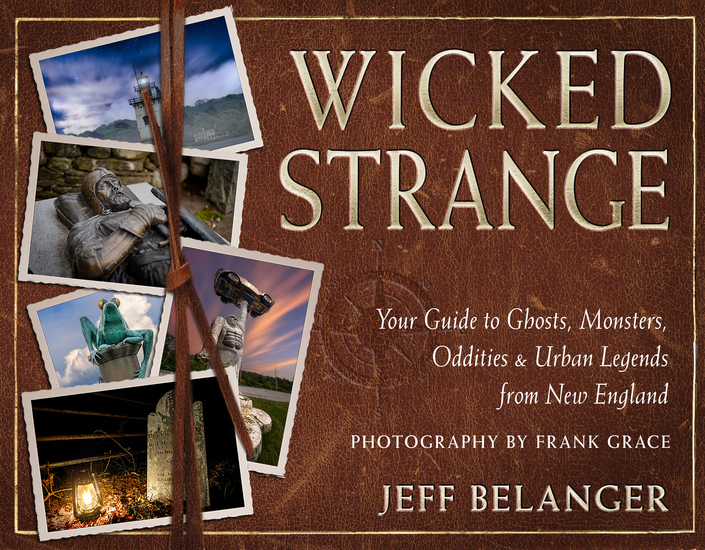
    Go legend hunting with explorer of the unexplained Jeff Belanger, visiting haunted places, where monsters lurk, and other roadside oddities. “Legends have always run deep in New England—thankfully, Jeff Belanger is here to uncover them and bring them to life. This collection of mysteries, secrets, and folklore from America’s birthplace is as illuminating as it is fascinating.” —Josh Gates, explorer, host of Discovery’s Expedition Unknown  Wicked Strange is a journey and a celebration of all the things that make New England like no other place on earth. In a time when so much of the world is becoming homogenized—as big-box stores and chain restaurants move in and so many communities lose their identity—we still have these legends. They belong to specific towns and streets. These are stories locals will share with you . . . if they trust you.   This travel guide takes readers on a journey to the strange and frequently unseen world that is often right under their noses. Covering numerous haunted places, environs where mysterious creatures have been spotted, areas where unusual events have happened, eccentric locals, and roadside oddities to explore, noted expert of the strange Jeff Belanger is your guide to all that’s local and strange. Haunted locations from all over New England are covered:  The Haunting of Conimicut Lighthouse—Warwick, Rhode Island  Maine’s Sistine Chapel—South Solon, Maine  Edith Wharton’s Haunted Mansion, The Mount—Lenox, Massachusetts  Emily’s Haunted Bridge—Stowe, Vermont  The Sleeping Giant—Hamden, Connecticut  The Haunted Mt. Washington Hotel—Bretton Woods, New Hampshire  New England is also full of monsters and devils that lurk in the woods, lakes, and seas. Explored are some of the best known and most obscure, including Lake Champlain’s Champ; the Cumberland Vampire of Rhode Island; Gloucester’s Sea Serpent; the Black Dog of West Peak in Meriden, Connecticut; and the Flying Moose of Maine.   Also covered are unusual events, such as UFO sightings (Connecticut’s UFO crash at Bantam Lake / Betty and Barney Hill’s UFO experience), and roadside oddities, such as the World’s Tallest Filing Cabinet (Burlington, VT), Boston’s Big Steaming Tea Kettle, and the literal Fork in the Road of Westport, MA. Wicked Strange takes you off the beaten path, revealing a hidden world right under your nose. Come journey through the towns, hamlets, and hills that hide the strangest of history. Uncover the wickedly strange.
    Show book
  • Aboriginal Australia - A Cultural and Historical Overview - cover

    Aboriginal Australia - A...

    Lillian Brooks

    • 0
    • 0
    • 0
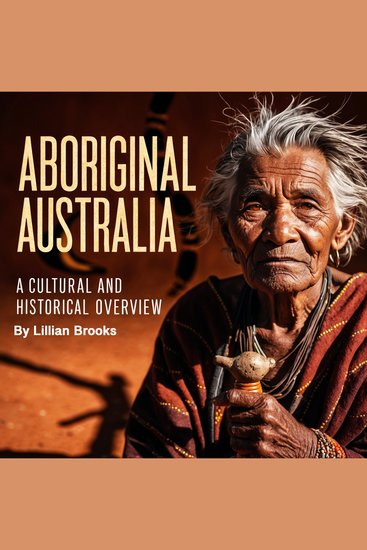
    Aboriginal Australia represents one of the world’s oldest continuous cultures, with a history that spans over 65,000 years. The Aboriginal peoples of Australia have a deep connection to the land, having lived across the continent for millennia, developing diverse societies, languages, and spiritual beliefs. This rich cultural heritage reflects an extraordinary resilience, as Aboriginal communities have adapted to a wide range of environments, from the arid deserts to lush rainforests. 
    The term "Aboriginal" refers to the diverse Indigenous groups that inhabit Australia, each with their own unique customs, languages, and traditions. There are over 250 distinct language groups, with their own dialects and systems of social organization. These communities have historically been hunter-gatherers, using sophisticated methods of land management, such as controlled fire-stick farming, to ensure the sustainability of their environment. The interconnectedness of land, culture, and spirituality is central to Aboriginal identity, where the landscape itself holds profound cultural significance. The concept of “Country” goes beyond mere geography—it is a living, breathing entity with deep spiritual meaning.
    Show book
  • Smelling the Breezes - A Journey through the High Lebanon in 1957 - cover

    Smelling the Breezes - A Journey...

    Ralph Izzard, Molly Izzard

    • 0
    • 0
    • 0
    Smelling the Breezes is an inspiring family adventure, a three-hundred-mile walk down the spine of the Lebanon with four children, two donkeys and Elias, the family's gardener, nursemaid and friend. The journey took them over towering passes, through immense gorges and into the lives of mountain villages and highland herdsmen. The presence of four small but redoubtable blonde children proved a passport at every door, whatever the politics, religion or ethnicity of the household. Smelling the Breezes is a magnificent portrait of Lebanon in all its rich complexity and easy charm: broken castles, hashish smugglers, clan feuds, festivals, forgotten temples, secretive headquarters and hospitable sheikhs.
    Show book
  • Edinburgh - cover

    Edinburgh

    Robert Louis Stevenson

    • 0
    • 0
    • 0
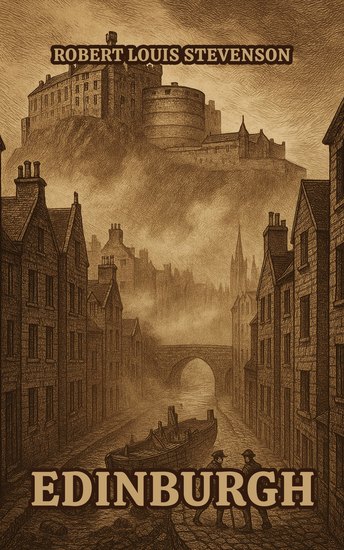
    Edinburgh by Robert Louis Stevenson is a lyrical and deeply affectionate portrait of one of Europe's most storied cities. Blending memoir, history, and keen observation, Stevenson captures the spirit of Edinburgh not merely as a place, but as a living character shaped by time, memory, and imagination.
    
    Through vivid prose and reflective insight, Stevenson walks the reader through the city's winding streets, looming castles, shadowed closes, and dramatic contrasts between the Old Town and the New. Each scene is infused with personal recollection and literary sensitivity, revealing how Edinburgh's architecture, climate, and social life mold the character of those who dwell within it.
    
    More than a travel sketch, Edinburgh is a meditation on identity and belonging. Stevenson explores the city's dual nature—ancient and modern, austere and romantic—while reflecting on his own formative years spent among its stones and stories. History, legend, and everyday life intertwine, offering readers a richly textured understanding of Scotland's capital.
    
    Written with elegance, nostalgia, and quiet wit, Edinburgh stands as both a love letter to a city and a masterclass in literary observation. It will appeal to readers who enjoy classic travel writing, cultural essays, and evocative portrayals of place that linger long after the final page.
    
    A timeless work, this book invites readers to see Edinburgh through the eyes of one of its most celebrated literary sons.
    Show book