Join us on a literary world trip!
Add this book to bookshelf
Grey
Write a new comment Default profile 50px
Grey
Subscribe to read the full book or read the first pages for free!
All characters reduced
Mutation - The Sequel to The Quarantine Zone - cover

Mutation - The Sequel to The Quarantine Zone

Kelly Addams

Publisher: PMO Publishing

  • 1
  • 1
  • 0

Summary

Jennifer's Zombie Adventure continues.
 
Haunted by events from her past zombie lover Jennifer returns to the quarantine zone, her quest, to find a hot zombie girlfriend. Since college she has been trying to deny her attraction to other girls, now she faces facts and embraces her bi-sexual desires. But she is unaware that the virus is set to mutate again, so her perfect girl might not remain perfect for very long!
Available since: 02/12/2022.

Other books that might interest you

  • Generals and Admirals of the Third Reich - Volume 1: A–G - For Country or Fuehrer - cover

    Generals and Admirals of the...

    James Webb

    • 0
    • 0
    • 0
    "... a work of exceptional scholarship that stands as a testament to the exhaustive nature of historical research." — War History Network
    
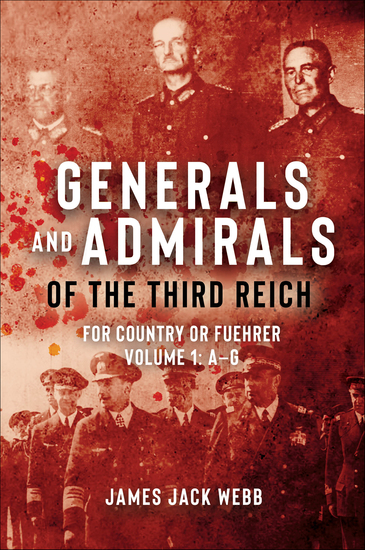
    This three-volume set offers concise biographical information for over five thousand generals and admirals of the Third Reich. It covers all branches of service, ordered alphabetically and provides a brief, though scholarly, overview of each individual, including personal details and dates for all attachments to unit, and medals awarded, offering a readily accessible go-to reference work for all World War II researchers and historians.
    
    In addition to the biographic information, each volume includes extensive appendices.
    
    The books are packed with information on these senior officers of the Third Reich, many of whom are little documented in the English language.
    Show book
  • Feudalism - The Structure of Medieval Society - cover

    Feudalism - The Structure of...

    Harris Ropes

    • 0
    • 0
    • 0
    Feudalism emerged in Western Europe as a response to the collapse of centralized authority following the fall of the Roman Empire. As Roman institutions crumbled in the 5th century, Europe descended into a period of instability and fragmentation. Without the protection and infrastructure once provided by Rome, people turned to local leaders for safety and organization. These leaders—often wealthy landowners or military figures—became the foundation of a new social and political structure that emphasized land ownership, loyalty, and mutual obligation. 
    The early roots of feudal practices can be traced to the relationships that formed during this chaotic period. In the absence of a strong central government, powerful individuals began offering protection to those around them in exchange for service or labor. Over time, this informal system developed into a structured hierarchy, with clearly defined roles and responsibilities. Lords granted land, known as fiefs, to their vassals, who in return pledged loyalty and military support. This mutual dependency became the backbone of medieval society and formalized the relationships that had organically formed during the earlier periods of uncertainty. 
    Localized power became the defining feature of feudal Europe. With no single empire to unify the continent, authority became decentralized. Kings often ruled in name only, while real control rested in the hands of regional lords and nobles. These lords governed their own territories, enforced laws, and maintained private armies. In turn, they depended on the support of lesser vassals and knights, who managed smaller portions of land and fulfilled military duties. This layered structure ensured that each level of society relied on those above and below, creating a rigid yet stable social order.
    Show book
  • Polyvagal Theory and the Developing Child - Systems of Care for Strengthening Kids Families and Communities - cover

    Polyvagal Theory and the...

    Marilyn R. Sanders, George S....

    • 0
    • 0
    • 0
    How sustained disruptions to children's safety have physical, behavioral, and mental health impact that follow them into adulthood. 


    At its heart, polyvagal theory describes how the brain's unconscious sense of safety or danger impacts our emotions and behaviors. In this powerful book, pediatrician and neonatologist Marilyn R. Sanders and child psychiatrist George S. Thompson offer listeners both a meditation on caregiving and a call to action for physicians, educators, and mental health providers. When children don't have safe relationships, or emotional, medical, or physical traumas punctuate their lives, their ability to love, trust, and thrive is damaged. Children who have multiple relationship disruptions may have physical, behavioral, or mental health concerns that follow them into adulthood. 


    By attending to the lessons of polyvagal theory—that adult caregivers must be aware of children's unconscious processing of sensory information—the authors show how professionals can play a critical role in establishing a sense of safety even in the face of dangerous, and sometimes incomprehensibly scary, situations.
    Show book
  • Orphaned Heritage - The East Coast’s Disappearing History - cover

    Orphaned Heritage - The East...

    Ben Swenson

    • 0
    • 0
    • 0
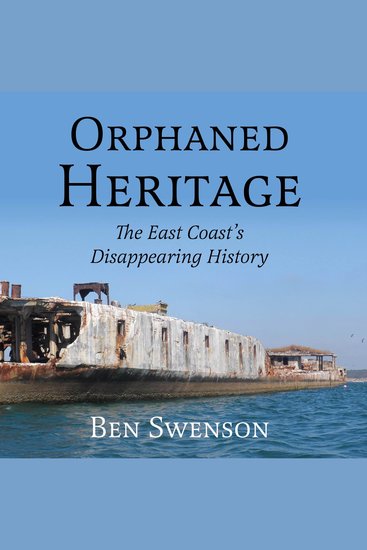
    The spot where the most famous manhunt in United States history came to a bloody end languishes in the litter-strewn median of a four-lane highway. There are no physical traces left of the Garrett farmhouse, where John Wilkes Booth died, and few historic footprints to be found at all in this unlikely place, a common right-of-way. The Garrett place is one of scores of sites on the East Coast that society cast aside, places of historic value left to the natural world as orphans of the American landscape. Orphaned Heritage: The East Coast's Disappearing History tells the story of the Atlantic seaboard's historic castaways and explores what we can learn from the ruin.
    Show book
  • Native American Resistance in the Midwest: The History and Legacy of the Wars that Pushed Indigenous Groups Out of the Region - cover

    Native American Resistance in...

    Editors Charles River

    • 0
    • 0
    • 0
    Throughout history, there have been men of war and men of peace, but few have actually had a war named after them. One of them was Pontiac, also known as Obwandiyag, an Odawa chief who left his mark on history by continuing the battle against the British after their official triumph during the French and Indian War. While modern historians question how important Pontiac’s role was in shaping America’s destiny, his leadership during Pontiac’s War was seen at that time as important enough to warrant significant articles and even a few 18th century books. Since these books were written by the British, or at least men who supported their cause, the descriptions of Pontiac were often not complimentary. Likewise, 19th century authors tended to portray him as something of an evil genius who plotted against the British and then drove his people into battle.  
    For the most part, the conflicts that followed consisted mostly of the Native Americans suffering defeat in the face of a better-equipped adversary, interspersed with binding treaties, which, on the side of the federal government, proved not very binding at all. Occasionally, however, there arose a Native American leader of such ability that such defeats were temporarily reversed, and Little Turtle, the war chief of the Miami tribe, was one such man.  
    The Battle of Tippecanoe, fought on November 7, 1811 near present-day Lafayette, Indiana, involved forces of fewer than 2,000 Native American warriors and white soldiers, and only about 300 men were killed or wounded on both sides. Given those numbers, it’s apparent that the battle was far from being a Saratoga or a Gettysburg in terms of its scale or significance as an historical turning point, yet it was one of the most important battles in the early 19th century. 
    Show book

  • The Elephant Man - cover

    The Elephant Man

    Frederick Treves

    • 0
    • 0
    • 0
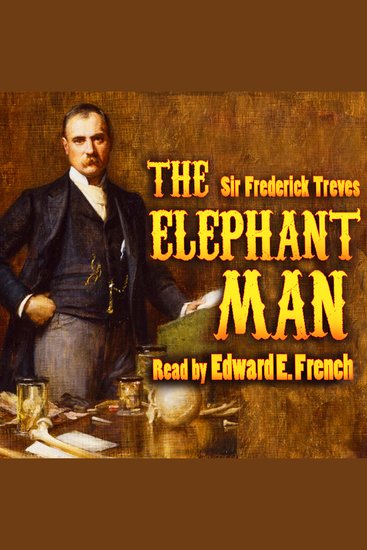
    This is a story in Victorian England of how in 1884 Frederick Treves, Surgeon and Lecturer in Anatomy at the London Hospital arranged for the "Elephant Man" (whose distorted grotesque face and deformed body made him a "freak") to visit the medical college next to the hospital for the purpose of a lecture.  They would later become friends and Treves the savior of the man named John Merrick. This is Treves' memoir.
    Show book