Join us on a literary world trip!
Add this book to bookshelf
Grey
Write a new comment Default profile 50px
Grey
Subscribe to read the full book or read the first pages for free!
All characters reduced
Tales of the Nature's Hidden Wonders - cover

Tales of the Nature's Hidden Wonders

Kavit Anjal

Publisher: Publishdrive

  • 0
  • 0
  • 0

Summary

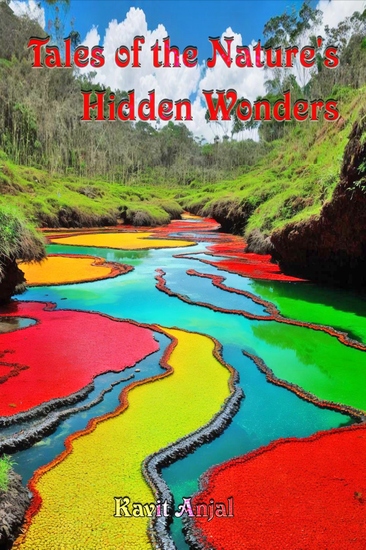
This book takes readers on a journey to explore nature’s hidden wonders, from the depths of the oceans to the peaks of mountains. Each chapter is a biographical tale of a different natural wonder, revealing its geographical, historical, and scientific significance. The book celebrates the beauty and complexity of nature, highlighting the human stories and discoveries intertwined with these extraordinary sites. Examples include the Darvaza Gas Crater and Dean’s Blue Hole, both marvels of nature with deep human connections. The book not only showcases the awe-inspiring landscapes but also addresses the challenges these wonders face, such as climate change and environmental threats. It aims to raise awareness about conservation and the delicate balance between human activities and environmental preservation. Through these tales, readers are encouraged to appreciate the natural world and its fragility, while understanding the importance of sustainable practices.
Available since: 05/01/2025.
Print length: 160 pages.
Other books that might interest you

  • Ethiopia - Culture Smart! - The Essential Guide to Customs & Culture - cover

    Ethiopia - Culture Smart! - The...

    Sarah Howard

    • 0
    • 0
    • 0
    Don't just see the sights—get to know the people. 
    Set in Africa, but not wholly African; an isolated nation, yet receptive to the outside world; hierarchical and conservative, yet innovative and desirous of modernity; conformist as a people, and fiercely independent as individuals? The Ethiopian identity defies definition. Ethiopia exists simultaneously in different time periods. Its people, when they see something new that might work to their advantage, will embrace it and find ways to improve on it. Modern democracy, however, has understandably been slower to bloom given the strong historical antecedents of its monarchy. 
    Culture Smart! Ethiopia unpacks the values, attitudes, and traditions of this culturally rich nation. Etiquette in daily life, socializing, and communicating are all helpfully described, and advice is given on how to make the most of a visit. Above all, it provides the tools to do so in a considerate and sensitive manner. 
    Have a richer and more meaningful experience abroad through a better understanding of the local culture. Chapters on history, values, attitudes, and traditions will help you to better understand your hosts, while tips on etiquette and communicating will help you to navigate unfamiliar situations and avoid faux pas.
    Show book
  • High Tea and the Low Down - An American’s Unfiltered Life in the UK - cover

    High Tea and the Low Down - An...

    Claire Craig Evans

    • 0
    • 0
    • 0
    A Transatlantic Adventure Fueled by Tea and Hedgerow Fruit 
    When American Claire Craig Evans married a charming British man, there was a cost for the snappy banter and countless offers of tea: she had to uproot life as she knew it and relocate to the UK. Who wouldn’t want to move to an enchanted island where mysterious women with dewy complexions made jam in thatched cottages with millennia-old lichen attached? 
    Sure, experienced American expats offered nuggets of wisdom (“Bring over a lifetime supply of taco seasoning!”) but they weren’t even mild comfort as Claire tried to avoid death, jail, and wayward sheep while learning to navigate zebra crossings and drive on the “wrong” side of the road. 
    The allure of a jet-setter lifestyle vanished as fast as Air India sent her Samsonite to Delhi instead of London Heathrow. Would more tea help her figure out how long she’d been wearing the single pair of underwear in her possession? (That was the jetlag talking. They do have underwear in the UK, too.) 
    Fans of Bridget Jones and Bill Bryson alike will enjoy High Tea and the Low Down, a keenly-observed memoir full of laugh-out-loud moments as Claire experiences the reality of English living. If she couldn’t even pass a pub quiz, how would she ever pass the infamous Life in the UK test, the high-stakes hurdle required to stay on British soil (and with her husband) indefinitely?
    Show book
  • Aksumite Empire - Ethiopia's Ancient Power and the First Christian Kingdom - cover

    Aksumite Empire - Ethiopia's...

    Rolf Hedger

    • 0
    • 0
    • 0
    The Aksumite Empire was one of the most significant and influential civilizations of ancient Africa. Emerging around the first century AD, it became a powerful and sophisticated state that played a crucial role in connecting diverse cultures and trade networks across continents. Its strategic location, bridging the Red Sea and the interior of the African continent, allowed Aksum to flourish as both a political and economic hub, facilitating exchanges between the Mediterranean world, the Arabian Peninsula, and beyond. 
    At the heart of Aksum’s success was its remarkable ability to integrate various cultural and economic influences. The empire was not only a center for commerce but also a melting pot of traditions, languages, and beliefs. This rich cultural mosaic is reflected in its unique art, architecture, and inscriptions, which have provided modern scholars with invaluable insights into the life and achievements of this ancient society. The monuments and stelae scattered across the landscape serve as enduring testaments to the empire's power and its sophisticated understanding of both artistry and engineering. 
    The rise of Aksum was deeply intertwined with the development of its political structures and the establishment of a centralized administration. Early rulers of the empire forged alliances through both diplomacy and military might, thereby securing their territories against external threats and internal discord. As the state grew in power, it adopted innovative approaches to governance that balanced traditional practices with the demands of a rapidly expanding empire. These innovations laid the groundwork for what would later be recognized as the first Christian kingdom in Africa.
    Show book
  • I diari della Via Francigena - In cammino da Roma alla Città tre volte santa - cover

    I diari della Via Francigena -...

    Enrico Brizzi, Marcello Fini

    • 0
    • 0
    • 0
    Fedeli all'idea che "una strada non domanda altro che essere percorsa" e che lo strumento privilegiato di conoscenza sia l'esperienza diretta dell'andare, Enrico Brizzi e Marcello Fini partono, nell'estate 2006, per percorrere la Via Francigena tra Canterbury e Roma, 1600 chilometri e 33 città sulle orme di Sigerico, l'arcivescovo di Canterbury che per primo tracciò l'itinerario nel 990 d.C. Affrontano, mossi dalla sola forza dei loro piedi, il più importante asse viario dell'Europa medioevale. Camminano sulle orme di viandanti e pellegrini, riflettono on the road sul significato della vita e su quale eredità ci abbia lasciato quell'Europa di mille anni fa, per la prima volta unita nel nome della religione e delle radici culturali. Si chiedono che senso abbia camminare nel XXI secolo sulle tracce di un oscuro vescovo britannico, di masnade armate, di mercanti e falsi bordones mescolati agli autentici uomini di fede diretti verso il sepolcro di Pietro. Sono pronti a raccogliere le parole e le immagini che la strada saprà offrirgli. Al racconto di viaggio è abbinato un ricco inserto fotografico, mappe e un'approfondita guida con tutte le indicazioni per ripetere l'impresa tappa per tappa.
    Show book
  • Winter's Playground - The Timeless Tales of Snowy Recreation - cover

    Winter's Playground - The...

    Timothy Whittenburg

    • 0
    • 0
    • 0
    Discover Whispers of Winter: A Journey Through Snow-Covered Memories  
     
    The pulse of adventure syncs with the crunch of fresh snow underfoot in this enchanting compendium, "Winter's Playground: Timeless Tales of Snowy Recreation." It captures the essence of winter sports and the soul in each snowflake. Dive into the evolution of skiing and snowboarding, from subversive beginnings to global phenomena. Stand with hockey legends, tracing the sport from humble pond games to national pride. Explore Nordic skiing's serene silence and the age-old joy of sledding. Roar through quiet landscapes on snowmobiles, connecting communities with trails. 
     
    Discover the endurance and companionship in dog sledding, the elegance of figure skating, and the strategic dance of curling. Delight in the craft of snow sculpting and global celebrations coloring the coldest months. Look ahead to the sustainable future of these cherished pastimes and reflect on preserving winter's magic amid change. "Winter's Playground" is more than historical facts; it's an invitation to continue the legacy, to add your story to the snowy recreation saga. Bundle up, step into frostbitten air, and prepare to etch your path on winter's canvas.
    Show book
  • History of Argentina - From the Arrival of the Spanish to the 20th Century - cover

    History of Argentina - From the...

    Kelly Mass

    • 0
    • 0
    • 0
    Argentina's history is a rich tapestry that can be divided into four distinct periods: the pre-Columbian or early history (up to the sixteenth century), the colonial period (1530–1810), the nation-building period (1810–1880), and contemporary history (from approximately 1880 to the present). Each phase shaped the region, transforming it from sparsely inhabited land into the modern Argentine Republic. 
    Human presence in what is now Argentina dates back approximately 13,000 years, with evidence of early settlements in Patagonia. Archaeological findings suggest human activity through the Paleolithic, Mesolithic, and Neolithic periods. However, a significant depopulation of large interior areas occurred between 4000 and 2000 B.C., likely due to a prolonged period of drought. Over time, indigenous peoples in the region evolved into diverse cultural groups with varying levels of complexity. 
    Uruguayan archaeologist Raúl Campá Soler categorized Argentina’s indigenous peoples into three groups: basic hunters and food gatherers without pottery; advanced gatherers and hunters; and basic farmers who developed pottery. The Pampas and Patagonia were dominated by the first group, while the second included tribes like the Charrúa, Minuane, and Guaraní. The third group, inhabiting regions such as the Quebrada de Humahuaca, adopted farming practices and pottery.
    Show book