Join us on a literary world trip!
Add this book to bookshelf
Grey
Write a new comment Default profile 50px
Grey
Subscribe to read the full book or read the first pages for free!
All characters reduced
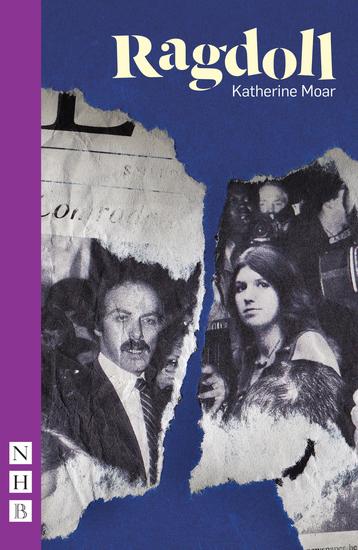
Ragdoll - cover

Ragdoll

Katherine Moar

Publisher: Nick Hern Books

  • 0
  • 0
  • 0

Summary

'You love the attention. You always have.'
1978. Holly, a young heiress, sits in a California prison awaiting trial for her role in a string of armed robberies that have captivated the nation. Her only hope? Her hotshot lawyer, Robert – who might make his name, if he can save hers.
2017. Robert, now one of the most famous attorneys in America, faces a different kind of trial: the court of public opinion. In a last-ditch bid for redemption, he turns to the one former client who could help him plead his case. But will she?
Inspired by the real-life trial of Patty Hearst, Katherine Moar's play Ragdoll is a psychedelic swirl of celebrity, violence and scandal. It premiered at Jermyn Street Theatre, London, in 2025, directed by Josh Seymour.
Available since: 10/16/2025.
Print length: 96 pages.

Other books that might interest you

  • Twelfth Night - cover

    Twelfth Night

    William Shakespeare

    • 0
    • 0
    • 0
    As the generating force of its plot, Twelfth Night uses a device which has since become a staple in comedy: gender confusion. Viola and her twin brother Sebastian, are shipwrecked on the coast of Illyria, a country ruled by the melancholy Duke Orsino. The twins are separated and Viola is led to believe that her brother has perished. She disguises herself as a male under the name of Cesario and makes her way to the ducal court, where Orsino employs her as a messenger, to communicate his love to the reclusive lady, Olivia—who is not willing to return his affection. Olivia is also the target of two other romantic schemes. Her pompous steward, Malvolio, has persuaded himself that Olivia has fallen for him but is too diffident to reveal her passion. Her dissipated uncle, Sir Toby Belch, has plans to set up a match for her with Sir Andrew Aguecheek, a feeble-minded squire. Viola/Cesario falls in love with Orsino and Olivia with Cesario, but all of the parties are obliged to hide their feelings. Having survived the shipwreck, Sebastian now appears on the scene and contracts a secret marriage with Olivia, who believes him to be Cesario. In the final act, Viola reveals her true identity … 
    Featuring Emma Faye as Viola, Kendra Murray as Olivia, Cate Barratt as Sir Toby Belch, Alan Weyman as Sir Andrew Aguecheek, Lillian Rachel as Malvolio, Marty Krz as Feste and Laura Richcreek as Orsino. Also featuring the voices of Claudia Anglade, Linda Barrans, PJ Morgan, Denis Daly and John Burlinson. 
    Songs arranged by Alan Weyman and Marty Krz 
    Audio edited by Denis Daly 
    Text kindly provided by playshakespeare.com
    Show book
  • Faust Part I - cover

    Faust Part I

    Johann Wolfgang von Goethe

    • 0
    • 0
    • 0
    Faust Part I is Johann Wolfgang von Goethe's masterful exploration of human ambition, desire, knowledge, and redemption—an enduring cornerstone of world literature. Blending philosophy, drama, folklore, and poetry, Goethe reimagines the legendary tale of Dr. Faust, a brilliant but deeply dissatisfied scholar who makes a fateful pact with the devil in pursuit of ultimate understanding and earthly pleasure.
    
    At the center of the story stands Heinrich Faust, a learned intellectual who has mastered philosophy, law, medicine, and theology—yet finds himself spiritually empty and disillusioned. Despite his vast knowledge, he feels no closer to grasping life's true meaning. In his despair, he turns to magic in an attempt to transcend human limitations. This longing summons Mephistopheles, a cunning and ironic embodiment of the devil, who offers Faust a dangerous bargain: unlimited worldly experiences in exchange for his soul—if ever Faust becomes so satisfied that he wishes a moment to last forever.
    
    As Faust embarks on his journey with Mephistopheles, the narrative shifts from philosophical introspection to deeply human tragedy. Faust's encounter with the innocent and pure-hearted Gretchen (Margarete) forms the emotional core of the drama. What begins as romantic infatuation evolves into a devastating chain of events marked by seduction, moral conflict, societal judgment, and profound suffering. Gretchen's tragic fate contrasts sharply with Faust's restless striving, highlighting themes of guilt, responsibility, and redemption.
    
    Goethe masterfully interweaves contrasting tones—comic, tragic, lyrical, and philosophical—creating a richly layered work that speaks to both the intellect and the heart. Mephistopheles, with his sharp wit and skeptical commentary, serves not only as tempter but also as a critical observer of humanity's contradictions. Through their dynamic, Goethe probes timeless questions: What is the value of knowledge without wisdom? Can ambition coexist with morality? Is redemption possible after profound wrongdoing?
    
    Written over several decades and published in 1808, Faust Part I reflects the intellectual spirit of the Enlightenment while foreshadowing the emotional intensity of Romanticism. Goethe's language is poetic and symbolic, filled with vivid imagery, dramatic monologues, and philosophical reflections that continue to resonate with readers today.
    
    More than a tale of a man who sells his soul, Faust Part I is a powerful meditation on the human condition—the restless pursuit of meaning, the consequences of unchecked desire, and the enduring hope for grace. It challenges readers to confront their own ambitions and moral choices, making it as relevant in the modern age as it was in Goethe's time.
    
    A monumental work of literature, Faust Part I remains an unforgettable journey into the depths of aspiration, temptation, and the fragile nature of the human soul.
    Show book

  • The Top 10 Poets – Born in London - Five poems each from some of the London born poets ever - cover

    The Top 10 Poets – Born in...

    John Donne, John Keats, William...

    • 0
    • 0
    • 0
    The language of Poetry is an art that most of us attempt at some point in our lives.  Although its commonplace exposure has been somewhat marginalised in today’s often fast-paced lives we all recognise good verse that can empathise with our thoughts or open us up to experience new things in new ways, to better understand and to enjoy the many strands of our lives. 
    But finding a starting point can be overwhelming, even off-putting, so in this series we offer up our Top 10 classic poets, who brim with talent and verse, on a range of subjects and themes that we can all enjoy. 
    The great city of London is perhaps unrivalled in its scale and effect on humankind down the centuries.  Its sprawl and its teeming throngs have shaped the world and even how we live today.  With the words of these 10 poets and their insightful, knowing verse we can perhaps begin to understand just why that is.
    Show book
  • A Rhyme A Dozen ― Mothers - 12 Poets 12 Poems 1 Topic - cover

    A Rhyme A Dozen ― Mothers - 12...

    Julia Ward Howe, Katharine...

    • 0
    • 0
    • 0
    ‘A dime a dozen’ as known in America, is perhaps equal to the English ‘cheap as chips’ but whatever the lingua franca of your choice in this series we hereby submit ‘A Rhyme a Dozen’ as 12 poems on many given subjects that are a well-rounded gathering, maybe even an essential guide, from the knowing pens of classic poets and their beautifully spoken verse to the comfort of your ears. 
    1 - A Rhyme A Dozen - 12 Poems, 12 Poets, 1 Topic - Mothers - An Introduction 
    2 - My Mother by Francis Ledwidge 
    3 - The Revolt of Mother by Alice Duer 
    4 - The Young Mother by Katharine Tynan 
    5 - To Mother by Marina Ivanova Tsvetaeva 
    6 - My Mother's Hands by Anonymous 
    7 - The Slave Mother by Frances E W Harper 
    8 - To My Mother by Edgar Allan Poe 
    9 - Mother's Day Proclamation by Julia Ward Howe 
    10 - The Mother's Charge by Charlotte Perkins Gilman 
    11 - The Mother by Patrick Pearce 
    12 - The Mother by May Herschel-Clarke 
    13 - The Mother's Grief by Ina Coolbirth
    Show book
  • The Comedy of Errors - cover

    The Comedy of Errors

    William Shakespeare

    • 0
    • 0
    • 0
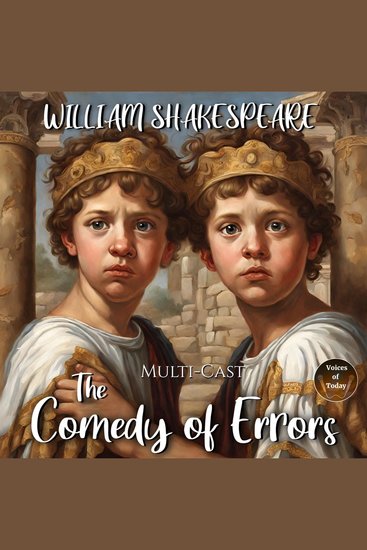
    Mistaken identity (which the Elizabethans called “Error”) is nearly always amusing, whether on the stage or in actual life. The Comedy of Errors is a play in which this situation is developed to the extreme of improbability – but we lose sight of this improbability in the roaring fun which results. Nowadays we should call a play of this type a farce, since most of the fun comes from situations which are improbable and the play depends on these for success, rather than on characterization or dialogue. Shakespeare’s Comedy of Errors draws on a much older play, Menaechmi, written by the ancient Roman playwright Plautus (254–184 B.C.).A merchant of Syracuse has twin sons and buys twin servants for them. His wife, with one twin and one servant, is soon separated from him by a shipwreck, and comes to live in Ephesus. When grown, the other son and his slave start out to find their brothers, and the father, some years later, starts out in turn to find them. Once in Ephesus, an amusing series of errors begins. The wife takes the wrong twin for her husband, the master beats the wrong slave, the wrong son disowns his father, the twin at Ephesus is arrested instead of his brother, and the twin slave Dromio of Syracuse is claimed as a husband by a black kitchen girl of Ephesus. The situation gets more and more mixed, until at last the real identity of the strangers from Syracuse is established, and all ends happily. 
    Featuring the voices of Susan Iannucci, Gary MacFadden, David Shears, Dara Brown, Blaise Doran, Aisling Gray, Claudia Anglade, Kendra Murray and P.J. Morgan
    Show book
  • rib cage: poems - cover

    rib cage: poems

    Rosaly Puthucheary, Arunditha, ...

    • 0
    • 0
    • 0
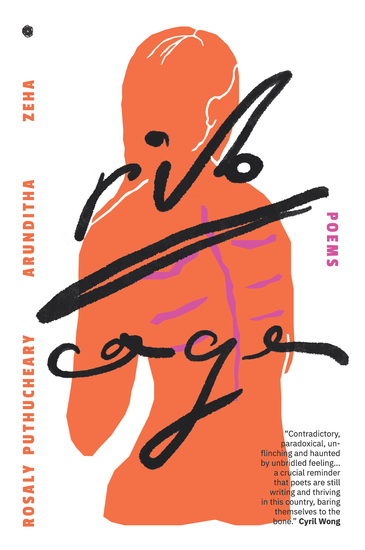
    Our ALLTHETIME folios present three poets across the generations in conversation with one another.  
      
    Pounding beneath rib/cage is a visceral struggle for selfhood and belonging. These poems shatter through the suffocating grip of silence and constraint. These are words carved into verse as sharp as bone—voiced into the stillness of night. 
      
    Within the pages of our first ALLTHETIME folio lies a collection spanning five decades. This chorus of voices across time confront unyielding questions about alienation and autonomy, reminding us that the fight remains as fierce as ever. Let these lines take root in your breath; we dare you to recite them with your whole damn chest.
    Show book