Join us on a literary world trip!
Add this book to bookshelf
Grey
Write a new comment Default profile 50px
Grey
Subscribe to read the full book or read the first pages for free!
All characters reduced
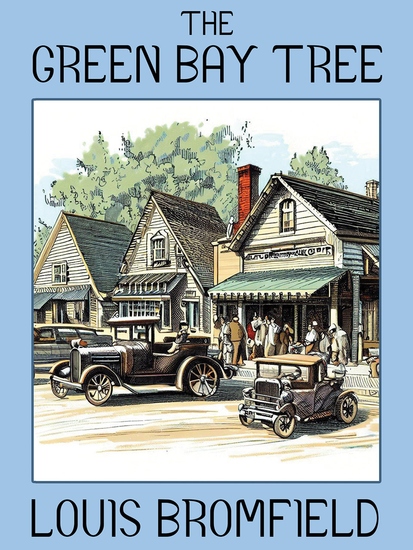
The Green Bay Tree - cover

The Green Bay Tree

Karl Wurf, Louis Bromfield

Publisher: Wildside Press

  • 0
  • 0
  • 0

Summary

"Mr. Bromfield paints on a large canvas, but with almost unfaltering deftness." --The New Republic
 
In 1924, Louis Bromfield published his first novel, The Green Bay Tree, which featured a headstrong, independent female protagonist — a feature that recurred in many of his later books. Includes an introduction by Karl Wurf.
Available since: 08/10/2023.
Print length: 279 pages.

Other books that might interest you

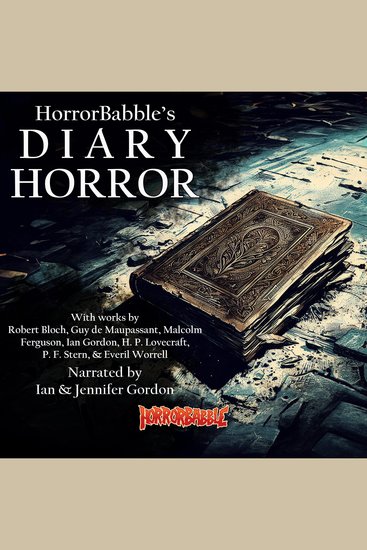
  • Diary Horror - The 'Found Footage' of the Written Word - cover

    Diary Horror - The 'Found...

    Robert Bloch, Guy de Maupassant,...

    • 0
    • 0
    • 0
    Fifteen stories told through the recovered pages of diaries/journals. 
    Contents: 
    What Killed Granded? by Ian Gordon (HorrorBabble, 2020) 
    An investigation told through a series of audio logs. 
    The Diary of Alonzo Typer by H. P. Lovecraft (Weird Tales, 1938) 
    An occult researcher disappears without a trace. 
    The Horror in the Lighthouse by E. A. Poe and R. Bloch (Fantastic, 1953) 
    Bloch completes Poe's famous fragment. 
    The Diary of Philip Westerly by Paul Compton (WT, 1936) 
    Unsettling incidents involving a mirror. 
    Notebook Found in a Deserted House by Robert Bloch (WT, 1951) 
    A boy hides from 'them ones'. 
    The Hall Bedroom by M. E. W. Freeman (Short Story Classics, 1905) 
    A peculiar room in a boarding house. 
    The Diary of a Madman by Guy de Maupassant (Le Gaulois, 1885) 
    The thoughts of an undiscovered murderer. 
    The Polar Vortex by Malcolm Ferguson (WT, 1946) 
    A terrible experiment. 
    The Impossible Adventure by H. T. W. Bousfield (WT, 1940) 
    A curious set of notes. 
    The Bed of Shadows by Fred R. Farrow, Jr. (WT, 1929) 
    What lurked above the man in the bed? 
    The Way Home by P. F. Stern (WT, 1935) 
    A man suffering from amnesia. 
    The Floor Above by M. Humphreys (WT, 1923) 
    A man's troubling stay with an old friend. 
    The Horla by Guy de Maupassant (1887) 
    A man is haunted by an invisible presence. 
    The Hollow Moon by Everil Worrell (WT, 1939) 
    A vampire and strange icebergs. 
    The Green Meadow by H. P. Lovecraft (The Vagrant, 1927) 
    A notebook found in a meteorite.
    Show book
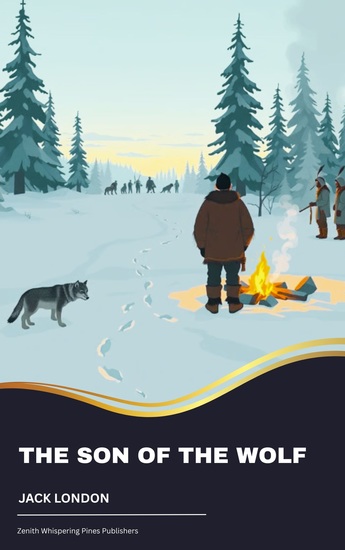
  • The son of the wolf - cover

    The son of the wolf

    Anonymous

    • 0
    • 0
    • 0
    Frozen nights. Untamed wilderness. Men and women fighting for life, love, and a place in the wild.
    In this gripping collection of frontier stories, Jack London captures the harsh beauty and brutal challenges of the Yukon. From daring escapes to fragile alliances and fierce battles with nature, each tale reveals the raw instincts that drive human courage—and human cruelty—when survival is on the line.
    
    Praised as "a powerful introduction to London's mastery of northern adventure," these stories blend vivid landscapes, emotional tension, and unforgettable characters shaped by ice, hunger, and hope. The result is a timeless portrait of the North in all its danger and wonder.
    
    If you crave rugged frontier fiction, atmospheric wilderness storytelling, and classic adventure at its purest, this collection will pull you deep into the heart of the Yukon.
    
    Open the book—and follow those who live where the cold makes legends.
    Show book
  • The Awakening - cover

    The Awakening

    Kate Chopin

    • 0
    • 0
    • 0
    "The Awakening" is Kate Chopin's groundbreaking novel published in 1899 that focuses on the life of Edna Pontellier, a woman who grapples with the societal conventions of the American South during the late 19th century. As Edna awakens to her own desires and seeks self-discovery and independence, she challenges the societal norms surrounding femininity, motherhood, and marriage. The narrative explores themes of identity, freedom, and the constraints of tradition. It was controversial upon its release due to its candid portrayal of a woman's sexual and emotional desires, but is now regarded as a seminal work in feminist literature.
    Show book
  • Leda - The Classic Tale - cover

    Leda - The Classic Tale

    Aldous Huxley

    • 0
    • 0
    • 0
    “Their Ethiop wives—sleek wineskins of black silk, Jellied and huge from drinking asses’ milk Through years of tropical idleness, to pray For offspring (whom he ever sent away With prayers unanswered, lest their ebon race Might breed and blacken the earth’s comely face.” 
    ― Aldous Huxley, Leda 
     
    Though he gained recognition for his later essays and novels, Aldous Huxley started his writing career as a poet. Published in 1920, Leda is his fourth compilation of poetry. It begins with the passionate and slightly erotic poem "Leda", which recalls the love affair between Queen Leda, the mother of Helen of Troy, and her swan, Zeus in disguise. Some short poems follow. The book ends with two long sections. The first, "Beauty," is a short collection of vignettes where the author reflects on the concept of beauty through an ideal model of physical desire, Helen of Troy. The second, "Soles Occidere et Redire Possunt," or "Suns Can Set, and Suns Can Rise Again," is another long poem that reflects a day in the life of John Ridley, a deceased friend of Huxley's, who was mentally challenged throughout his entire life.  
     
    Author Aldous Huxley was an English writer and philosopher. He wrote nearly fifty books, both novels and non-fiction works—as well as wide-ranging essays, narratives, and poems. 
    Born into the prominent Huxley family, he graduated from Oxford, with an undergraduate degree in English literature. Early in his career, he published short stories and poetry and edited the literary magazine Oxford Poetry, before going on to publish travel writing, satire, and screenplays. Huxley spent the latter part of his life in the United States, living in Los Angeles from 1937 until his death. By the end of his life, Huxley was widely acknowledged as one of the foremost intellectuals of his time.
    Show book
  • Elenora - An oddity of a romance story - cover

    Elenora - An oddity of a romance...

    Edgar Allan Poe

    • 0
    • 0
    • 0
    Edgar Poe was born in Boston Massachusetts on 19th January 1809. His father abandoned his family the following year and within a year his mother had died leaving him an orphan.   
     
    He was taken in by the Allan family but never formally adopted although he now referred to himself as Edgar Allan Poe.  His father alternatively spoiled or chastised him and tension was frequent over gambling debts and monies for his education.  His university years to study ancient and modern languages was cut short by lack of money and he enlisted as a private in the army claiming he was 22, it is more probable he was 18. After 2 years he obtained a discharge in order to take up an appointment at the military academy, West Point, where he failed to become an officer. 
     
    Poe had released his 1st poetry volume in 1827 and after his 3rd turned to prose and placing short stories in several magazines and journals.  At age 26 he obtained a licence to marry his cousin.  She was a mere 13 but they stayed together until her death from tuberculosis 11 years after. 
     
    In January 1845 ‘The Raven’ was published and became an instant classic.  Thereafter followed the prose works for which he is now so rightly famed as a master of the mysterious and the macabre. 
     
    Edgar Allan Poe died at the tragically early age of 40 on 7th October 1849 in Baltimore, Maryland. Newspapers at the time reported Poe's death as ‘congestion of the brain’ or ‘cerebral inflammation’, common euphemisms for death from disreputable causes such as alcoholism but the actual cause of death remains a mystery.
    Show book
  • In Our Time (1925 Edition) - Short Stories by Ernest Hemingway - cover

    In Our Time (1925 Edition) -...

    Ernest Hemingway

    • 0
    • 0
    • 0
    Ernest Hemingway was born in Oak Park, Illinois, on July 21, 1899. He served in World War I as an ambulance driver on the Italian front; he was wounded and decorated. After the war, he worked as a journalist before settling in Paris, where he met Gertrude Stein and Ezra Pound, who shaped his literary voice. His prose was terse, his sentences short, and his stories of men and their battles with nature, with love, with their own souls. Hemingway wrote many novels and short stories: "The Sun Also Rises," "A Farewell to Arms," "For Whom the Bell Tolls," and "The Old Man and the Sea," for which he received the Pulitzer Prize. He lived in Key West, Cuba, and Idaho, always in pursuit of the perfect sentence, the true experience. 
    He married four times, loved deeply, and fought hard against his inner demons. Hemingway's life was marked by adventure, war, hunting, fishing, and an unyielding quest for authenticity. In 1954, he was awarded the Nobel Prize in Literature. On July 2, 1961, in Ketchum, Idaho, he ended his life with a shotgun. His works endure, capturing the essence of a man facing the world, striving for grace under pressure. 
    Frank Marcopolos lives in Florida with his dog, Sparky.
    Show book