Join us on a literary world trip!
Add this book to bookshelf
Grey
Write a new comment Default profile 50px
Grey
Subscribe to read the full book or read the first pages for free!
All characters reduced
The Russo-Japanese Conflict: Its Causes and Issues - cover

The Russo-Japanese Conflict: Its Causes and Issues

Kan'ichi Asakawa

Publisher: DigiCat

  • 0
  • 0
  • 0

Summary

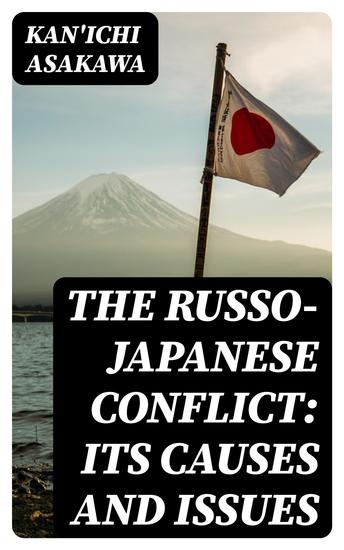
In "The Russo-Japanese Conflict: Its Causes and Issues," Kan'ichi Asakawa offers a meticulous examination of the geopolitical tensions that culminated in the first major military conflict of the twentieth century. Employing a blend of historical analysis and personal narrative, Asakawa situates the conflict within the broader context of imperial ambitions in East Asia. His literary style is characterized by clarity and depth, allowing readers to grasp the multifaceted issues, from colonial rivalry to strategic miscalculations, that fueled this significant confrontation. The work stands as a crucial text in the study of modern international relations, reflecting an era when Asian powers began challenging Western hegemony, making it vital for understanding contemporary geopolitics. Kan'ichi Asakawa, a notable historian and scholar of Japanese-American relations, draws on his background and personal experiences in Japan to inform his analysis. As a product of both Japanese education and Western thought, Asakawa's insights into the cultural and political intricacies of the conflict provide a nuanced understanding. His scholarly rigor is matched by a personal investment in the subject matter, enhancing the depth of his exploration. Recommended for students of history and international relations alike, Asakawa's work not only sheds light on the complexities of the Russo-Japanese conflict but also invites readers to consider the enduring implications of imperialism. This book serves as both an informative resource and a thought-provoking reflection on the dynamics of power in a rapidly changing world.
Available since: 09/16/2022.
Print length: 292 pages.

Other books that might interest you

  • The Confessions of Saint Augustine - cover

    The Confessions of Saint Augustine

    Saint Augustine

    • 0
    • 0
    • 0
    "The Confessions of Saint Augustine" is an autobiographical work by St. Augustine of Hippo, consisting of 13 books written between AD 397 and 400. This seminal work outlines his sinful youth and his conversion to Christianity. It is widely seen as the first Western autobiography ever written, and it provides deep philosophical and theological insights into faith and morality. Augustine explores the nature of time, memory, and the inner self, and the narrative is as much a chronicle of his spiritual journey as it is a theological treatise.
    Show book
  • Heian Period - The Golden Age of Art Literature and Aristocratic Rule - cover

    Heian Period - The Golden Age of...

    Rolf Hedger

    • 0
    • 0
    • 0
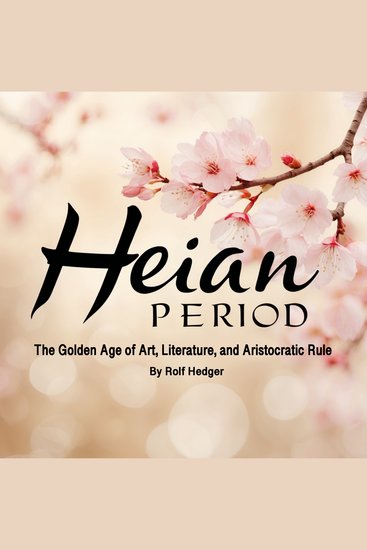
    The Heian Period, spanning from 794 to 1185 CE, marks one of the most culturally rich and politically significant eras in Japanese history. This chapter lays the groundwork for understanding the historical context, political dynamics, and societal structure that defined the early stages of the Heian era. The period officially began when Emperor Kanmu moved the imperial capital from Nara to Heian-kyō, present-day Kyoto. This relocation was intended to establish a new seat of power free from the influence of powerful Buddhist monasteries that had grown too entwined with politics in Nara. 
    The move to Heian-kyō signified more than a change in geography—it was the beginning of a new political and cultural identity. The city was meticulously planned, modeled after the Chinese capital of Chang’an, with a grid-like structure that reflected a vision of order and centralized authority. However, over time, the influence of the emperor waned as powerful aristocratic families, particularly the Fujiwara clan, rose to prominence. By marrying their daughters into the imperial family and acting as regents, the Fujiwara effectively controlled the court, shaping policy and governance from behind the scenes. 
    The political landscape of early Heian Japan was one of ceremonial grandeur and subtle manipulation. Real power resided in the hands of a few elite families, and the imperial court became increasingly detached from the provinces. This created a division between the cultured, refined life of the capital and the often turbulent realities of rural Japan, where local warrior clans began to assert their own authority.
    Show book
  • A Rare Recording of Ian Fleming and Raymond Chandler - cover

    A Rare Recording of Ian Fleming...

    Ian Fleming, Raymond Chandler

    • 0
    • 0
    • 0
    Ian Lancaster Fleming (May 28, 1908 to August 12, 1964) was an English writer, best known for his James Bond series of spy novels, and his only children's novel, Chitty-Chitty-Bang-Bang. Fleming came from a wealthy family connected to the merchant bank Robert Fleming & Co., and his father was the Member of Parliament (MP) from 1910 until his death on the Western Front in 1917. Fleming himself was heavily involved in British intelligence during World War II. Raymond Thornton Chandler (July 23, 1888 to March 26, 1959) was an American novelist and screenwriter. His first novel, The Big Sleep, was published in 1939. All but one of his eight novels have been made into motion pictures. Chandler had an immense stylistic influence on American popular literature, including pioneering the hardboiled school of detective fiction. The protagonist of his novels, Philip Marlowe, is considered by some to be synonymous with "private detective." The following recording is from the late 1950s.
    Show book
  • Camera Orientalis - Reflections on Photography of the Middle East - cover

    Camera Orientalis - Reflections...

    Ali Behdad

    • 0
    • 0
    • 0
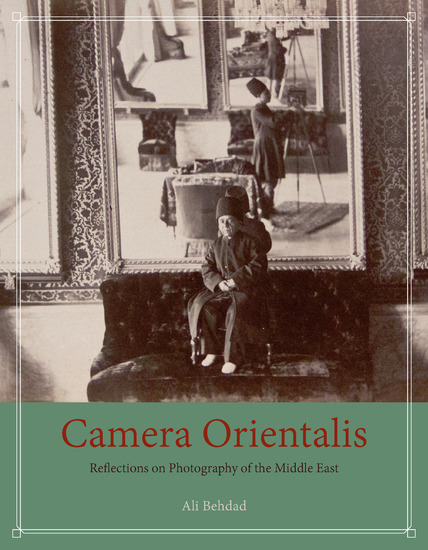
    In the decades after its invention in 1839, photography was inextricably linked to the Middle East. Introduced as a crucial tool for Egyptologists and Orientalists who needed to document their archaeological findings, the photograph was easier and faster to produce in intense Middle Eastern light—making the region one of the original sites for the practice of photography. A pioneering study of this intertwined history, Camera Orientalis traces the Middle East’s influences on photography’s evolution, as well as photography’s effect on Europe’s view of “the Orient.” Considering a range of Western and Middle Eastern archival material from the late nineteenth and early twentieth centuries, Ali Behdad offers a rich account of how photography transformed Europe’s distinctly Orientalist vision into what seemed objective fact, a transformation that proved central to the project of European colonialism. At the same time, Orientalism was useful for photographers from both regions, as it gave them a set of conventions by which to frame exotic Middle Eastern cultures for Western audiences. Behdad also shows how Middle Eastern audiences embraced photography as a way to foreground status and patriarchal values while also exoticizing other social classes. An important examination of previously overlooked European and Middle Eastern photographers and studios, Camera Orientalis demonstrates that, far from being a one-sided European development, Orientalist photography was the product of rich cultural contact between the East and the West.  
    Show book
  • Champagne Charlie - The Frenchman Who Taught Americans to Love Champagne - cover

    Champagne Charlie - The...

    Petie Kladstrup, Don Kladstrup

    • 0
    • 0
    • 0
    Champagne Charlie tells the story of a dashing young Frenchman, Charles Heidsieck, who introduced hard-drinking Americans to champagne in the mid-nineteenth century and became famously known as Champagne Charlie. Ignoring critics who warned that America was a dangerous place to do business, Heidsieck plunged right in, considering it "the land of opportunity" and succeeding there beyond his wildest dreams. Those dreams, however, became a nightmare when the Civil War erupted and he was imprisoned and nearly executed after being charged with spying for the Confederacy. 


    Only after the Lincoln administration intervened was Heidsieck saved, but his champagne business had gone bankrupt and was virtually dead. Then, miraculously, Heidsieck became owner of nearly half the city of Denver, the fastest-growing city in the West. By selling the land, Heidsieck was eventually able to resurrect his business to its former glory. 


    For all its current-day glamour, effervescence, and association with the high life, champagne had a lackluster start. It was pale red in color, insipid in taste, and completely flat. Champagne's success can be traced back to King Louis XV and his mistress Madame de Pompadour, Napoleon Bonaparte, countless wars and prohibitions, and, most important to the United States, Charles Heidsieck.
    Show book
  • Springer Mountain - Meditations on Killing and Eating - cover

    Springer Mountain - Meditations...

    Wyatt Williams

    • 0
    • 0
    • 0
    Drawing on years of investigative reporting, Wyatt Williams offers a powerful look at why we kill and eat animals. In order to understand why we eat meat, the restaurant critic and journalist investigated factory farms, learned to hunt game, worked on a slaughterhouse kill floor, and partook in Indigenous traditions of whale eating in Alaska. In Springer Mountain, he tells about his experiences while charting the history of meat eating and vegetarianism. 


    Williams shows how mysteries springing up from everyday experiences can lead us into the big questions of life while examining the irreconcilable differences between humans and animals. Springer Mountain is a thought-provoking work, one that reveals how what we eat tells us who we are.
    Show book