Join us on a literary world trip!
Add this book to bookshelf
Grey
Write a new comment Default profile 50px
Grey
Subscribe to read the full book or read the first pages for free!
All characters reduced
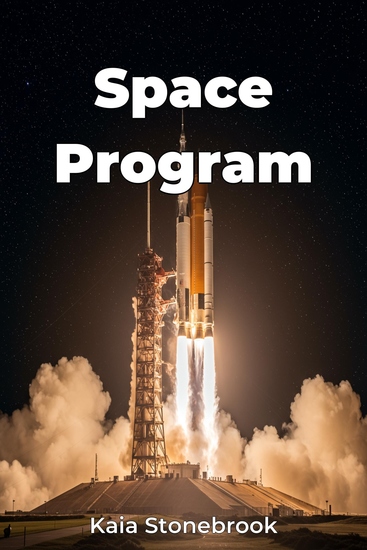
Space Program - cover

Space Program

Kaia Stonebrook

Translator A AI

Publisher: Publifye

  • 0
  • 0
  • 0

Summary

"Space Program" explores the history of the United States' ambitious journey into space, spearheaded by NASA. It examines how scientific breakthroughs, geopolitical strategies during the Space Race, and the enduring human spirit of discovery have shaped this unprecedented endeavor. The book highlights pivotal milestones, such as Project Apollo and landing humans on the Moon, while also analyzing the impact of NASA's work on American values and technological advancement.

 
The book progresses chronologically, starting with the post-World War II era and the formation of NASA. It moves through key projects like Mercury and Gemini, then analyzes the Space Shuttle era and current initiatives like the Artemis Program. By drawing upon NASA documents, mission transcripts, and historical analyses, "Space Program" offers a comprehensive account of the U.S. space program while connecting to fields like political science, economics, and environmental science.
Available since: 05/06/2025.
Print length: 67 pages.

Other books that might interest you

  • How to Give a Speech - Unlock Your Inner Orator and Master the Art of Public Speaking - cover

    How to Give a Speech - Unlock...

    Joseph Steadman

    • 0
    • 0
    • 0
    How to Give a Speech: Unlock Your Inner Orator and Master the Art of Public SpeakingEmbark on a transformative journey that will empower you to captivate any audience with confidence and finesse. Whether you're a seasoned professional seeking to polish your speaking skills or an aspiring speaker preparing for your debut, this audiobook is your comprehensive guide to becoming a captivating and impactful communicator.From conquering stage fright to harnessing the power of body language, vocal modulation, and storytelling techniques, this audiobook takes you step-by-step through the essentials of effective speech delivery. Explore proven strategies for organizing your thoughts, engaging your listeners, and conveying your message with clarity and conviction.But it doesn't stop there. "How to Give a Speech" delves deeper, offering valuable insights on tailoring your speeches to different audiences, handling Q&A sessions with finesse, and leveraging visual aids to enhance your presentations. You'll also learn techniques for handling unexpected challenges, transforming nervous energy into a powerful presence, and establishing an authentic connection with your audience.Whether you aspire to deliver compelling TED Talks, engage in persuasive business presentations, or inspire and motivate others through your words, "How to Give a Speech: Unlock Your Inner Orator and Master the Art of Public Speaking" is your trusted companion on this transformative journey. Let it be your catalyst for unlocking your true potential as a confident, persuasive, and impactful speaker.
    Show book
  • The Principles of Masonic Law - cover

    The Principles of Masonic Law

    Albert G. Mackey

    • 0
    • 0
    • 0
    "The Principles of Masonic Law" by Albert G. Mackey is a foundational text that delves into the legal framework and traditions governing Freemasonry. Originally published in 1856, this work explores the constitutional laws, customs, and landmarks that define Masonic governance and practice. Mackey, a respected Masonic scholar, offers a detailed analysis of the rights and duties of Masonic lodges and individual members, the structure and authority of Grand Lodges, and the procedures for addressing Masonic offenses. Written in a clear and systematic style, this book remains a vital resource for anyone interested in Masonic law, history, and organizational principles, providing timeless insights into the fraternity's governance and ethical standards.
    Show book
  • Civil disobedience - cover

    Civil disobedience

    Henry David Thoreau

    • 0
    • 0
    • 0
    Unleash the power of your conscience with "Civil Disobedience," a timeless manifesto on personal integrity and social justice. Written by the influential thinker Henry David Thoreau, this work challenges individuals to rise against unjust governance and take action to align their lives with moral principles. 
    Through eloquent prose and compelling arguments, Thoreau makes a case for nonviolent resistance, urging citizens to prioritize justice over blind allegiance to authority. This audiobook dives deep into the responsibility of each individual to act according to their conscience and make meaningful contributions toward a more equitable society. 
    Perfect for those seeking inspiration to champion change, "Civil Disobedience" remains a cornerstone of movements for freedom and equality, influencing leaders like Gandhi and Martin Luther King Jr. Whether you’re an activist, a scholar, or a curious mind, this audiobook will challenge and empower you to rethink the boundaries of obedience and justice in the pursuit of a better world. 
    Listen to Thoreau’s revolutionary ideas brought to life in this dynamic and thought-provoking rendition. Let it spark your courage to act on your beliefs and transform your understanding of civil liberties.
    Show book
  • Operation Typhoon - Hitler's March on Moscow October 1941 - cover

    Operation Typhoon - Hitler's...

    David Stahel

    • 0
    • 0
    • 0
    In October 1941, Hitler launched Operation Typhoon—the German drive to capture Moscow and knock the Soviet Union out of the war. As the last chance to escape the dire implications of a winter campaign, Hitler directed seventy-five German divisions, almost two million men and three of Germany's four panzer groups into the offensive, resulting in huge victories at Viaz'ma and Briansk—among the biggest battles of the Second World War. David Stahel's groundbreaking new account of Operation Typhoon captures the perspectives of both the German high command and individual soldiers, revealing that despite success on the battlefield the wider German war effort was in far greater trouble than is often acknowledged. Germany's hopes of final victory depended on the success of the October offensive but the autumn conditions and the stubborn resistance of the Red Army ensured that the capture of Moscow was anything but certain.
    Show book
  • Fifteen Out of the Box Ideas which will Change the World - cover

    Fifteen Out of the Box Ideas...

    Martin K. Ettington

    • 0
    • 0
    • 0
    The world is not as we think it is. We are taught standard accepted beliefs from birth and many of them are not correct or a misunderstanding of the truth. 
    Who am I to say so? At this writing I’m nearly seventy years old and I’ve spent my life observing reality as an engineer and explorer of the unknown. 
    I’ve had many weird and paranormal experiences and done lots of research. Many patterns have made themselves known to me and this is why I make these types of statements. 
    This book is an effort to shed light on these misunderstandings and change your perception of the world we live in. 
    Much of what I will relate is based on my subjective experiences and research many would say does not conform to the accepted scientific method yet you will see that my observations make a lot of common sense. 
    Some of these concepts have been around for thousands of years but are not commonly accepted today. My effort is to show you why these ideas are likely true and how these concepts also are built on to provide new understandings. 
    At the end of each chapter logic is provided on how general belief in these new ideas will change humanity. 
    My hope is that by the end of this book you the reader will open your mind more about many things which are strange but possibly true.
    Show book
  • The Gambling Century - Commercial Gaming in Britain from Restoration to Regency - cover

    The Gambling Century -...

    John Eglin

    • 0
    • 0
    • 0
    Gambling captures as nothing else the drama of the "long eighteenth century" between the age of religious wars and the age of revolutions. The society that was confronted with games of chance pursued as commercial ventures also came to grips with unprecedented social mobility, floated by new wealth from new sources created fortunes from trade in sugar, cotton, ivory, silk, tea, or enslaved human beings. Likewise, play for money was prominent in the public imagination as money itself, deployed through an ever expanding and ever more sophisticated range of mechanisms, increasingly invaded public awareness, as when prospective spouses in period fiction were rated in terms of annual income as if they were municipal bonds. Similarly, the archetypal figure of the gambler captured the imagination of the public in fiction, media, and politics. At the same time, new interest in science, technology, engineering, and mathematics—encouraged and bankrolled by those in power—fostered a new and unprecedented appreciation for mathematical probability and its applications, opening the possibility that games of chance might be pursued as a profitable commercial venture. The Gambling Century focuses like no previous work on those who enabled, facilitated, and profited from gambling, as well as on efforts to regulate or outlaw it.
    Show book