¡Acompáñanos a viajar por el mundo de los libros!
Añadir este libro a la estantería
Grey
Escribe un nuevo comentario Default profile 50px
Grey
Suscríbete para leer el libro completo o lee las primeras páginas gratis.
All characters reduced
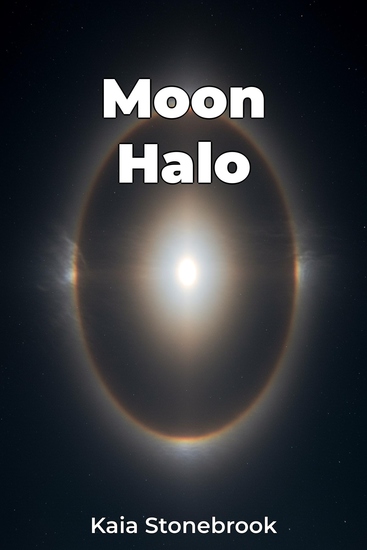
Moon Halo - cover

Moon Halo

Kaia Stonebrook

Traductor A AI

Editorial: Publifye

  • 0
  • 0
  • 0

Sinopsis

"Moon Halo" explores the captivating science behind lunar and solar halos, those luminous rings we sometimes see around the Moon or Sun. These optical illusions are created by light interacting with ice crystals in the atmosphere. One intriguing fact is that the specific shape and orientation of these ice crystals determine the type of halo formed, such as the common 22° halo or sun dogs.

 
Understanding these atmospheric phenomena offers a window into weather patterns and the physics of light refraction, demonstrating how light bends as it passes through icy prisms. The book uniquely bridges theoretical physics with practical observation, encouraging readers to participate in documenting and studying halos.

 
It begins with meteorological principles and light properties, then identifies common halo types, explaining the ice crystal formations and atmospheric conditions behind each. Using photographs and observational data, it provides a guide for identifying halos in nature. This approach makes complex scientific concepts accessible to a broad audience interested in Earth Sciences Geography.

 
By understanding atmospheric conditions and ice crystal morphology, we gain valuable insights into our atmosphere.
Disponible desde: 19/02/2025.
Longitud de impresión: 67 páginas.

Otros libros que te pueden interesar

  • Flesh Made New: The Unnatural History and Broken Promise of Stem Cells - cover

    Flesh Made New: The Unnatural...

    John Rasko, Carl Power

    • 0
    • 0
    • 0
    The dazzling promise of stem cell medicine: does it work and will it save us? Two experts look at the hype 
      
    For decades, we've been anticipating the dawn of regenerative medicine. Again and again, we've been promised that stem cells will soon cure just about every ill imaginable. If not tomorrow, then the next day, or the day after that, and so on. We're still waiting. 
    This book is an antidote to hype and a salve to soothe the itch for stem-cell salvation. In it, Professor John Rasko, a leading physician-scientist, and writer-historian Carl Power take us on a wild historical tour of this scandal-prone field. They expose all the dirty little secrets that the hype merchants prefer to ignore - the blunders and setbacks, confusions and delusions, tricks and lies. You'll meet Alexis Carrel, who discovered how to cultivate cells in a test tube: celebrity surgeon, scientific genius and suspected Nazi sympathiser, he opened the field of modern cell science with an experiment so bogus it blocked the way forward for the next 50 years. You'll meet Don Thomas, who developed bone marrow transplantation - the first successful stem-cell therapy - but only after a miserable decade in which most of his patients died. Alongside true stem-cell pioneers, you'll meet charlatans who cooked their data and claimed fake cures - sometimes with fatal consequences. 
    Is there any good news? Which of the many promises of stem-cell research have been kept? And what of the future? Rasko and Power insist that we can only know where we're going if we have a sense of where we've been. Their study tears down the hype surrounding stem cells in order to reveal what's still worth hoping for. 
    PRAISE 
    'If you love some scandal with your science - or some science with your scandal - this is THE book for you. Brilliant stuff' Adam Spencer, University of Sydney 
     'Science, skulduggery and snake oil salesmen ... it is a revolution in medicine but who knew the story of stem cell science was such a ripping yarn!' Fran Kelly, ABC Radio National Breakfast  
    'Science isn't magic: it's a human enterprise. This enthralling book tells of high achievement and astonishing blunders in a vital field of research' Robyn Williams, science journalist and broadcaster 
    'A masterpiece in myth-busting which helps separate fact from fiction in the world of regenerative medicine. It shines a light on some episodes in medical history many would rather forget but also shows a way forward for stem cell research breakthroughs grounded in solid science' Sophie Scott, national medical reporter, ABC 
    'The stem cell revolution: myths, mistakes but mighty medical masterpiece' Sir Gustav Nossal, AC CBE FRS FAA, Australian of the Year 2000 
    'A compelling (and compulsory) read for anyone entranced by the latest media-promoted breakthroughs in medical research, or planning translation of new biomedical research into clinical practice' Ian Frazer, AC, FRCPE, FRCPA, FAA, FTSE Australian of the Year 2006, Australian Living Treasure 2012 
    'Is it really stem cells' turn to revolutionise health care? When you come across a train wreck, keep reading! You'll discover that stem cells reveal medicine in its most provocative and challenging light' Antony Basten AO FAA FTSE 
    'Flesh Made New is a revelation for the general reader about what lies beneath the surface of exciting scientific advances ... The book shows the value of patience and trust in robust evidence-based scientific research, and where things go off the rail, for whistleblowers and experts like the authors of this book' Lucy Turnbull AO, businesswoman, urbanist and philanthropist
    Ver libro

  • Developing to Scale - Technology and the Making of Global Health - cover

    Developing to Scale - Technology...

    Heidi Morefield

    • 0
    • 0
    • 0
    The first critical book on “appropriate technology,” Developing to Scale shows how global health came to be understood as a problem to be solved with the right technical interventions. 
      
    In 1973, economist E. F. Schumacher published Small Is Beautiful, which introduced a mainstream audience to his theory of “appropriate technology”: the belief that international development projects in the Global South were most sustainable when they were small-scale, decentralized, and balanced between the traditional and the modern. His theory gained widespread appeal, as cuts to the foreign aid budget, the national interests of nations seeking greater independence, postcolonial activism, and the rise of the United States’ tech sector drove stakeholders across public and private institutions toward cheaper tools. In the ensuing decades, US foreign assistance shifted away from massive modernization projects, such as water treatment facilities, toward point-of-use technologies like village water pumps and oral rehydration salts. This transition toward the small scale had massive implications for the practice of global health. 
      
    Developing to Scale tells the history of appropriate technology in international health and development, relating the people, organizations, and events that shaped this consequential idea. Heidi Morefield examines how certain technologies have been defined as more or less “appropriate” for the Global South based on assumptions about gender, race, culture, and environment. Her study shows appropriate technology to be malleable, as different constituencies interpreted its ideas according to their own needs. She reveals how policymakers wielded this tool to both constrain aid to a scale that did not threaten Western interests and to scale the practice of global health through the development and distribution of technical interventions.
    Ver libro
  • Rethinking Intelligence - A Radical New Understanding of Our Human Potential - cover

    Rethinking Intelligence - A...

    Rina Bliss

    • 0
    • 0
    • 0
    A genetics expert and professor challenges our understanding of intelligence, explaining what it truly means to be “smart,” why conventional assessments are misleading, and what everyone can do to optimize their potential. 
    Growing up in middle-class suburban Los Angeles in the 1980s, Rina Bliss saw intelligence as her ticket out. Like height and stature, intelligence was said to run in families. The prevailing idea was that mental capacity was determined by our DNA and could be measured; a simple IQ test could predict a child’s future. 
    Yet, once Dr. Bliss looked closer, first as a student, then as a scientist, and later as a mom of identical twins who share a genome, she began to challenge conventional wisdom about innate intelligence. In Rethinking Intelligence, she shares her findings, drawing on cutting-edge scientific research to offer a new model for how we understand, define, and assess intelligence, using a measurement that is far more flexible and expansive. 
    Intelligence has little to do with standardized test results or other conventional measures of intellect, Dr. Bliss argues. Intelligence is a process, a journey defined by change that cannot be scored or taken away. Intelligence is influenced by our surroundings in ways that are often overlooked—more than Baby Mozart or flash cards or superfoods, factors like stress, connection, and play actually sculpt young minds. 
    In Rethinking Intelligence, Dr. Bliss shares insights from the burgeoning science of epigenetics to help us harness our environments to empower our minds. If we truly want to nurture potential, we must eliminate toxic stress so that our genes can work optimally, in harmony with our environment. Dr. Bliss offers successful strategies we can use as individuals and a society, including embracing a growth mindset, prioritizing connection, becoming more mindful, and reforming systemic issues—poverty, racism, the lack of quality early childhood education—that have a negative and lasting neurobiological impact. 
    Joining acclaimed works by Carol Dweck, Amy Cuddy, and James Clear, Rethinking Intelligence reframes human behavior and intellect, offering a new perspective for understanding ourselves and our children, and the practical tools necessary to thrive.
    Ver libro
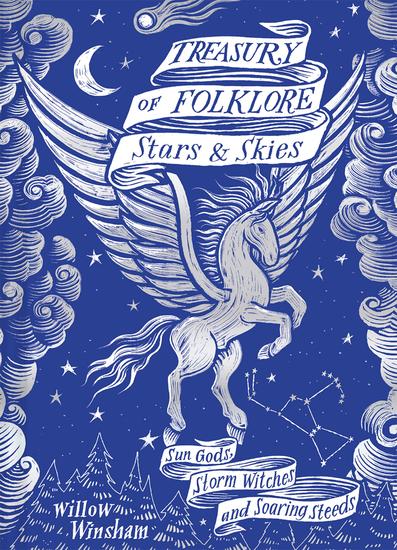
  • Treasury of Folklore: Stars and Skies - Sun Gods Storm Witches and Soaring Steeds - cover

    Treasury of Folklore: Stars and...

    Willow Winsham

    • 0
    • 0
    • 0
    Following on from the hugely popular Treasury of Folklore: Seasand Rivers and Woodlands and Forests comes Treasury of Folklore: Stars and Skies, an exploration of the mysteries of the stars, skies and heavens above.
    People have gazed up at the same stars for millennia, trading stories about them; conjuring gods and goddesses; mapping the constellations; and navigating the complex human world below. The tales, traditions and myths included here traverse countries and continents and have been chosen to highlight how humans are linked through time and place, with shared dreams, fears and ways of rationalising the unknown.
    Under 'Stars and Heavens' Willow delves into rosy fingered dawn and the hubris of Icarus, the Greek myths surrounding the constellations and the omen of meteors, the trials of the Hawaiian goddess Hina and the legend of the rabbit in the moon. In the section on 'Skies' we are introduced to winged Pegasus and the Firebird, the Witch of Westray and stories of storms, the mysteries of the Northern Lights and unexplained UFOs. 
    Treasury of Folklore: Stars and Skies is a fascinating portal into a rich history of myths surrounding the sky, an aspect of the natural world that continues to fascinate and confound.
    Ver libro
  • Psychedelics and mental health - Therapeutic applications and neuroscience of psilocybin LSD DMT and MDMA - cover

    Psychedelics and mental health -...

    Irene de Caso

    • 0
    • 0
    • 0
     
    Irene de Caso explains in an understandable and entertaining way the current neuroscientific advances related to psychedelic drugs, as well as their clinical and experiential applications.
    José Carlos Bouso, PhD, Scientific Director, ICEERS.
    
    Learn about the therapeutic uses of classical psychedelics and empathogens as revolutionary tools for neuroplasticity and mental health. Discover how they promote profoundly revealing mental states capable of restructuring our internal models of the world, reconsolidate traumatic memories and improve our social relationships. How do they affect the brain? What characteristics make these substances powerful catalysts for the psychotherapeutic process?
    Learn how they can help to improve severe symptoms: addictions, treatment-resistant depression, anxiety or post-traumatic stress.
    This illustrated guide describes the most important clinical studies and will be of great interest to all medical and mental health professionals seeking to understand the cutting edge clinical applications of these molecules, as well as to individuals interested in learning about the potential of psychedelic-assisted therapies.
    Ver libro
  • Restoring Eden - Unearthing the Agribusiness Secret That Poisoned My Farming Community - cover

    Restoring Eden - Unearthing the...

    Elizabeth D. Hilborn

    • 0
    • 0
    • 0
    All spring, Dr. Elizabeth Hilborn watched as her family fruit farm of many years became increasingly diminished, suffering from a lack of bees. 


    The plentiful wildlife, so abundant just weeks before, was gone. Everything was still, silent. 


    As an environmental scientist trained to investigate disease outbreaks, she rose to the challenge. Despite facing headwinds from skeptical neighbors, environmental experts, and agricultural consultants, she'd assembled information. 


    The chemicals found in her water samples showed beyond any doubt that not only her farm, but her greater farming community, was at risk from toxic chemicals that traveled with rain water over the land and deep within the soil. 


    Even as a scientist, she'd been unaware of the risks to life from some common agricultural chemicals. Her goal was to protect her farm and the animals who lived there. 


    But first she had to convince her rural neighbors of the risk to their way of life, too. 


    A lyrical celebration of nature by a passionate citizen scientist who felt called to advocate for the land, earth, and creatures who don't have a voice, Restoring Eden ultimately offers hope that citizens can create change, that reform is possible.
    Ver libro