
Join us on a literary world trip!
Add this book to bookshelf
Grey
Write a new comment Default profile 50px
Grey
Subscribe to read the full book or read the first pages for free!
All characters reduced
Microscopy Revolution Timeline - cover

Microscopy Revolution Timeline

Kaia Stonebrook

Translator A AI

Publisher: Publifye

  • 0
  • 0
  • 0

Summary

Microscopy Revolution Timeline explores the fascinating history and profound impact of microscopy on science and medicine. It traces the evolution of imaging techniques from early light microscopes to advanced methods like electron microscopy and super-resolution fluorescence microscopy, revealing how each breakthrough expanded our view of the micro-world. For example, the development of electron microscopy allowed scientists to see structures at the atomic level, far beyond the capabilities of light microscopes. This book highlights that microscopy isn't just a tool; it's a driving force behind scientific progress.

 
The book progresses chronologically, beginning with the earliest lenses and their applications. It then transitions into the rise of electron microscopy, detailing the shift from light to electron beams. Finally, it examines scanning probe and super-resolution techniques. Microscopy Revolution Timeline uniquely combines historical narratives with explanations of the scientific underpinnings, making complex concepts accessible. It emphasizes the interplay between technological advancements and scientific understanding, showcasing microscopy's crucial role across disciplines like biology, materials science, and nanotechnology.
Available since: 03/04/2025.
Print length: 77 pages.

Other books that might interest you

  • From Zero to Four Figures - Making $1000 a Month Self-Publishing Fiction - cover

    From Zero to Four Figures -...

    Paul Austin Ardoin

    • 0
    • 0
    • 0
    Starting out as an indie author can be daunting, especially if you don't have much money to invest in marketing. If you've published one or more books but are struggling to get sales, this is the book for you! 
    In From Zero to Four Figures, USA TODAY bestselling author Paul Austin Ardoin shows you the strategy that helped him build an audience and grow his self-published fiction business to $1,000 a month within two years. Increasing your sales requires the right books, mindset, and marketing — many new authors lack one or more of these pillars. This book helps identify the gaps and mistakes that are holding you back. 
    These guidelines are repeatable, proven, inexpensive, and attainable—and will help get your self-published fiction business off the ground.
    Show book
  • Active Empathy for Kids - Building Compassion in Your Child Through Mindful Communication: A Compact Activity Guide for Parents - cover

    Active Empathy for Kids -...

    Morgan Bravo

    • 0
    • 0
    • 0
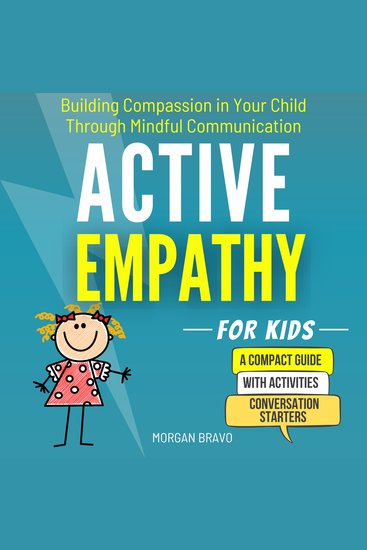
    "Active Empathy for Kids" is an essential guide for parents who want to instill the values of compassion and understanding in their children. Empathy is an essential skill that helps children connect with others, build stronger relationships, and navigate the world with kindness and understanding. 
    This compact activity guide offers valuable insights into the meaning of empathy, its causes, and the reasons behind a lack of empathy. Using mindful communication techniques and strategies, parents will learn how to foster their child's ability to empathize and show compassion towards others. 
    The book includes "Conversation Starters" that enable parents to communicate and explore the concept of empathy with their child in an engaging and accessible way. The activities in the book are designed to help children build empathy and understanding through interactive and fun exercises that encourage them to think about how others feel and how they can make a difference in the world. 
    "Active Empathy for Kids" is an invaluable resource for parents who want to nurture their child's emotional intelligence and cultivate the values of kindness and compassion. With this book as your guide, you'll be able to raise children who are empathetic, understanding, and capable of making a positive impact on the world.
    Show book
  • What God Would Have Known - How Human Intellectual and Moral Development Undermines Christian Doctrine - cover

    What God Would Have Known - How...

    J. L. Schellenberg

    • 0
    • 0
    • 0
    Classical Christian ideas loom large in philosophy of religion today. But arguments against Christian doctrine have been neglected. J. L. Schellenberg's new book remedies this neglect. 


    The tide of human development, which the early Christians might have expected to corroborate their teaching, has in fact brought many results that run contrary to that teaching. Or at least it will be seen to have done so, says Schellenberg, when we think about the consequences of any God existent then being fully cognizant, when Christian doctrine was first formed, of all that we have laboriously learned since then. Newly discovered facts, not just about such things as evolution and the formation of the New Testament but also about mental illness, violent punishment, the relations between women and men, and the status of same-sex intimacy, suggest new arguments against the content of the Christian revelation when the prior understanding of the purported revealer is taken into account. 


    What God Would Have Known offers a thorough and incisive treatment of its subject that remains respectful and fair-minded throughout. It is not concerned with the overworked question of whether classical Christians believe irrationally, but with what overlooked arguments about human development show in relation to the truth or falsity of Christian claims about reality.
    Show book
  • Wars that Forged Ancient Rome The: The History of the Military Campaigns that Established Antiquity’s Greatest Empire - cover

    Wars that Forged Ancient Rome...

    Editors Charles River

    • 0
    • 0
    • 0
    The Roman army is one of the most famous fighting forces in history. Through its power and prowess, a once obscure Italian city forged an empire that encircled the Mediterranean and covered half of Europe. The physical remains of its presence can be traced from the mountainous borders of Scotland to the arid deserts of Egypt, but its legacy is far greater and more enduring, as Rome's influence continues to shape the political, legal, and cultural landscape of Europe to this very day. 
    While the Roman army is rightly famed as an institution, the image of the individual legionary is also an iconic one. The uniformed, disciplined soldier of the late Republic and early Empire is one of the first things many people imagine when they think of Rome. They are the ultimate image of the ancient soldier, their arms and armor instantly recognizable. Their abilities, not only as warriors but also as engineers and administrators, have made them role models for other soldiers through the centuries. In the same vein, their commanders are still celebrated and studied, and generals the world over have tried to emulate the likes of Julius Caesar. 
    Caesar is still remembered for winning a civil war and helping bring about the end of the Roman Republic, leaving a line of emperors in its place, but it’s quite possible that none of what Caesar did would’ve happened without the template for such actions being set 40 years earlier. At the time, when Caesar was in his teens, war was being waged both on the Italian peninsula and abroad, with domestic politics pitting the conservative, aristocratic optimates against the populist, reformist populares, and this tension ultimately escalated into an all-out war. One of the leading populares was Caesar’s uncle, Gaius Marius, a military visionary who had restructured the legions and extended the privileges of land ownership and citizenship to legionaries.
    Show book
  • ADHD Parenting Guide for Boys - Managing Impulsive Behaviours Improving Cognitive Flexibility and Helping Your Son Thrive - cover

    ADHD Parenting Guide for Boys -...

    Emily Stafford

    • 0
    • 0
    • 0
    From Chaos to Confidence in Parenting Your Boy with ADHD. 
    A comprehensive program to help you raise a confident and independent boy with ADHD.  
    You love your boy with ADHD to the moon and back and would do anything to see them succeed. AND you are exhausted from giving approximately 328 reminders to complete the same daily tasks, yelling to got them to (sometimes) listen, and walking on eggshells to avoid the seemingly constant emotional outbursts. 
    Whether you're... 
    - A parent who suspects your child has ADHD, but you don't have a diagnosis. 
    - A parent whose child just received a diagnosis of ADHD. 
    - A parent whose child has had a diagnosis of ADHD for a long time.Here’s What You’ll learn. 
    - Understanding ADHD. 
    - Common Triggers of ADHD to Be Aware Of. 
    - What to Expect When Your Boy Has ADHD. 
    - How I Influence My Child’s Behavior. 
    - Managing ADHD Behavior Away from Home. 
    - The Five Reinforcements for ADHD Behavior. 
    - Improving Social Skills of Children with ADHD. 
    - Getting Knowledge About Self-Control. 
    - Behavioral Therapy for ADHD. 
    - Supporting a Boy with ADHD. 
    - Reducing Conflicts with Your Child. 
    - ADHD at School. 
    - Managing Big Emotions.You will learn: 
    - Why your child is disorganized, late, and distracted... and how you can help. 
    - Strategies to handle meltdowns and give your child tools to cope. 
    - Easy tools to make chaotic mornings and bedtimes much smoother. 
    - A clear approach to handle behaviors like defiance, lying, and hitting. 
    - Healthy boundaries to save your sanity while raising a confident child.A year from now you will have wished you started today....So let's get started!
    Show book
  • Chasing the Intact Mind - How the Severely Autistic and Intellectually Disabled Were Excluded from the Debates That Affect Them Most - cover

    Chasing the Intact Mind - How...

    Amy S.F. Lutz

    • 0
    • 0
    • 0
    The concept of the intact mind, first described in a 2006 memoir, refers to the idea that inside every autistic child is an intelligent, typical child waiting to be liberated by the right diet, the right treatment intervention, the right combination of supports and accommodations. The sentiment itself is not new. Though the idea gives hope to parents devastated by a child's diagnosis, Amy Lutz argues that it has also contributed to widespread dismantling of services badly needed by severely disabled children and their families. 


    In Chasing the Intact Mind, Lutz traces the history of the intact mind concept, explaining how it influences current policy and practice affecting those with autism. Lutz provides a historical analysis of the intact mind narrative and describes how the concept—originally unique to autism—has come to inform current debates at the heart of intellectual and developmental disability practice and policy in the United States. Lutz argues that focusing on the intact mind and marginalizing those with severe disability reproduces historic patterns of discrimination that yoked human worth to intelligence, and that it is only by making space for the impaired mind that we will be able to resolve these ongoing clashes—as well as even larger questions of personhood, dependency, and care.
    Show book