Join us on a literary world trip!
Add this book to bookshelf
Grey
Write a new comment Default profile 50px
Grey
Subscribe to read the full book or read the first pages for free!
All characters reduced
Lunar Cycles - cover

Lunar Cycles

Kaia Stonebrook

Translator A AI

Publisher: Publifye

  • 0
  • 0
  • 0

Summary

"Lunar Cycles" explores the pivotal role of the moon in shaping ancient civilizations. From Mesopotamia to Egypt and China, the moon wasn't just a celestial body; it was a fundamental tool for timekeeping, agriculture, and religious practices. Ancient societies ingeniously used lunar cycles to create calendars, plan harvests, and structure their social lives. Intriguingly, the consistent phases of the moon provided a reliable framework for predicting seasonal changes, and some cultures even believed lunar phases directly influenced crop yields. 

 
The book examines lunar calendars and their impact on agriculture and religious ceremonies. It details how lunar cycles influenced ancient farmers' planting and harvesting decisions and how different cultures incorporated the moon into their mythology and worship. Through historical and archaeological evidence, "Lunar Cycles" argues that the moon was an active agent in human development, connecting history, astronomy, and anthropology to provide a holistic understanding.

 
Starting with an introduction to lunar cycles, the book progresses through the development of lunar calendars, the moon's influence on agriculture, and its role in religious practices, culminating in a discussion of its enduring legacy.
Available since: 03/04/2025.
Print length: 54 pages.
Other books that might interest you

  • A Womanist Theology of Worship - Liturgy Justice and Communal Righteousness - cover

    A Womanist Theology of Worship -...

    Lisa Allen

    • 0
    • 0
    • 0
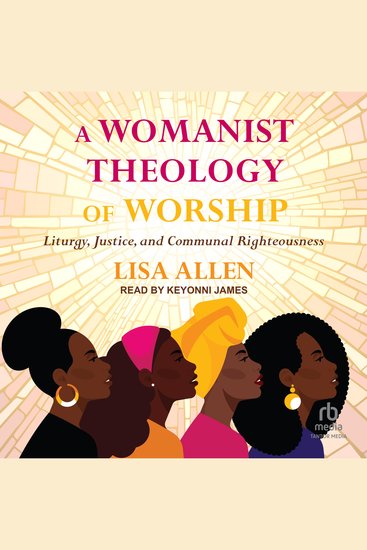
    In this "love letter to the Black Church," Dr. Lisa Allen examines the history of worship in the Black Church in America (and its legacy of equating liturgy with justice), the enduring effects of white supremacy on its liturgical heritages, and finally proffers a new liturgical paradigm, using a womanist hermeneutic, for students, liturgists, liturgical musicians, and lay people.
    Show book
  • Fool - In Search of Henry VIII's Closest Man - cover

    Fool - In Search of Henry VIII's...

    Peter K. Andersson

    • 0
    • 0
    • 0
    In some portraits of Henry VIII there appears another figure—a gaunt and morose-looking man with a shaved head. This is William or "Will" Somer, the king's fool, a celebrated wit who reportedly could raise Henry's spirits and spent many hours with him. Was Somer an "artificial fool," a cunning comic who could speak freely in front of the king, or a "natural fool," someone with intellectual disabilities, like many other members of the profession? Fool is the first biography of Somer—and perhaps the first of a Renaissance fool. 


    After his death, Somer disappeared, and historians struggled to separate myth from reality. Unearthing as many facts as possible, Peter K. Andersson pieces together the fullest picture yet of an enigmatic and unusual man with a strange job. Somer's story provides new insights into how fools lived and what they did for a living, how monarchs and courtiers related to commoners and people with disabilities, and whether aspects of the Renaissance fool live on in the modern comedian. But most of all, we learn how a commoner without property or education managed to become the court's chief mascot and a continuous presence at the center of Tudor power. 


    Fool reveals a little-known world, surprising and disturbing, when comedy was something crueler and more unpleasant than we like to think.
    Show book
  • Compassion - The Heart of Connection - cover

    Compassion - The Heart of...

    Esther Jameson

    • 0
    • 0
    • 0
    Compassion is a fundamental human quality, one that transcends individual differences and connects us to one another in profound ways. It is often described as the ability to feel and show concern for the suffering of others, accompanied by a desire to alleviate that suffering. At its core, compassion involves recognizing the pain or distress someone else is experiencing and responding with kindness, empathy, and support. This emotional response is not just about feeling for someone else; it is about acting in ways that may help them through their difficult times. 
    The essence of compassion lies in empathy, which is the ability to deeply understand and share the feelings of another. When we empathize with someone, we can put ourselves in their shoes, imagining their emotional and physical states. Compassion takes this a step further, as it compels us to act in a way that can alleviate or ease their suffering. It is more than simply being moved by someone’s pain; it is the drive to do something about it, whether through words of encouragement, acts of service, or offering comfort. 
    It is important to distinguish compassion from sympathy. Sympathy involves feeling pity or sorrow for someone else's misfortune, but it lacks the proactive component that characterizes compassion. While sympathy may evoke a response such as feeling sad for someone, compassion urges us to take action in a positive way. Compassion connects us to others through action and intention, and it is through this action that we create genuine bonds and meaningful relationships.
    Show book
  • First Book of Corinthians The - The World English Bible Book 46 (Unabridged) - cover

    First Book of Corinthians The -...

    Various Authors

    • 0
    • 0
    • 0
    The First Epistle to the Corinthians is one of the Pauline epistles, part of the New Testament of the Christian Bible. The epistle is attributed to Paul the Apostle and a co-author, Sosthenes, and is addressed to the Christian church in Corinth. Scholars believe that Sosthenes was the amanuensis who wrote down the text of the letter at Paul's direction. It addresses various issues that had arisen in the Christian community at Corinth, and is composed in a form of Koine Greek.
    Show book
  • Star Portals & Celestial Journeys - From the Ladder of Jacob to Nag Hammadi’s Cosmic Realms—Interstellar Travel in Sacred Writings - cover

    Star Portals & Celestial...

    Various Ancient Writers, Tim...

    • 0
    • 0
    • 0
    What if every heartbeat were a countdown to launch beyond the stars? 
    The Star Portals & Celestial Journeys audiobook blends evocative narration with subtle cosmic ambience, escorting you through: 
    •	The Ladder of Jacob – A thunderous opening of the heavenly gate. 
    •	Ascension of Isaiah – Seven ascending key-changes of choir and chime. 
    •	Zostrianos, Paraphrase of Shem, Allogenes, Marsanes – Whispered Gnostic passwords and soaring synth drones. 
    Brief scene-setting commentaries keep you oriented without breaking immersion, making this perfect for night drives, meditation, or imaginative flights past Orion’s belt.
    Show book
  • Teleology - Purpose in Nature: Understanding Design and Intent - cover

    Teleology - Purpose in Nature:...

    Mike Crawford

    • 0
    • 0
    • 0
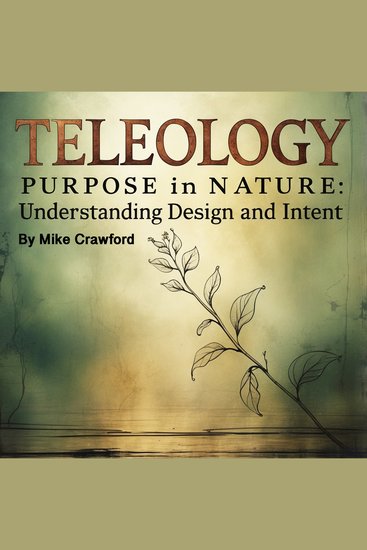
    Teleology is the study of purpose, design, and goal-directedness in nature. It is a concept that has shaped philosophical, scientific, and theological discourse for centuries, offering explanations for why things exist and function the way they do. The term itself comes from the Greek word telos, meaning "end" or "goal," and logos, meaning "study" or "reason." At its core, teleology seeks to explain natural phenomena by considering their intended purpose or final cause rather than merely their material composition or mechanical processes. This perspective has been a fundamental part of human thought, influencing fields as diverse as biology, ethics, cosmology, and psychology. 
    The significance of teleology lies in its ability to provide a framework for understanding the apparent order and directionality in the world. From the intricate adaptations of biological organisms to the finely tuned laws of the universe, teleological reasoning has historically been used to argue for the presence of intentionality or inherent purpose in natural systems. Philosophers such as Aristotle, who introduced the concept of final causes, and later thinkers like Thomas Aquinas, who integrated teleology into theological arguments, viewed the natural world as inherently purposeful. Even in modern times, teleological thinking persists in various scientific discussions, particularly in debates surrounding evolution, complexity, and emergent phenomena.
    Show book