Join us on a literary world trip!
Add this book to bookshelf
Grey
Write a new comment Default profile 50px
Grey
Subscribe to read the full book or read the first pages for free!
All characters reduced
Lost Calendars - cover

Lost Calendars

Kaia Stonebrook

Translator A AI

Publisher: Publifye

  • 0
  • 0
  • 0

Summary

Lost Calendars explores the fascinating history of timekeeping by delving into ancient and often forgotten calendrical systems. It reveals how civilizations tracked time, embedding sophisticated science and deep cultural significance into their methods. These lost calendars offer insights into the worldviews of past societies and challenge our assumptions about the universality of time. For example, the intricate Mayan calendar system showcased remarkable mathematical precision linked to complex cosmological beliefs. Similarly, Mesopotamian calendars were closely tied to agriculture and early record-keeping practices, demonstrating the vital role of timekeeping in daily life. The book examines the technological and astronomical expertise needed to construct these calendars and their connection to social, religious, and agricultural practices. It progresses from introducing fundamental concepts like solar and lunar calendars to specific case studies, ultimately discussing why these systems were abandoned due to factors like conquest or the adoption of standardized timekeeping. By treating calendars as cultural artifacts, Lost Calendars provides invaluable insights into the intellectual and spiritual lives of past civilizations, offering alternative ways of understanding our place in the cosmos.
Available since: 03/04/2025.
Print length: 59 pages.

Other books that might interest you

  • Conversational Phrases Czech Audiobook - Level 1 - Absolute Beginner - cover

    Conversational Phrases Czech...

    CzechClass101.com, Innovative...

    • 0
    • 0
    • 0
    Are you trying to learn Czech…but having trouble speaking?
     
    Do you struggle coming up with your own Czech sentences?
     
    Are you tired of not understanding how Czech grammar works?


    If you answered yes to any of these questions, …


    ...then the Conversational Phrases Audiobook, Level 1 - Absolute Beginner is for you!


    In this beginner-level Audiobook, you will master over 25 common sentence patterns across 25 simple lessons. By the end, you’ll be able to ask common questions and answer them in your own way, all while acquiring over 100 Czech words. 


    Most importantly, you’ll be able to have real conversations in various social situations.


    How, you may ask? Each lesson introduces a new conversation reflecting a real-world situation, including casual chats between friends as well as dialogues in more formal settings. Learning is made easy with three simple steps:


    1. Get familiar: First, you get a sample conversation and its translation.
     
    2. Understand: Then, we explain an underlying sentence pattern, so you can grasp the grammar and actually understand how the Czech works.
     
    3. Practice: Lastly, you create your own responses… and start speaking Czech!


    Lessons in this audiobook include:
     
    - Going Sightseeing
     
    - Going to a Restaurant
     
    - Giving Directions
     
    - Going to the Movies
     
    - Renting an Apartment
     
    And much more!


    Conversational Phrases Audiobook, Level 1 - Absolute Beginner contains:
     
    - 25 Lessons 
     
    - 4 Hours+ of Content
     
    - 1 Core Pattern Per Lesson
     
    - 100+ Czech Vocabulary Words
     
    - 28 Page Accompanying PDF eBook


    Download the PDF and read along
    Show book
  • Indigenous Spirituality and Global Wisdom - Discover how Indigenous spirituality reveals the timeless truths shared by all great religions - cover

    Indigenous Spirituality and...

    Mayur Katariya

    • 0
    • 0
    • 0
    What if the key to a more connected and mindful life lies in ancient wisdom, we've overlooked?  
    This audiobook explores the spiritual traditions of Indigenous Australians, with a focus on the practice of Dadirri—a deep form of listening and contemplation.  
    It also examines parallels between Indigenous spirituality and other global wisdom traditions, such as Zen Buddhism, Vedic traditions, and Christian mysticism. By the end of the book, learners will develop a deeper understanding of Indigenous spirituality, its holistic worldview, and how these practices can be integrated into their personal and spiritual lives.  
    This is not just a journey into history—it may transform the way you approach your own spiritual and personal growth.  
    This is a lesson in why the wisdom of Indigenous cultures remains profoundly relevant today, for all of us.
    Show book
  • The History of Venezuela - Economic Troubles - cover

    The History of Venezuela -...

    Anya Solace

    • 0
    • 0
    • 0
    Venezuela’s economic history is deeply intertwined with its political and social landscape, shaped by cycles of prosperity and crisis. While the country has vast natural resources, particularly oil, mismanagement, external pressures, and political instability have contributed to its economic troubles. Understanding the roots of these challenges requires examining Venezuela’s early economic foundations, the role of oil in its development, and the influence of political decisions on its financial stability.  
    In its early history, Venezuela’s economy was primarily based on agriculture and trade. Before the discovery of oil in the early 20th century, the country relied on exports of coffee, cocoa, and other agricultural products. While these industries provided some level of economic growth, wealth distribution remained highly uneven, favoring a small elite class while the majority of the population struggled with poverty. The transition from an agrarian economy to an oil-driven one dramatically altered Venezuela’s financial structure, offering immense opportunities but also creating long-term vulnerabilities.  
    The discovery of vast oil reserves in the early 20th century transformed Venezuela into one of the world’s leading oil producers. By the mid-20th century, petroleum had become the backbone of the national economy, contributing to rapid industrialization, urbanization, and infrastructure development. The influx of oil wealth led to economic booms and improved social programs, but it also fostered dependence on a single commodity. This overreliance on oil made Venezuela’s economy highly sensitive to fluctuations in global oil prices. Whenever oil prices soared, the government expanded public spending and welfare programs, but during downturns, the country faced severe financial instability. 
    Show book
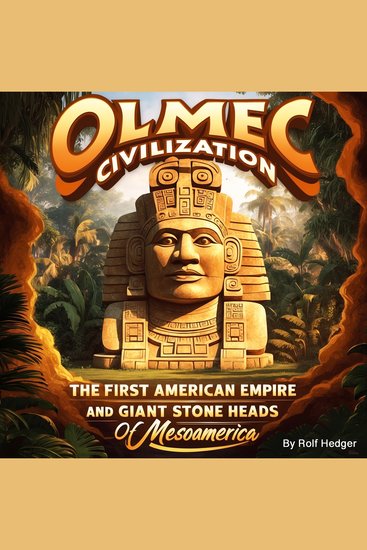
  • Olmec Civilization - The First American Empire and Giant Stone Heads of Mesoamerica - cover

    Olmec Civilization - The First...

    Rolf Hedger

    • 0
    • 0
    • 0
    The Olmec civilization, often regarded as the "Mother Culture" of Mesoamerica, emerged around 1200 BCE in the tropical lowlands of present-day southern Mexico, specifically in the Gulf Coast region. This area, rich in natural resources, served as the cradle for one of the earliest and most influential cultures in the Americas. The Olmec are best known for their monumental stone heads, intricate artwork, and the development of many foundational aspects of Mesoamerican civilization. 
    The origins of the Olmec civilization can be traced back to a combination of environmental factors, agricultural innovations, and the development of social structures. The region’s fertile lands provided an abundant supply of food, particularly maize, which became the cornerstone of Olmec agriculture. The availability of other crops, such as beans, squash, and cassava, further supported the growth of a settled society. The Olmec were skilled farmers, and their ability to adapt to the challenging conditions of the tropical lowlands allowed them to create surplus food, leading to population growth and the emergence of more complex social and political systems. 
    One of the defining features of the Olmec civilization was the rise of their urban centers, most notably San Lorenzo, La Venta, and Tres Zapotes. These cities became hubs of political and religious activity, with powerful rulers who controlled vast territories. The creation of these urban centers marked a shift from small, scattered villages to larger, more centralized societies. The Olmec rulers established authority through both political power and religious influence, often associating themselves with divine figures and acting as intermediaries between the gods and the people. This centralization of power allowed for the coordination of large-scale construction projects, such as the creation of the colossal stone heads and other monumental sculptures.
    Show book
  • Justice on Trial - How High-Profile Court Cases Change the Law - cover

    Justice on Trial - How...

    Sean Dupree

    • 0
    • 0
    • 0
    Discover the compelling narratives behind landmark legal battles that reshaped the fabric of justice in Justice on Trial: How High-Profile Court Cases Change the Law. Authored by Sean Dupree, this riveting book dives into cases that challenged societal norms, highlighted systemic flaws, and left an indelible mark on law and society. 
    Explore the stories of Rodney Reed, the Central Park Five, and Brown v. Board of Education. Delve into the chilling trials of the Scottsboro Boys and Furman v. Georgia that questioned the morality of the death penalty. Witness the transformative power of Roe v. Wade and the lessons learned from Billie Holiday's struggles with addiction and race. Each chapter uncovers the intricate dynamics of race, gender, media influence, and the evolving judicial process, offering an insightful lens into the interplay between public pressure and legal reforms. 
    This book is essential for true crime enthusiasts, legal minds, and anyone intrigued by the evolution of justice. By examining cases like Emmett Till, the West Memphis Three, and Kirk Bloodsworth, Sean Dupree sheds light on the humanity within the courtroom and the power of law to instigate societal change. 
    Whether you're captivated by courtroom drama, inspired by the fight for equality, or fascinated by the complexities of legal reform, Justice on Trial is a must-read. Embark on this journey through the pivotal trials that changed the law—and our world.
    Show book
  • Tyrants - History's 100 Most Evil Despots & Dictators - cover

    Tyrants - History's 100 Most...

    Nigel Cawthorne

    • 0
    • 0
    • 0
    "I have committed many acts of cruelty and had an incalculable number of men killed, never knowing whether what I did was right. But I am indifferent to what people think of me." 
    - Genghis Khan 
     
    A spine-chilling chronicle of dictators and their crimes against humanity, Tyrants introduces the most bloodthirsty madmen - and women - ever to wield power over their unfortunate fellow human beings.  
     
    From Herod the Great, persecutor of the infant Jesus, to Adolf Hitler, mass murderer and instigator of the most devastating war the world has ever known, this book examines history's most infamous despots and tells in vivid detail the story of the lives they led, their ruthless climb to the top and the destruction and sorrow they left in their wake. 
     
    Unflinching in its coverage, Tyrants is a gripping and compelling portrait of the darker side of politics and power, revealing the strange and grisly stories behind the world's most infamous autocrats.
    Show book