Join us on a literary world trip!
Add this book to bookshelf
Grey
Write a new comment Default profile 50px
Grey
Subscribe to read the full book or read the first pages for free!
All characters reduced
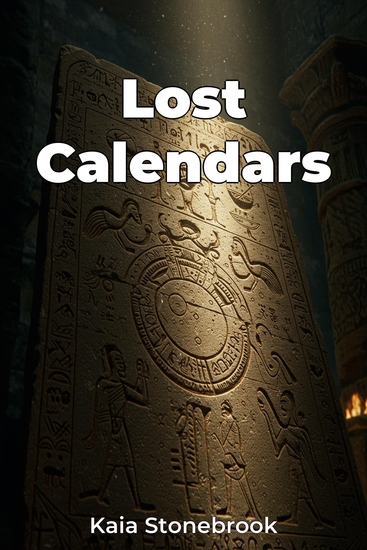
Lost Calendars - cover

Lost Calendars

Kaia Stonebrook

Translator A AI

Publisher: Publifye

  • 0
  • 0
  • 0

Summary

Lost Calendars explores the fascinating history of timekeeping by delving into ancient and often forgotten calendrical systems. It reveals how civilizations tracked time, embedding sophisticated science and deep cultural significance into their methods. These lost calendars offer insights into the worldviews of past societies and challenge our assumptions about the universality of time. For example, the intricate Mayan calendar system showcased remarkable mathematical precision linked to complex cosmological beliefs. Similarly, Mesopotamian calendars were closely tied to agriculture and early record-keeping practices, demonstrating the vital role of timekeeping in daily life. The book examines the technological and astronomical expertise needed to construct these calendars and their connection to social, religious, and agricultural practices. It progresses from introducing fundamental concepts like solar and lunar calendars to specific case studies, ultimately discussing why these systems were abandoned due to factors like conquest or the adoption of standardized timekeeping. By treating calendars as cultural artifacts, Lost Calendars provides invaluable insights into the intellectual and spiritual lives of past civilizations, offering alternative ways of understanding our place in the cosmos.
Available since: 03/04/2025.
Print length: 59 pages.
Other books that might interest you

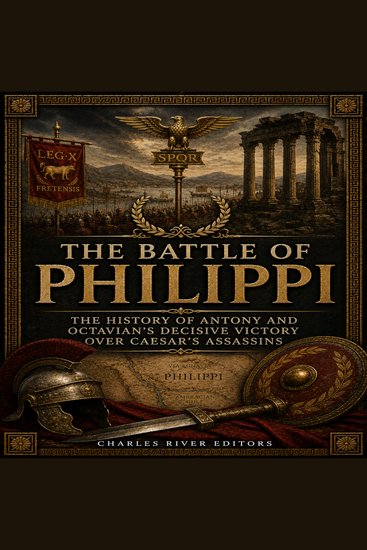
  • Battle of Philippi The: The History of Antony and Octavian’s Decisive Victory Over Caesar’s Assassins - cover

    Battle of Philippi The: The...

    Charles River Editors

    • 0
    • 0
    • 0
    Even in his time, Julius Caesar was in many ways larger than life, and because of his legacy as virtual founder of the Roman Empire, much of what was written about and by him during his life and immediately after his assassination was politically motivated. The fact that he was murdered on the Ides of March is universal knowledge, as is the name of his most famous assassin. Marcus Brutus has been history’s most notorious assassin since the Ides of March in 44 B.C., but aside from his conspiracy, the rest of his life is often overlooked, especially his role in the subsequent civil war. In fact, forces loyal to Brutus and the other main conspirator, Cassius, fought one of the biggest battles in Roman history against Octavian and Mark Antony at Philippi, and it was one that they very nearly won. However, by the end of the decisive battle, Brutus and Cassius had lost, and both had taken their own lives. After Octavian rose to power by defeating Antony in yet another civil war, he was able to establish himself as Augustus, and the Republic that Caesar’s assassins had hoped to save was truly finished.  
    	Naturally, Augustus’s victories ensured that Brutus was mostly despised during his reign, and Brutus’ negative reputation persevered over the centuries, but in more modern times, Brutus has undergone something of a rehabilitation. As Western political thought shifted away from the Divine Right of Kings and towards democracy, Brutus began to be viewed in a far more sympathetic light. In Shakespeare’s Julius Caesar itself, Brutus is praised as the best of the conspirators because his motives were described not as being for personal gain but a genuine desire to act for the good of the Republic, however misguided. Later, he became viewed as something of a populist hero, the man who had stood up in defense of a democratic government against a tyrant who wished to seize power for himself alone.
    Show book
  • Perfect Victims - and the Politics of Appeal - cover

    Perfect Victims - and the...

    Mohammed El-Kurd

    • 0
    • 0
    • 0
    "Mohammed El-Kurd has written a new Discourse on Colonialism for the twenty-first century." —Robin D. G. Kelley 


    Perfect Victims is an urgent affirmation of the Palestinian condition of resistance and refusal—an ode to the steadfastness of a nation. 


    Palestine is a microcosm of the world: on fire, stubborn, fragmented, dignified. While a settler colonial state continues to inflict devastating violence, fundamental truths are deliberately obscured—the perpetrators are coddled while the victims are blamed and placed on trial. 


    Why must Palestinians prove their humanity? And what are the implications of such an infuriatingly impossible task? With fearless prose and lyrical precision, Mohammed El-Kurd refuses a life spent in cross-examination. Rather than asking the oppressed to perform a perfect victimhood, El-Kurd asks friends and foes alike to look Palestinians in the eye, forgoing both deference and condemnation. 


    How we see Palestine reveals how we see each other; how we see everything else. Masterfully combining candid testimony, history, and reportage, Perfect Victims presents a powerfully simple demand: dignity for the Palestinian.
    Show book
  • The Curiosity Quotient - A Renegade Pathologist's Detour Guide to the Morgue - cover

    The Curiosity Quotient - A...

    Sabine O’Laughlin

    • 0
    • 0
    • 0
    Are You Living… or Just Managing Your Way to the Morgue?
     
    Dr.
     Sabine O’Laughlin—renegade pathologist turned functional health 
    rebel—delivers a provocative guide to waking the hell up. She dedicated 
    her career studying death and disease which has fostered a passion for 
    life and health.
     
    The Curiosity Quotient
     isn’t just another self-help formula or woo-woo wellness plan. It’s a 
    fierce, funny, and deeply personal invitation to explore what’s been 
    killing your energy, your joy, and your sense of possibility. Through 
    sharp insights, irreverent stories, and the groundbreaking Health Matrix™ Success Navigator, you'll uncover the unconscious patterns, systems, and family dynamics that keep you stuck—and how to get unstuck.
     
    Forget perfection. Forget pleasing. Forget waiting until it’s “bad enough.”
     
    This is your call to curiosity, to freedom, to vitality. Because the real diagnosis is this:You’ve been playing dead.Now it’s time to come alive.
    Show book
  • Faithful Futures - Sacred Tools for Engaging Younger Generations - cover

    Faithful Futures - Sacred Tools...

    Josh Packard

    • 0
    • 0
    • 0
    In a world where young people are increasingly disconnected from traditional religious institutions and influenced by social media, Faithful Futures offers church leaders a lifeline: practical, research-based tools to engage Gen Z and Gen Alpha in meaningful conversations about faith. This book provides actionable strategies that build trust and foster belonging in today's rapidly changing cultural landscape. 


    Traditional approaches to youth ministry are often outdated and ineffective for younger generations, says Josh Packard. Instead, he advocates an approach that emphasizes relational authority, cultivates belonging, and understands faith as an ongoing conversation. Drawing on fresh data, innovative practices, and more than twenty years of experience as a sociologist, Packard offers a comprehensive guide for religious leaders to understand and engage younger generations authentically. 


    Informed yet accessible, this book translates complex concepts into practical strategies, addressing the unique cultural and digital landscapes of today's youth and offering new ways to resonate with their realities. It features exercises, tools, and end-of-chapter discussion questions.
    Show book
  • The Lotus - cover

    The Lotus

    Aya I. Chebaro

    • 0
    • 0
    • 0
    In this transformative book, the author shares a deeply personal journey through anxiety and psychosomatic struggles, shedding light on experiences that often go unspoken. With a candid exploration of the blunt truths that many people face but few articulate, this book invites readers to confront their own challenges with honesty and courage.Interwoven with personal anecdotes, research findings, and motivational insights, this book is more than a story of recovery; it is a call to action for anyone seeking to reclaim control over their mental and emotional well-being. The book powerfully illustrates that by shifting one's identity to embrace healing, individuals can unlock their potential and emerge stronger, much like a lotus flower grows out of muddy waters.
    Show book
  • Survival Food - North Woods Stories by a Menominee Cook - cover

    Survival Food - North Woods...

    Thomas Pecore Weso

    • 0
    • 0
    • 0
    In these coming-of-age tales set on the Menominee Indian Reservation of the 1980s and 1990s, Thomas Pecore Weso explores the interrelated nature of meals and memories. As he puts it, “I cannot separate foods from the moments in my life when I first tasted them.” Weso’s stories recall the foods that influenced his youth in northern Wisconsin: subsistence meals from hunted, fished, and gathered sources; the culinary traditions of the German, Polish, and Swedish settler descendants in the area; and the commodity foods distributed by the government—like canned pork, dried beans, and powdered eggs—that made up the bulk of his family’s pantry. His mom called this “survival food.” These stories from the author’s teen and tween years—some serious, some laugh-out-loud funny—will take readers from Catholic schoolyards to Native foot trails to North Woods bowling alleys, while providing Weso’s perspective on the political currents of the era. The book also contains dozens of recipes, from turtle soup and gray squirrel stew to twice-baked cheesy potatoes. This follow-up to Weso’s Good Seeds: A Menominee Indian Food Memoir is a hybrid of modern foodways, Indigenous history, and creative nonfiction from a singular storyteller. “This book is not only about survival food, but about the singular beauty, creativity, and fortitude that comes out of that survival.” —Chef Sean Sherman, author, The Sioux Chef’s Indigenous Kitchen “Survival Food is interesting because it’s one part cookbook, three parts memoir, one part history, and one part multidisciplinary exploration of its setting, northern Wisconsin." —James Norton, The Cookbook Test
    Show book