Join us on a literary world trip!
Add this book to bookshelf
Grey
Write a new comment Default profile 50px
Grey
Subscribe to read the full book or read the first pages for free!
All characters reduced
Hydration Indoors - cover

Hydration Indoors

Kaia Stonebrook

Translator A AI

Publisher: Publifye

  • 0
  • 0
  • 0

Summary

Hydration Indoors reveals the surprising connection between your health and the quality of your indoor environment, specifically focusing on water, air, and humidity. It highlights how factors like water contamination and poor air filtration can negatively impact well-being, leading to dehydration or respiratory issues. The book stresses that most people spend the majority of their time indoors, making indoor environmental quality a key determinant of long-term health.

 
Did you know that the effectiveness of your air filtration system can significantly affect the levels of indoor particulate matter, thus affecting respiratory health? Or that maintaining optimal humidity can prevent the growth of harmful mold and bacteria?

 
The book explores the historical context of water treatment and air quality standards before diving into practical strategies for improving your home environment. Organized into distinct sections covering water quality, air filtration, and humidity control, Hydration Indoors offers actionable advice. It also gives guidance on selecting the right technologies, such as air purifiers and water filters, and practices for individual needs. The book provides checklists and buying guides, empowering readers to create a healthier indoor space.
Available since: 02/21/2025.
Print length: 101 pages.

Other books that might interest you

  • Data Modeling and Database Design - 3 in 1 Guide - cover

    Data Modeling and Database...

    Brian Murray

    • 0
    • 0
    • 0
    "Data Modeling and Database Design: Turn Your Data into Actionable Insights" is a comprehensive 3 in 1 guide to designing and implementing effective database solutions. With the explosion of data in today's world, businesses and organizations need reliable and efficient ways to store, manage, and analyze data. This book provides a step-by-step approach to data modeling and database design, covering the fundamentals of database management and advanced techniques for optimizing data storage and retrieval. 
    Starting with an introduction to data modeling and database design, the book covers the essential concepts and techniques for creating a data model that accurately represents the data and supports the organization's business requirements. It then explores database design, covering the creation of database schemas, normalization, and indexing, and the implementation of database objects such as tables, views, and stored procedures. 
    The book also covers advanced topics such as data warehousing, big data, and cloud databases. It discusses the challenges and opportunities presented by these new technologies and provides practical guidance on how to design and implement effective database solutions in these environments. 
    Throughout the book, the emphasis is on practical, real-world examples, with case studies and examples drawn from a variety of industries and domains. The book is aimed at database developers, data architects, and data analysts, as well as anyone interested in learning about data modeling and database design. 
    By the end of the book, readers will have a comprehensive understanding of data modeling and database design, and the skills and knowledge needed to design and implement effective database solutions that turn data into actionable insights. 
     
    Show book
  • Millenia of Minds - Thinkers Who Rewired Humanity - cover

    Millenia of Minds - Thinkers Who...

    Ylia Callan

    • 0
    • 0
    • 0
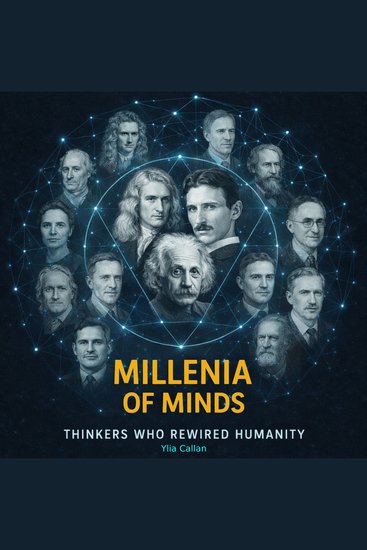
    This audiobook is narrated by an AI Voice.  What distinguishes a great mind from an ordinary one? How do the rarest geniuses see the world in ways others cannot? 
     
    Millenia of Minds, Thinkers Who Rewired Humanity explores the extraordinary cognitive processes of the most influential thinkers of the last millennium and beyond. This book goes beyond biographies and achievements to examine how genius thinks, imagines, and perceives. It reveals patterns of thought that allowed these individuals to unlock truths invisible to ordinary minds. 
     
    From Isaac Newton, who felt the geometry of motion before calculus existed, to Nikola Tesla, who internally simulated entire machines; from Srinivasa Ramanujan, who received mathematics like visions in dreams, to Kurt Gödel, who discovered the limits of logic itself — this book examines the minds that reshaped mathematics, physics, and philosophy. Other minds include Michael Faraday, Albert Einstein, John von Neumann, Alan Turing, Marie Curie, James Clerk Maxwell, Wolfgang Pauli, Euclid, Archimedes, Aristotle, and Carl Friedrich Gauss. 
     
    Each chapter explores unique cognitive traits: structural intuition, internal simulation, persistent perception, system-building, and the capacity to sense underlying coherence or inconsistency. The book highlights how these minds operated in isolation, endured personal cost, and yet reshaped human understanding. 
     
    More than a history of genius, this work is a guide to appreciating the architecture of human thought, intuition, and creativity. It demonstrates that exceptional cognition is not simply knowledge accumulated, but the ability to perceive reality’s hidden structure and act upon it. 
     
    For readers fascinated by science, mathematics, philosophy, or the nature of human consciousness, this book offers a rare opportunity to explore how the greatest minds actually thought, and what their methods reveal about the untapped potential of our own cognition.
    Show book
  • Decentralized Computing - The Evolution of Power and Possibility - cover

    Decentralized Computing - The...

    Saimon Carrie

    • 0
    • 0
    • 0
    "Decentralized Computing: The Evolution of Power and Possibility" explores the transformative impact of blockchain and decentralized technologies on our world today and in the future. From revolutionizing finance and governance to empowering individuals and communities, decentralized computing represents a paradigm shift in how we interact, transact, and govern. 
    In this insightful exploration, we delve into the foundational principles of decentralization, tracing its evolution from the creation of Bitcoin to the emergence of smart contracts and decentralized applications (dApps) on platforms like Ethereum. We uncover how these technologies have democratized access to financial services through decentralized finance (DeFi), enabling peer-to-peer transactions, lending, and investing without intermediaries. 
    Moreover, the book examines how decentralized networks are reshaping governance models, with innovations like Decentralized Autonomous Organizations (DAOs) enabling transparent decision-making and community-driven initiatives. We explore the potential of blockchain to enhance data privacy and digital autonomy through self-sovereign identity solutions and decentralized storage systems, empowering individuals to control their personal information securely. 
    "Decentralized Computing" also addresses the challenges and opportunities inherent in this technological revolution. It navigates regulatory landscapes, security considerations, and scalability issues while advocating for ethical and responsible innovation. The book underscores the potential of decentralized computing to drive sustainable development, promote environmental stewardship, and foster inclusive economic growth. 
    Join us on a journey into the decentralized future, where power shifts from centralized authorities to empowered communities, and possibilities for innovation and equitable progress abound. 
     
    Show book
  • Biotechnology and Bioinformatics - From Gene Editing to Personalized Medicine - cover

    Biotechnology and Bioinformatics...

    Daniel Garfield

    • 0
    • 0
    • 0
    "Biotechnology and Bioinformatics: Fundamentals and Applications" is a comprehensive guide to the cutting-edge technologies and practices that are driving modern science. This book covers the basics of biotechnology and bioinformatics, including their definitions, histories, and applications in various fields. 
    Readers will gain an understanding of the fundamental techniques used in biotechnology, such as genetic engineering, gene editing, PCR, DNA sequencing, and microarray technology. The book also explores the applications of biotechnology in agriculture, biomedical science, industrial biotechnology, and environmental biotechnology. 
    Bioinformatics is introduced as an essential component of modern biology, and readers will learn about genomics, proteomics, transcriptomics, metabolomics, and systems biology. This book provides an overview of the various tools and techniques used in bioinformatics, including database management systems, sequence alignment algorithms, statistical analysis tools, and visualization tools. 
    The applications of bioinformatics are explored in depth, including drug discovery, personalized medicine, biomedical research, agriculture, and environmental science. The book also delves into the ethical and social implications of biotechnology and bioinformatics, and the regulation and governance of these technologies. 
    Finally, readers will gain insight into the future of biotechnology and bioinformatics, including the challenges and obstacles that must be overcome to realize the full potential of these technologies. This book is an essential resource for students, researchers, and professionals in the fields of biology, biotechnology, bioinformatics, and related disciplines, as well as anyone interested in the fascinating world of modern science.
    Show book
  • Grass-Fed Beef for a Post-Pandemic World - How Regenerative Grazing Can Restore Soils and Stabilize the Climate - cover

    Grass-Fed Beef for a...

    Ridge Shinn, Lynn Pledger

    • 0
    • 0
    • 0
    The COVID-19 pandemic exposed the vulnerabilities of our globalized food system and highlighted the desperate need for local and regional supplies of healthy meat. We must replace corn-based feedlots, which are responsible for significant climate emissions, nitrogen pollution, and animal suffering. Grass-Fed Beef for a Post-Pandemic World outlines a hopeful path out of our broken food system via regional networks of regeneratively produced meat. In 2017, Ridge Shinn and Lynne Pledger went to market with Big Picture Beef, a company that partners with farmers across the Northeast to increase access to wholesale markets while promoting holistic grazing management techniques. The result? Increased health benefits for consumers, the environment, and livestock. This book compiles information from the fields of ecology, climate science, nutrition, and animal welfare, along with on-the-farm stories from Ridge’s travels as a consultant all over the world. It reveals that regenerative grazing can restore degraded farmland, protect against droughts and floods, increase biodiversity, combat climate change by reducing emissions and sequestering carbon, contribute to regional economic development, and produce nutrient-dense meat for consumers. This book is for anyone wondering how our farmers and ranchers can raise cattle while also caring for the local and global environment. It includes a foreword by Gabe Brown, the bestselling author of Dirt to Soil.
    Show book
  • Evolution Is Wrong - A Radical Approach to the Origin and Transformation of Life - cover

    Evolution Is Wrong - A Radical...

    Erich von Däniken

    • 0
    • 0
    • 0
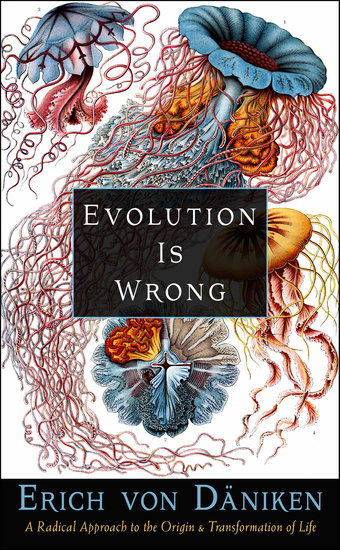
    A Fascinating Exploration on Why the Darwinists’ Theory No Longer Explains EverythingThere was once a set of ideas called the theory of evolution, conceived by clever people and confirmed by countless scientists. Then people discovered the electron microscope. This made it possible to make the molecules within the cell visible, and suddenly questions about evolution arose that were not possible before. Which force actually bundles the atoms in the right order? What moves the molecular chains into the correct position? How did the first living unit within the cell actually come about? How does inheritance work, how does information pass on to the next generation? Did humans descend only and exclusively from primates—as Charles Darwin and countless other great minds assumed—or did additional “engines” intervene in evolution? Today it is clear: countless questions can no longer be answered with the previous theory of evolution. There is a form of life called “Blob” (Physarum polycephalum). The “thing” has neither eyes nor ears, neither a mouth nor a nose or even a brain. Nevertheless, it takes in food, overcomes obstacles by the shortest route and exchanges information with other “blobs.” The “blob” contradicts any evolutionary thought that one develops from the other. Or the “gastric-brooding frogs” (Rheobatrachus) found in Australia. They hatch their young in the stomach. Impossible in a slow, evolutionary process. Everywhere there are characteristics of animals that do not want to fit into the theory of evolution anywhere. And man? Are we really the most adapted life-form on this planet? Today, more and more scientists who contradict the previous theory of evolution speak out. The theory fits the changes within the species, but it can no longer be reconciled with the inner workings of the cell. Some other influence that has so far escaped us is affecting evolution. It is called “Intelligent Design.” Intelligent planning is suspected behind this. Anyone or anything—a spirit of the universe? Aliens?—could be behind this planning. Erich von Däniken uses countless examples to demonstrate the impossibility of the previous evolutionary idea. He quotes scientists who argue against the previous teaching, but also those who defend it. Unfortunately, established science still refuses to look at discrepancies and holes in the theory of evolution, even though it is quite obvious that there is more going on with regard to the development of all species, as well as human culture, than could be explained by the theory of evolution alone.
    Show book