Join us on a literary world trip!
Add this book to bookshelf
Grey
Write a new comment Default profile 50px
Grey
Subscribe to read the full book or read the first pages for free!
All characters reduced
Forensic Science - cover

Forensic Science

Kaia Stonebrook

Translator A AI

Publisher: Publifye

  • 0
  • 0
  • 0

Summary

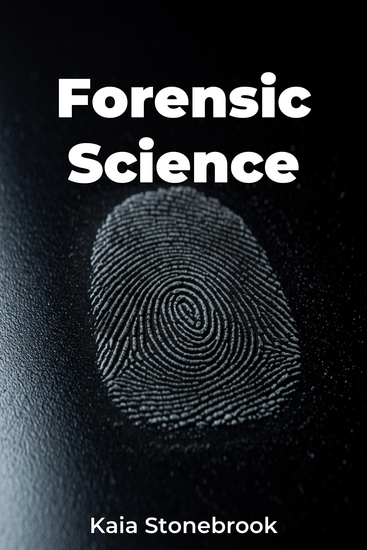
"Forensic Science" explores how scientific principles are applied to solve crimes, bridging the gap between science and the pursuit of justice. The book delves into how seemingly insignificant details at a crime scene can provide crucial insights, showcasing the power of forensic techniques in modern criminal investigations. Readers will discover how forensic science has evolved, with fingerprint analysis as a long-standing method and DNA profiling offering precise identification. Trace evidence, like fibers and soil, further connects people, objects, and locations.

 
The book systematically introduces foundational concepts such as crime scene investigation and evidence collection before delving into specific areas like fingerprint analysis, DNA profiling, and trace evidence examination. Later chapters explore specialized fields including forensic entomology and digital forensics. Real-world case studies and examples enhance understanding, demonstrating how forensic science has revolutionized crime solving.

 
By understanding the scientific principles behind these methods, readers gain a profound appreciation for the power of forensic science and how it shapes our understanding of true crime. The unique value of this book lies in its accessible approach to complex topics, making it suitable for students, legal professionals, and anyone interested in crime solving. It emphasizes the importance of accuracy and impartiality in the criminal justice system and highlights the ethical considerations that guide forensic scientists.
Available since: 03/06/2025.
Print length: 76 pages.

Other books that might interest you

  • The Lansky Legacy - The Life and Letters of Meyer Lansky - cover

    The Lansky Legacy - The Life and...

    Meyer Lansky II, S.J. Peddie

    • 0
    • 0
    • 0
    Meyer Lansky was more than a cofounder of the Mafia. He was a truly transformative figure, a key player who balanced criminal enterprise and legitimate business, ushering in a "Golden Age" of the Mafia that lasted half of the twentieth century. His impact lives on today—in the lavish casinos of Las Vegas, the offshore banking strategies of major global industries, and the countless Hollywood films like The Godfather Part II and Bugsy, with Lansky portrayed by actors Lee Strasberg, Ben Kingsley, Harvey Keitel, and others. He remains a legend in the annals of American crime. But even now, after decades of fictionalized accounts, historical conjectures, and larger-than-life mythmaking, the question remains:Who was the real Meyer Lansky?In this eye-opening account—featuring personal letters and stunning new details never before revealed—the grandson of Meyer Lansky dares to answer the most intriguing questions that have fascinated the public to this day: Why and how did a serious Jewish boy from Poland get involved with mobsters like Lucky Luciano and Bugsy Siegel? What was his role in the growth and consolidation of the Mafia, and why couldn't the Feds pin any crime on him besides illegal gambling? How many millions had Lansky amassed by the time of his death in 1983—and what happened to the money? But most shocking of all: Who really killed Bugsy Siegel, and can the truth finally be told?Packed with surprising insights from the grandson and his family, The Lansky Legacy is a must-listen for crime buffs, Mafia enthusiasts, and anyone invested in the American Dream.
    Show book
  • Face to Face - Finding Justice for My Murdered Twin Brother - cover

    Face to Face - Finding Justice...

    Nick Dawson

    • 0
    • 0
    • 0
    When his identical twin brother Simon was kicked to death, all Nick Dawson felt for the killers was hatred. 
     
    Struggling in a world where his mirror image had vanished, he came to realise there was only one way to stop the torture - acceptance. Travelling to the absolute limits of personal darkness, Nick came face to face with one of his brother's killers. 
     
    Now a champion of restorative justice, Nick heads behind bars, asking hardened criminals to change, to think of their victims, to make amends. 
     
    In Face to Face he takes us with him on a journey into this hidden and unpredictable world.
    Show book
  • Albert Fish: The Notorious Life and Legacy of the Brooklyn Vampire - cover

    Albert Fish: The Notorious Life...

    Charles River Editors

    • 0
    • 0
    • 0
    Albert Fish did not look like a monster. That was what people remembered after the newspapers had printed every sensationalized story, the trial had ended, and Americans were left with trying to understand who Albert Fish was. Pictures showed him with a slight frame, white hair, and mild blue eyes behind wire-rimmed glasses. Those who actually knew him recalled the way he spoke to children, mixing patience, kindness, and gentleness in ways that children recognize and trust without being taught. Neighbors described him as pleasant, and landladies said he was no trouble at all. He paid his rent on time, never raised his voice, and smiled easily and often. His smile reached his eyes like genuine ones do, in a way that cannot be easily faked. 
    	It turned out that for more than 40 years, Albert Fish had been moving through the country, leaving behind him a trail of victims that the authorities had not yet connected and would not connect for years to come. That trail, when it was finally mapped, would test the limits of what the American criminal justice system had ever been asked to confront. 	He was, according to the psychiatrists who examined him, the most complex case of sexual psychopathy in American history, and he engaged in behaviors so far outside normal human boundaries that many professionals found themselves lacking adequate clinical language to describe him. His crimes were not driven by money, ambition, or any of the motives that typical criminals possess when committing such acts. What motivated him were issues so deeply rooted in the wreckage of his childhood that the psychiatrists who later examined him could trace his crimes back to his youth and still not fully understand what they found.  
    	Fish was also genuinely good with children, a detail that every person who studies him eventually learns but struggles to internalize. He had a natural ease with young people, a patience and playfulness that boys and girls recognized and responded to.
    Show book
  • More Foul Deeds & Suspicious Deaths in Wakefield - cover

    More Foul Deeds & Suspicious...

    Katie Taylor

    • 0
    • 1
    • 0
    A historic account of the Northern England city’s crimes, including misdeeds that shed light on past ways of life—from death by neglect to police killings.   How the body of a Wakefield murder victim was exhibited for a fee in 1853, the odd story of a Normanton miner attacked by a prosperous Crofton gentleman in 1875, the tragic death of a twenty-one-year old woman on what should have been her wedding day in 1909, and the case of the Sandal dental lecturer who killed his adopted daughter in 1966 are among the many foul deeds recounted in More Foul Deeds and Suspicious Deaths in Wakefield.   In a companion volume to Foul Deeds and Suspicious Deaths in Wakefield (2001), Kate Taylor has assembled more than fifty further accounts of horrific deaths in or near Wakefield. Some killings reflect the tensions and resentment of domestic life but there are mysteries too like the case of a man found dead in 1860 in a shallow beck with no marks of violence on him. In an incident in Horbury involving the death of a baby in 1849 it was the assistant constable pursuing the inquiries who died. The book shows something of the cultural context that can promote murder—the stigma of illegitimacy in the past and the more recent risks of glue sniffing and the appalling bullying of immigrants. Take a journey into the darker and unknown side of your area as you read More Foul Deeds and Suspicious Deaths in Wakefield.
    Show book
  • No Haven - The Connecticut Mob and the Rise of America's Model City - cover

    No Haven - The Connecticut Mob...

    Paul Bleakley

    • 0
    • 0
    • 0
    With Boston to the north and New York City to the south, Connecticut's history of organized crime is often overlooked. This is the untold story of New Haven's illegal past. 


    One of America's most historic and enduring cities, New Haven has wrangled with a perpetual identity struggle, torn between worlds that occasionally converged in chaos and violence. In the 1930s, Connecticut became a region where Mafia families like the Genoveses, Gambinos, Colombos, and Patriarcas shared turf—working together with enough profits to go around or descending into open war to rival that experienced in any major city. Central to this conflict were three men who were, at different times, cautious allies or sworn nemeses. Representing the Genoveses, Midge Renault reigned supreme thanks to his reputation for wanton violence. Meanwhile, Colombo capo Ralph "Whitey" Tropiano maintained a lower profile, which belied his reputation as a vicious killer. But it was his lieutenant, Billy "The Wild Guy" Grasso, who ultimately rose to the top after joining the New England Patriarca Family, enjoying a short rule that ended with a murder plot that left him on the wrong end of a bullet.
    Show book
  • Not So Merry Wakefield - cover

    Not So Merry Wakefield

    Katie Taylor

    • 0
    • 1
    • 0
    The life and times of a Wakefield woman in the late twentieth century with substantial local historical information. The book aims to echo Henry Clarkson's memories of Merry Wakefield (1887) but with more sombre overtones reflecting experiences of single parenthood, time in the local mental hospital and the trauma of a fatal car accident, but with good times too.
    Show book