Join us on a literary world trip!
Add this book to bookshelf
Grey
Write a new comment Default profile 50px
Grey
Subscribe to read the full book or read the first pages for free!
All characters reduced
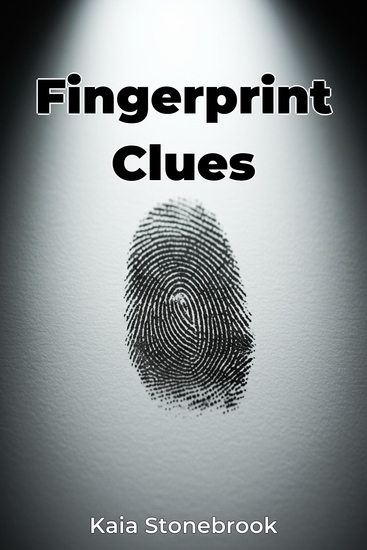
Fingerprint Clues - cover

Fingerprint Clues

Kaia Stonebrook

Translator A AI

Publisher: Publifye

  • 0
  • 0
  • 0

Summary

Fingerprint Clues explores the captivating world of fingerprint analysis, a cornerstone of forensic science and true crime investigations. It reveals how these unique patterns, formed before birth, become invaluable tools for law enforcement. The book highlights the scientific underpinnings of fingerprint identification, showcasing how the individuality of fingerprints—even among identical twins—makes them a reliable source of evidence. Discover how, despite advancements in forensic technology like DNA analysis, fingerprinting remains a cost-effective and universally accessible method for solving crimes. The book traces the evolution of dactyloscopy, from its initial adoption to its current status as a validated identification method, emphasizing the innovations that have enhanced its accuracy. It dives into the techniques used to collect and analyze fingerprints, covering traditional methods alongside modern digital imaging technologies. Case studies illustrate the power of fingerprint evidence in securing convictions and exonerating the innocent. Fingerprint Clues progresses from the biological basis of fingerprints to latent print development at crime scenes, culminating in a discussion of future technologies and challenges.
Available since: 03/06/2025.
Print length: 80 pages.
Other books that might interest you

  • Drug Cartels - The Dark Underworld of Drug Trafficking and Its Global Consequences - cover

    Drug Cartels - The Dark...

    Marcus Klein

    • 0
    • 0
    • 0
    Drug cartels have become a pervasive and highly organized criminal force with a significant global reach. These powerful syndicates control large portions of the illegal drug trade, operating not only within their home countries but across continents. Their operations extend far beyond drug trafficking, often influencing global markets, politics, and even social structures. The history of drug cartels is intertwined with the rise of drug consumption worldwide, as their growth is directly linked to the increasing demand for illicit substances such as cocaine, heroin, methamphetamines, and marijuana. 
    The origins of modern drug cartels can be traced back to the mid-20th century, when illicit drug trade routes first began to form. Latin America, with its extensive agricultural regions, became a focal point for the cultivation of drugs, particularly in countries like Colombia, Mexico, and Peru. These regions not only provided the raw materials needed for drug production but also became hubs for smuggling operations that reached the United States, Europe, and other parts of the world. 
    Cartels began to emerge as centralized organizations within these areas, with influential leaders at the helm. The most notorious of these early cartels, such as the Medellín and Cali cartels in Colombia, gained immense wealth and power. By the 1980s and 1990s, they had established networks that spanned the globe, trafficking drugs through elaborate and sophisticated systems of production, distribution, and money laundering.
    Show book
  • Eleven Days - The Fascinating True Account of Agatha Christie's Mysterious Disappearance - cover

    Eleven Days - The Fascinating...

    Laura Thompson

    • 0
    • 0
    • 0
    A unique approach to understanding Agatha Christie’s infamous eleven-day disappearance, from the New York Times bestselling author of the Edgar-nominated Agatha Christie.In December of 1926, Agatha Christie, the world’s most famous mystery author, vanished. Eleven days later, after frenzied media speculation, she was discovered alive and well. Claiming to have lost her memory, she gave one disingenuous newspaper interview in 1928, but otherwise refused to speak publicly about her disappearance. A century on, there are questions that have never been answered. The book penetrates the blank space in Christie’s long and brilliant life, which leaves her ever more emblematic of the genre that she defines. Eleven Days is an examination of a myth, of a Christie mystery that has remained tantalizingly unsolved. In a new approach, Laura Thompson undertakes a re-enactment of Christie’s movements: from the moment of driving away from her marital home, to the abandonment of her car and her arrival the following night at a hotel in the north of England. Based on Thompson’s conversations with people close to Christie - notably, her interviews with Christie’s only child, her daughter Rosalind –Eleven Days will examine what lay behind this event, including some entirely new information about Christie’s first marriage. Thompson explores all theories about Christie’s disappearance, as well as the notion of disappearance in itself: how it might feel to wander like a ghost through one’s own life, to be oneself yet without identity. What sort of person has the capacity to disappear? Many of us may have longed to do so, but actually to go through with it? What courage or daring does it take, what desperation or deviousness? And how was Agatha Christie changed by it?  Eleven Days delves into these questions and delivers the final word on the greatest mystery ever created by the greatest writer of mysteries.
    Show book
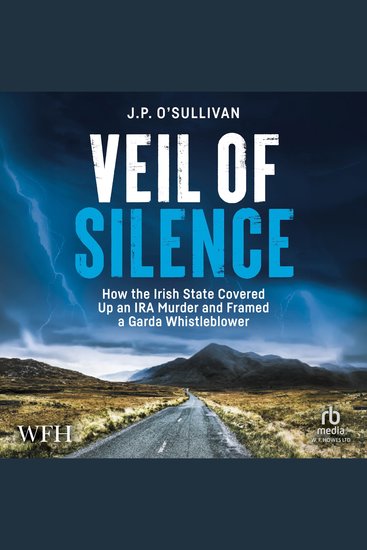
  • Veil of Silence - How the Irish State Covered Up an IRA Murder and Framed a Garda Whistleblower - cover

    Veil of Silence - How the Irish...

    J.P. O’Sullivan

    • 0
    • 0
    • 0
    In 1985 John Corcoran, a garda informer within the ranks of the Cork IRA, was abducted and brutally executed by the IRA. No one has ever been charged with his murder, but for decades, speculation was rife that gardaí of the highest rank allowed Corcoran – a father of eight – to be murdered to protect Sean O’Callaghan, the state’s most prized IRA informer during the Troubles. 
     
    Now, for the first time, J.P. O’Sullivan, Corcoran’s Special Branch handler, breaks his silence. He reveals the chain of events leading to the killing, including detailed reports he filed warning of potential threats to his informant’s life that were systematically ignored by garda intelligence. He recounts how he was inexplicably sidelined from the investigation into Corcoran’s murder and later framed and convicted for a crime he did not commit in order to silence him and bury the truth. 
     
    O’Sullivan’s account is a damning indictment of garda complicity in covering up an IRA murder. It exposes murky manoeuvres, a flawed investigation, and the devastating cost paid by a detective who refused to back down. This is a story of betrayal and justice denied in a state under siege, and one man’s quest for justice.
    Show book
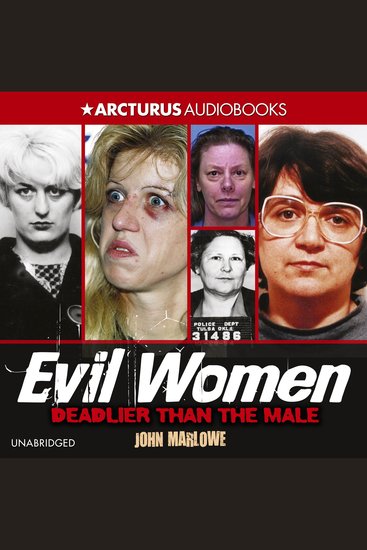
  • Evil Women - Deadlier Than the Male - cover

    Evil Women - Deadlier Than the Male

    John Marlowe

    • 0
    • 0
    • 0
    Many people find it impossible to believe women are capable of committing brutal murders just like men, but this book shows otherwise. 
     
    Katherine Knight donned a black negligee before stabbing her lover John Price 37 times, then serving up his corpse for dinner with baked potatoes, pumpkin and all the trimmings. 
     
    Sue Basso became supermarket packer Buddy Musso's 'lady love', but his dreams of happiness were shredded when she and her friends tortured him to death for a paltry $15,000 life insurance policy. 
     
    Shelly Michael injected her husband with a drug that led to death by slow suffocation, then she set their house on fire. 
     
    Each of the thirty-four cases documented here makes for a chilling read, proving that the female really can be deadlier than the male.
    Show book
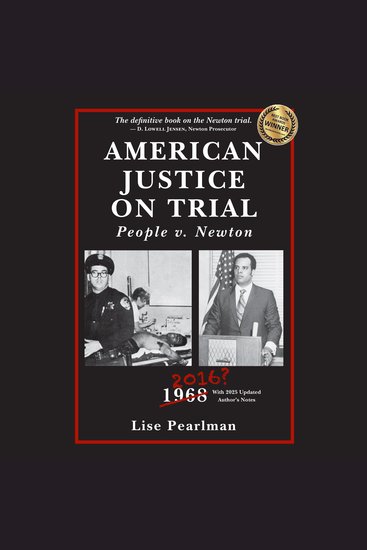
  • American Justice On Trial - People v Newton - cover

    American Justice On Trial -...

    Lise Pearlman

    • 0
    • 0
    • 0
    The award-winning film version of this "world-changing true story" was featured by PBS across country during Black History Month 2025. The film highlighted the startling relevance of a riveting trial more than half a century ago when a black revolutionary, Black Panther Party co-founder Huey Newton, faced execution for the death of a white policeman -- with totally unexpected results. This audiobook was narrated by Rua, the same actor who voiced Huey Newton in the documentary. It allows listeners to take a ringside seat at the case that transformed the traditional all white male "jury of one's peers" to a jury truly drawn from a cross-section of the community, including women and minorities. The book also provides a rare look behind the scenes into life-or-death jury deliberations and features comments from key trial participants and observers. Pioneering television journalist Belva Davis vividly described the participants in that historic trial: "The Newton trial cast of characters would be hard to put together for a Hollywood film --- the defense attorney, the prosecutor, the jury foreman, the makeup of the jury, Newton himself." Huey's older brother Melvin Newton captured the essence of that historic trial, inspiring the book's title: "The prosecution represents the state -- the People of California vs. Huey Newton was putting Huey Newton on trial. As it turned out, [my brother] Huey put the United States on trial." 
    Award-winning author Lise Pearlman (www.lisepearlman.com) is a retired judge and the country's leading expert on the 1968 Newton trial. She appeared in Stanley Nelson's top-rated 2015 documentary "The Black Panthers: Vanguard of the Revolution" and created the award-winning 2022 film project for which she served as co-producer, American Justice on Trial recently renamed "In the Crosshairs." www.justicemovie.com
    Show book
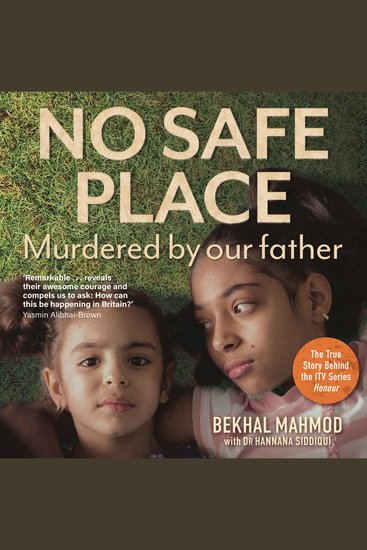
  • No Safe Place - Murdered by our Father - cover

    No Safe Place - Murdered by our...

    Bekhal Mahmod, Dr Hannana Siddiqui

    • 0
    • 0
    • 0
    "My life will always be in danger. My beautiful sister Banaz Mahmod was murdered in an ‘honour killing’ ordered by our father and uncle. If those evil men find me, they will kill me too." 
    Bekhal Mahmod was one of six siblings from a Sunni Muslim family in Iraqi Kurdistan who sought a new life as asylum seekers and arrived in London in 1998. 
    When Bekhal's father tried to force her into an arranged marriage at 15, she ran away. This caused her father to ‘lose respect’ within the Kurdish community and Bekhal became the target of an honour killing and her younger sisters Banaz and Payzee were quickly married off to restore the family's reputation. 
    When Banaz left her husband, claiming he'd beaten and raped her, Mahmod decided this 'shame' to the family meant Banaz must die. Within weeks, she had vanished. 
    Her body was finally discovered, crammed into a suitcase and buried in a garden in Birmingham. Banaz, age 20, had been raped and killed in a sickening plot orchestrated by her father and uncle. 
    Still fearing for her own life, Bekhal bravely faced her father and uncle in court - making her the first female in British legal history to give evidence against family members in an honour killing trial - and won justice for her beloved sister Banaz. 
    Bekhal now has a new identity after entering the police witness protection programme. She lives in terror of her father’s release from jail. 
    This is her story.
    Show book