Join us on a literary world trip!
Add this book to bookshelf
Grey
Write a new comment Default profile 50px
Grey
Subscribe to read the full book or read the first pages for free!
All characters reduced
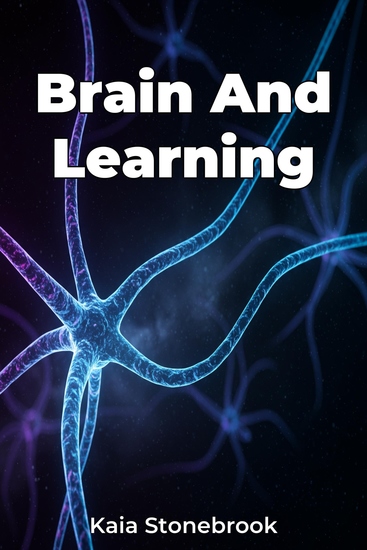
Brain And Learning - cover

Brain And Learning

Kaia Stonebrook

Translator A AI

Publisher: Publifye

  • 0
  • 0
  • 0

Summary

Brain and Learning explores the fascinating connection between neuroscience and education, revealing how our brains learn and retain information. It emphasizes that understanding the brain's mechanisms is key to optimizing educational strategies and improving learning outcomes. The book highlights neuroplasticity, the brain's ability to reorganize itself, and memory consolidation, the process of turning short-term memories into long-term ones, as crucial elements in learning. Did you know that emotions also play a significant role, often overlooked in traditional education?


This book progresses logically, starting with foundational neuroscience concepts before exploring various memory types and their neural bases. Major chapters delve into the impact of stress and sleep, the neuroscience of attention, and the functions of different brain regions. What makes this book unique is its translation of complex neuroscientific findings into practical strategies for educators and learners alike, offering a clear path toward personalized learning and memory improvement. It uses a wealth of research to analyze learning theories and offers insights for enhancing cognitive performance.
Available since: 03/11/2025.
Print length: 77 pages.
Other books that might interest you

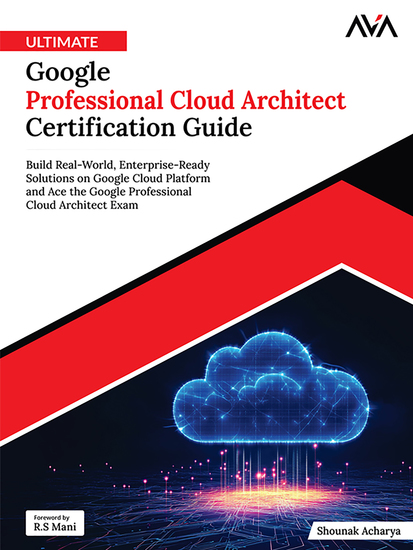
  • Ultimate Google Professional Cloud Architect Certification Guide - Build Real-World Enterprise-Ready Solutions on Google Cloud Platform and Ace the Google Professional Cloud Architect Exam - cover

    Ultimate Google Professional...

    Shounak Acharya

    • 0
    • 0
    • 0
    Architect Google Cloud Solutions That Go Beyond Certification
    Key Features? Master core GCP services, including Compute, Storage, and Networking.? Apply GCP design patterns to real-world enterprise architecture.? Prepare with exam-focused guidance, diagrams, and case scenarios.
    Book Description
    In today’s cloud-first world, the Google Cloud Professional Cloud Architect certification stands as one of the most respected credentials in enterprise IT. Ultimate Google Professional Cloud Architect Certification Guide is your companion to achieving that goal.
    This book goes far beyond exam preparation. It is a hands-on, real-world companion that walks you through every architectural decision-making point you will face on Google Cloud Platform (GCP). You will begin with the building blocks, such as Compute Engine, Autoscaling, Load Balancing, and Storage. From there, you will navigate through advanced networking, managed services like App Engine, and orchestration, using Google Kubernetes Engine (GKE).
    Table of Contents
    1. GCP Compute Engine
    2. Autoscaling and Load Balancing
    3. GCP Storage Infrastructure (Block, File, and Object)
    4. GCP Networking
    5. Introduction to Managed Services on GCP and App Engine
    6. Google Kubernetes Engine
    7. Serverless Google Run Functions and Google Cloud Run
    8. Introduction to Asynchronous Communication in GCP
    9. Databases in GCP Overview
    10. Relational, NoSQL, and Caching Databases
    11. Authentication with Google Cloud IAM
    12. Exploring IAM, Project Organization, and Encryption
    13. Exploring Data Warehousing and Data Lifecycle on GCP
    14. Google Cloud Operations Suite
    15. Agile, DevOps, SRE, SDLC, and Other Important GCP Topics       
    
    Index
    Show book
  • Outsmart the Digital SAT - An SAT Coach's AI Prompt System for Maximum Score Gains - cover

    Outsmart the Digital SAT - An...

    Sebastian Meza

    • 0
    • 0
    • 0
    Most students prepare for the SAT the same way: 
    More practice. More time. More effort. 
    And yet… scores often don’t reflect it. 
    After scoring a 1490 on the SAT and earning a full-ride scholarship to the University of Central Florida, I noticed something that didn’t make sense: 
    Some of the smartest students I knew—straight-A students—were scoring in the 1200s. 
    That one test was limiting their college options and scholarships. 
    It felt incredibly unfair. 
    And it revealed a deeper truth: 
    The SAT isn’t about working harder. It’s about working with the right system. 
    In Predictable SAT Results Using AI, you’ll learn how to replace guesswork with a clear, structured approach that combines proven learning science with the power of AI. 
    Inside, you’ll discover: 
    ✔ How to identify your child’s highest-impact weaknesses 
    ✔ A simple system to analyze mistakes and improve faster 
    ✔ AI prompts you can use immediately for targeted practice 
    ✔ A clear method to track progress with confidence 
    Go from confusion → clarity… 
    From guessing → predictable results. 
    Because with the right approach, SAT success is not random.
    Show book
  • Archaeopteryx The: The History and Mystery Surrounding the Flying Dinosaur Genus - cover

    Archaeopteryx The: The History...

    Editors Charles River

    • 0
    • 0
    • 0
    The massively popular 1990 novel Jurassic Park by Michael Crichton and its subsequent movie adaptations led to a huge resurgence in interest in dinosaurs and the prehistoric world. That interest continues to the present day, even though most of the dinosaurs in Jurassic Park weren’t actually from the Jurassic period. Triceratops, Velociraptor, Tyrannosaurus Rex and the huge sauropods such as Brachiosaurus that feature in the book and movies all actually belong to the Late Cretaceous period, more than 40 million years after the end of the Jurassic. Regardless, certain kinds of dinosaurs remain instantly recognizable. 
    	The movie also popularized pterodactyls, and the concept of flying dinosaurs fascinates people. There is no doubt that Archaeopteryx, which lived over 150 million years ago, was one of the earliest birds or avialans (bird-like creatures), and when the first fossil of it was discovered, it was hailed as a potential missing link between dinosaurs and birds. The name Archaeopteryx comes from Greek, the word for “ancient” and the term for “wing” or “feather.” The creature is occasionally referenced by the German, “Urvogel,” which literally means “primeval bird.” From the known species of Archaeopteryx, the creature grew no longer than half a meter (20 inches), including its long, bony tail. Despite its bird-like appearance, scientists point out that the genus has far more in common with the dinosaurs of its day than with the thousands of bird species of our modern age. 
    	Over time, however, others would argue it was actually the missing link between birds and other reptiles. Meanwhile, the debate over whether it was the first avialan came and went, as it was discovered to not be the first.
    Show book
  • Invention And Discovery: Curious Facts And Characteristic Sketches - cover

    Invention And Discovery: Curious...

    Unknown

    • 0
    • 0
    • 0
    In this little volume are brought together a number of sketches and memoranda, illustrating the history of discovery, and the lives and labours of inventors and explorers, not of our own country alone, but of others, for knowledge is of no country, but of all. The object of the collector has been rather to present the popular than the strictly scientific side of his subject, to furnish materials of interest and amusement, as well as instruction; and if now and then he has been tempted to stray into bye-paths of anecdote and gossip, excuse may readily be found in the fact that the private life of our men of science, often singularly noble and full of character, is apt to be altogether obscured by the brilliancy of the results of their secret and silent toil. This volume will have served its purpose, if it excites an appetite for fuller and deeper inquisition into the sources of British greatness and of modern civilization.Since there are no chapter or other divisions of these anecdotes, the reader has chosen to read entries for about thirty minutes per section.  There is an index of topics in the printed book available on projectgutenberg.org.  (From Book Introductory Note and David Wales)
    Show book
  • The Emotional First Aid Kit - A Practical Guide to Life After Bariatric Surgery - cover

    The Emotional First Aid Kit - A...

    PsyD Cynthia L. Alexander

    • 0
    • 0
    • 0
    The second edition of this book is written for anyone who wants to change his or her life through bariatric weight loss surgery. Learn realistic and practical strategies for dealing with emotional difficulties encountered before and after your weight loss surgery that help you: 


    ● Relieve stress without using food 


    ● Modify unhealthy behavior 


    ● Overcome hurdles to establishing a consistent exercise program 


    ● Deal with negative reactions by friends, family, and spouse to your weight loss 


    ● Prevent relapse . . . and more.
    Show book
  • Science and Hypothesis - cover

    Science and Hypothesis

    Henri Poincaré

    • 0
    • 0
    • 0
    Jules Henri Poincaré (1854 – 1912) was one of France's greatest mathematicians and theoretical physicists, and a philosopher of science.As a mathematician and physicist, he made many original fundamental contributions to pure and applied mathematics, mathematical physics and celestial mechanics. He was responsible for formulating the Poincaré conjecture, one of the most famous problems in mathematics. In his research on the three-body problem, Poincaré became the first person to discover a chaotic deterministic system which laid the foundations of modern chaos theory. He is considered to be one of the founders of the field of topology. Poincaré introduced the modern principle of relativity and was the first to present the Lorentz transformations in their modern symmetrical form. He discovered the remaining relativistic velocity transformations and recorded them in a letter to Lorentz in 1905. Thus he obtained perfect invariance of all of Maxwell's equations, an important step in the formulation of the theory of special relativity. (Summary from Wikipedia)
    Show book