Join us on a literary world trip!
Add this book to bookshelf
Grey
Write a new comment Default profile 50px
Grey
Subscribe to read the full book or read the first pages for free!
All characters reduced
Arab Mathematicians - cover

Arab Mathematicians

Kaia Stonebrook

Translator A AI

Publisher: Publifye

  • 0
  • 0
  • 0

Summary

Arab Mathematicians explores the significant contributions of Middle Eastern scholars to mathematics and science during the 8th to 15th centuries. It highlights how these thinkers preserved, translated, and expanded upon the knowledge of ancient Greece and India, acting as a vital link to the European Renaissance. The book emphasizes the development of algebra, geometry, and astronomy during the Islamic Golden Age, revealing how these advancements shaped the world we know today. For instance, Muhammad ibn Musa al-Khwarizmi's work not only gave us the term "algorithm" but also laid the foundation for solving quadratic equations, which remain crucial in modern mathematics.

 
The book progresses by first establishing the historical backdrop, examining the factors that fostered intellectual growth in the Abbasid Caliphate. It then delves into specific fields like algebra, geometry (particularly the study of conic sections), and astronomy, showcasing the meticulous observations and theoretical models developed by scholars like Ibn al-Haytham. A key aspect is its focus on the collaborative, multicultural environment of scientific inquiry, challenging Eurocentric views and showcasing how these advancements were deeply intertwined with practical applications in optics, cartography, and architecture.
Available since: 03/20/2025.
Print length: 61 pages.

Other books that might interest you

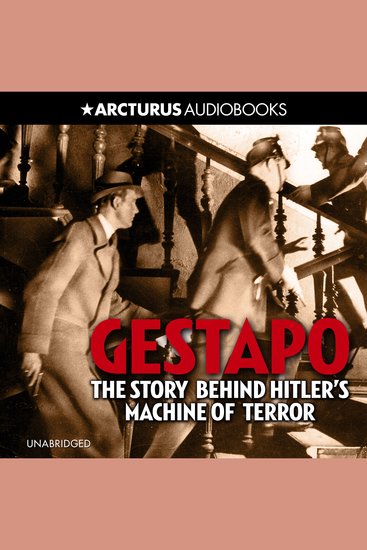
  • Gestapo - The Story Behind Hitler's Machine of Terror - cover

    Gestapo - The Story Behind...

    Lucas Saul

    • 0
    • 0
    • 0
    Formed in 1933, the Gestapo became one of the most feared state forces of the Third Reich before and during World War II. 
     
    Chronicling the history of the organization, from its origins to the brutal and horrific offences that it perpetrated on hundreds of thousands of people, to its eventual downfall, Gestapo is a compelling tale of power and destruction taken to their most terrifying extremes. Familiar in films as the ominous men wearing black leather trench coats seen arresting people on the flimsiest of pretexts, the true story of the Geheime Staatspolizei (or Gestapo for short) is even more frightening. 
     
    Drawing on numerous sources, Gestapo explores how this secret state police force was born on 26 April 1933, the creation of Hermann Göring. Together with the Kriminalpolizei and the Sicherheitsdienst, the Gestapo would enforce a reign of terror on Germany and across much of Europe. Containing profiles of key figures and chilling tales of its death squads' sadistic efficiency - from the torture of Resistance members to mass murder in collaboration with the Einsatzgruppen - Gestapo shows how the organization thrived on Hitler's insecurity until, as the Allies triumphed, its members were eventually rounded up and, as far as possible, brought to justice.
    Show book
  • Healing Childhood trauma 2-1 Series - The Perfect Series for Victims of Childhood Sexual Abuse - cover

    Healing Childhood trauma 2-1...

    Nancy Loyat

    • 0
    • 0
    • 0
    If you were sexually abused as a child or minor and its consequences still affect your life, read this. 
    You are no longer alone. For years, I didn’t understand the source of my anger. Past and present were tangled, leaving me feeling rejected and abandoned. To find clarity, I tried several therapeutic approaches, alone and in groups. The secret buried in my memory poisoned my life. All I wanted was to feel better, but I didn’t know how. 
    Years passed before I discovered the truth. My life felt like a windswept leaf—frustration and anger ruled me. It wasn’t until I hit rock bottom—overreacting to comments, without a job or money, asked to move out—that my body reminded me of the trauma I had buried: childhood sexual abuse. 
    Common behaviors among victims include: 
    Trust issues 
    Taking care of others at their own expense 
    Persistent anger or panic 
    Overreacting to remarks 
    Living aimlessly or trying to escape 
    Inability to focus on real needs or make decisions 
    Difficulty identifying priorities 
    Possible post-traumatic stress disorder (PTSD) 
    Talking about such pain is difficult, yet its effects often lead to destructive behavior. Joining a support group helped me understand that victims of childhood sexual abuse are survivors. Through readings and exercises with the group, I learned to recognize my wounds and name long-repressed emotions. 
    If you believe your life could be better without anger or shame, this book is for you.
    Show book
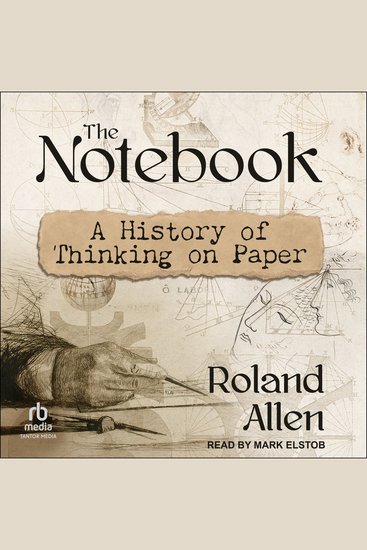
  • The Notebook - A History of Thinking on Paper - cover

    The Notebook - A History of...

    Roland Allen

    • 0
    • 0
    • 0
    A Kirkus Most Anticipated Book of Fall 2024 


    We see notebooks everywhere we go. But where did these indispensable implements come from? How did they revolutionize our lives? And how can using a notebook help change the way you think? In this wide-ranging history, Roland Allen reveals how the notebook became our most dependable and versatile tool for creative thinking. He tells the notebook stories of Leonardo and Frida Kahlo, Isaac Newton and Marie Curie, and writers from Chaucer to Henry James; shows how Darwin developed his theory of evolution in tiny pocket books and Agatha Christie plotted a hundred murders in scrappy exercise books; and introduces a host of cooks, kings, sailors, fishermen, musicians, engineers, politicians, adventurers, and mathematicians, all of whom used their notebooks as a space to think—and in doing so, shaped the modern world. 


    In an age of AI and digital overload, the humble notebook is more relevant than ever. Allen shows how bullet points can combat ADHD, journals can ease PTSD, and patient diaries soften the trauma of reawakening from coma. The everyday act of moving a pen across paper, he finds, can have profound consequences, changing the way we think and feel: making us more creative, more productive—and maybe even happier.
    Show book
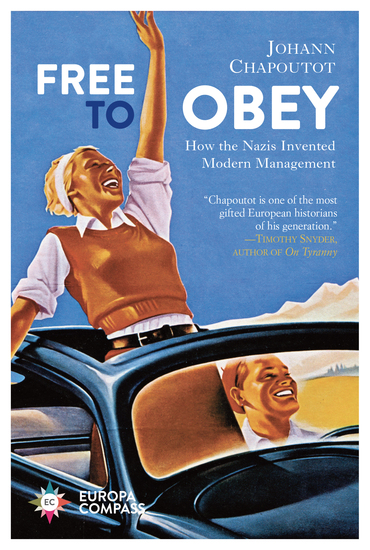
  • Free to Obey - How the Nazis Invented Modern Management - cover

    Free to Obey - How the Nazis...

    Johann Chapoutot

    • 0
    • 0
    • 0
    What if the rules of modern capitalism were written during the Third Reich?  Reinhard Höhn (1904-2000) was a commander of the SS, one of Nazi Germany’s most brilliant legal minds, and an archetype of the fervid technocrats and intellectuals that built the Third Reich. Following Germany’s defeat, after a few years in hiding, he emerged in the early 1950s as the founder and director of a renowned management school in Lower Saxony.  Höhn’s story wouldn’t be very different from that of many other prominent Nazis if not for the fact that a vast number of Germany’s postwar business leaders—more than 600,000 executives—were educated at his management school.  In this fascinating book, Johann Chapoutot, one of France’s most brilliant historians, traces the profound links between Nazism and the principles of modern corporate management, our definitions of success, and a concept of personal freedom that masks rigid hierarchical structures of power and control.  “One of the most gifted European historians of his generation.”—Timothy Snyder, New York Times best-selling author of On Tyranny
    Show book
  • Gerontocracy in America - How the Old Are Hoarding Power and Wealth—and What to Do About It - cover

    Gerontocracy in America - How...

    Samuel Moyn

    • 0
    • 0
    • 0
    A leading social critic identifies our least-discussed major crisis, and sets out to solve it.As Americans debate President Biden’s infirmities and President Trump’s erratic behavior, we’ve neglected the bigger problem before us: a massive transfer of power and wealth to the oldest among us, and the curtailment of the prospects of the young. In Gerontocracy in America, the historian and social critic Samuel Moyn offers a piercing diagnosis of our age divide and its consequences. Even apart from the presidency, in legislatures, businesses, and the courts, the average leader’s age has risen dramatically. The elderly predominantly fund campaigns and dominate their agendas, often with the intent to block any challenge to their status. The tax code is rigged on their behalf, as is an economy geared to sheltering financial and housing assets. The United States was founded on the promise of generational renovation but has become an increasingly febrile country of old men.But it doesn’t need to be this way. With understanding and wit, Moyn shows how elder power can be dismantled. With strong safety nets in place, mandatory retirement ages can be established. The early transfer of assets between generations could be encouraged and young voters can be granted more voice. In such a world, the elderly themselves would be freed from power games to confront the existential opportunities of aging, while the young would find their path to starting out in life unblocked at last.
    Show book
  • The Prophet - cover

    The Prophet

    Kahlil Gibran

    • 0
    • 0
    • 0
    The book is structured around the story of a prophet named Almustafa who is about to board a ship to return to his homeland after twelve years of exile. As he prepares to leave, the people of the city he has been living in gather around him and ask him to share his wisdom before he departs. Almustafa proceeds to share his insights on a wide range of topics, including love, marriage, children, work, and death. Gibran's writing is known for its lyrical beauty and its ability to convey deep, philosophical ideas in a simple and accessible way. Each chapter of "The Prophet" is a poetic meditation on a different aspect of life, and the book has been praised for its timeless wisdom and its ability to inspire readers to think deeply about their own lives and the world around them. Read in English, unabridged.
    Show book