Join us on a literary world trip!
Add this book to bookshelf
Grey
Write a new comment Default profile 50px
Grey
Subscribe to read the full book or read the first pages for free!
All characters reduced
Bots vs Algorithms - cover

Bots vs Algorithms

Kai Turing

Translator A AI

Publisher: Publifye

  • 0
  • 0
  • 0

Summary

"Bots vs Algorithms" tackles a critical distinction in modern technology that's often overlooked: the fundamental differences between automated bots and algorithmic systems. This comprehensive guide dismantles the common misconception that these technologies are interchangeable, offering a structured exploration of their unique characteristics, applications, and roles in our digital world.

 
The book progresses logically through four key sections, beginning with clear technical definitions before moving into real-world applications across industries. It reveals how bots and algorithms, while complementary, serve distinct purposes in areas like financial trading and customer service. Through carefully selected case studies and research data, readers gain practical insights into how these technologies shape decision-making processes and influence organizational outcomes.

 
What sets this book apart is its balanced approach to complex technical concepts, making them accessible without sacrificing depth. It serves both technical professionals and business decision-makers by combining theoretical foundations with practical implementation frameworks. The inclusion of performance metrics, system architecture analyses, and troubleshooting strategies provides readers with actionable knowledge for optimizing their technological solutions.

 
Throughout the text, real-world examples and comparative analyses help readers understand when to use bots, when to employ algorithms, and how to effectively combine both technologies for maximum benefit.
Available since: 01/17/2025.
Print length: 138 pages.

Other books that might interest you

  • What a Bee Knows - Exploring the Thoughts Memories and Personalities of Bees - cover

    What a Bee Knows - Exploring the...

    Stephen Buchmann

    • 0
    • 0
    • 0
    For many of us, the buzzing of a bee elicits panic. But the next time you hear that low droning sound, look closer: the bee has navigated to this particular spot for a reason using a fascinating set of tools. She may be using her sensitive olfactory organs, which provide a 3D scent map of her surroundings. She may be following visual landmarks or instructions relayed by a hive-mate. She may even be tracking electrostatic traces left on flowers by other bees. What a Bee Knows: Exploring the Thoughts, Memories, and Personalities of Bees invites us to follow bees' mysterious paths and experience their alien world. 


    Although their brains are incredibly small—just one million neurons compared to humans' one hundred billion—bees have remarkable abilities to navigate, learn, communicate, and remember. In What a Bee Knows, entomologist Stephen Buchmann explores a bee's way of seeing the world and introduces the scientists who make the journey possible. We travel into the field and to the laboratories of noted bee biologists who have spent their careers digging into the questions most of us never thought to ask (for example: Do bees dream? And if so, why?). With each discovery, Buchmann's insatiable curiosity and sense of wonder is infectious.
    Show book
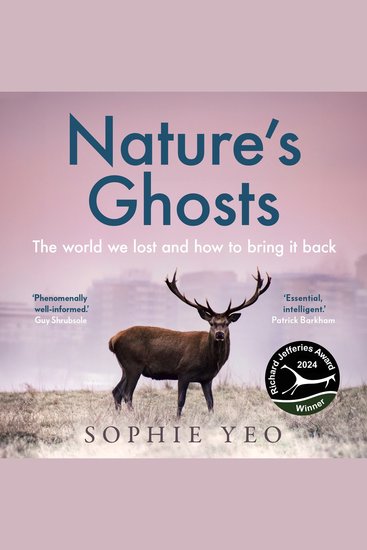
  • Nature’s Ghosts: The world we lost and how to bring it back - cover

    Nature’s Ghosts: The world we...

    Sophie Yeo

    • 0
    • 0
    • 0
    Winner of the 2024 Richard Jefferies Award for nature writingShortlisted for the 2024 Wainwright Prize for Writing on ConservationA Times Science Book of the Year 
    ‘Sophie writes fantastically, chronicling the most important issues facing nature conservationists today.’ Chris Packham 
    For thousands of years, humans have been the architects of the natural world. Our activities have permanently altered the environment – for good and for bad. 
    In Nature’s Ghosts, award-winning journalist Sophie Yeo examines how the planet would have looked before humans scrubbed away its diversity: from landscapes carved out by megafauna to the primeval forests that emerged following the last Ice Age, and from the eagle-haunted skies of the Dark Ages to the flower-decked farms of more recent centuries. 
    Uncovering the stories of the people who have helped to shape the landscape, she seeks out their footprints even where it seems there are none to be found. And she explores the timeworn knowledge that can help to fix our broken relationship with the earth. 
    Along the way, Sophie encounters the environmental detectives – archaeological, cultural and ecological – reconstructing, in stunning detail, the landscapes we have lost. 
    Today, the natural world is more vulnerable than ever; the footprints of humanity heavier than they have ever been. But, as this urgent book argues, from the ghosts of the past, we may learn how to build a more wild and ancient future. 
    Sophie Yeo's Nature’s Ghosts is a non-fiction masterpiece that takes us on a journey through the science of ecology, exploring the habitats and ecosystems that have been altered by human activity. The book emphasises the need for protection of these resources, offering a glimpse into the past to help us understand how we can shape a better future. 
    For fans of Robert Macfarlane (Is a River Alive?), Robin Wall Kimmerer (The Democracy of Species), Isabella Tree (Wilding), Jennifer Ackerman (What an Owl Knows), and Derek Gow (Birds, Beasts and Bedlam). 
    HarperCollins 2024
    Show book
  • The Best Selling ChatGpt Author - How To Write And Publish Your Bestselling Book With AI In 7 Days - cover

    The Best Selling ChatGpt Author...

    David M. Patel

    • 0
    • 0
    • 0
    Are you stuck dreaming of publishing a bestselling book—but never finding the time or strategy to make it happen? 
    This audiobook is your shortcut to transforming from idea-dabbler to published author. If you’ve ever wondered how to break through procrastination, confusion, or overwhelm, you’ll discover here a proven, AI-driven system to create and market your nonfiction masterpiece in as little as 7–14 days. 
    Inside, you’ll learn: 
     A powerful 8-step formula for writing, editing, and publishing using ChatGPT and other generative AI tools. 
      How to uncover profitable book ideas and select winning titles with smart keyword research. 
     Step-by-step guidance on outlining, drafting, and humanizing your manuscript—without falling into common AI writing traps. 
      Insider tips for book cover design, blurbs, and promotional strategies to help your audiobook stand out on crowded platforms. 
      Action-ready marketing techniques to reach the right audience and turn your work into passive income. 
    Whether you’re a first-time author or a seasoned writer ready to scale your author brand, this audiobook will equip you to use cutting-edge AI tools effectively and ethically. 
     Listen now—because waiting for your big author breakthrough isn’t an option.
    Show book
  • A Dumb Birds Field Guide to the Worst Birds Ever - cover

    A Dumb Birds Field Guide to the...

    Matt Kracht

    • 0
    • 0
    • 0
    We can all agree—birds are terrible. They're stupid and won't shut up. 


    Featuring fifty of the absolute worst birds to fly the earth, Kracht identifies each of their most terrible qualities, details exactly why they suck, and shows you why. Including all-new, all-worst fowl, such as: the absolute waste of feathers Cruddy Turdstone (Ruddy Turnstone), the utter a-hole Blank Staring-Eyes Flycrapper (Black Paradise Flycatcher), the outright loser Dowdy Woodfucker (Downy Woodpecker), and many more! 


    Even the author's previous bird takedown guides are no preparation for this hilariously harrowing collection of squawking, conceited, trash-eating, and even murderous idiots. The horror. The horror . . . 


    LOVE BIRDS? HATE BIRDS?: For those who hate birds and for bird lovers everywhere with a sense of humor, this handbook is equal parts profane and funny, and—let's face it—true. 


    ENTERTAINING AND EDUCATIONAL: This uproarious guide to all things wings includes tips for bird identification, musings on the avian population and classification, and more. Plus, each entry is accompanied by facts about a bird's (annoying) call, its (dumb) migratory pattern, its (downright tacky) markings, and more.
    Show book
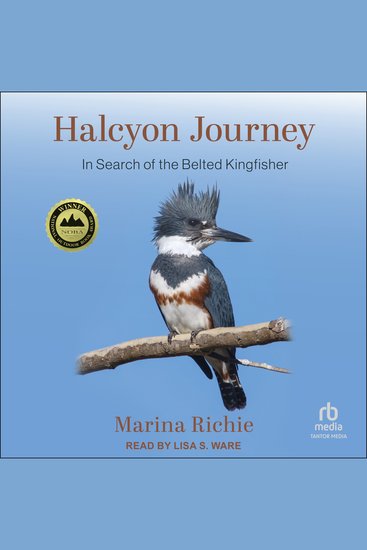
  • Halcyon Journey - In Search of the Belted Kingfisher - cover

    Halcyon Journey - In Search of...

    Marina Richie

    • 0
    • 0
    • 0
    Winner of the 2024 John Burroughs Medal for Distinguished Natural History Writing 


    More than one hundred species of kingfishers brighten every continent but Antarctica. Not all are fishing birds. They range in size from the African dwarf kingfisher to the laughing kookaburra of Australia. This first book to feature North America's belted kingfisher is a lyrical story of observation, revelation, and curiosity in the presence of flowing waters. 


    The kingfisher—also known as the halcyon bird—is linked to the mythic origin of halcyon days, a state of happiness that Marina Richie hopes to find outside her back door in Missoula, Montana. Epiphanies and a citizen science discovery punctuate days tracking a bird that outwits at every turn. The female is more colorful than the male (unusual and puzzling) and the birds' earthen nest holes are difficult to locate. 


    While the heart of the drama takes place on Rattlesnake Creek in Missoula, the author's adventures in search of kingfisher kin on the lower Rio Grande, in South Africa, and in London illuminate her relationships with the birds of Montana. In the quiet of winter, she explores tribal stories of the kingfisher as messenger and helper, pivotal qualities for her quest. For all who love birds or simply seek solace in nature, Halcyon Journey is an inviting introduction to the mythic and mysterious belted kingfisher.
    Show book
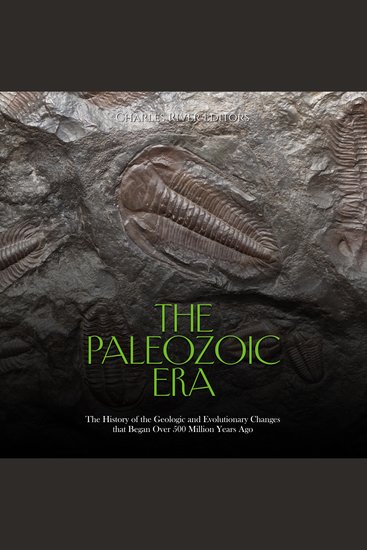
  • Paleozoic Era The: The History of the Geologic and Evolutionary Changes that Began Over 500 Million Years Ago - cover

    Paleozoic Era The: The History...

    Editors Charles River

    • 0
    • 0
    • 0
    The current view of science is that Earth is around 4.6 billion years old, and the first 4 billion years of its development are known as the Precambrian period. For the first billion years or so, there was no life in Earth. Then the first single-celled life-forms, early bacteria and algae, began to emerge. It’s unclear where they came from or even if they originated on this planet at all, but this gradual development continued until around four billion years ago when suddenly (in geological terms) more complex forms of life began to emerge.  
    	Scientists call this time of an explosion of new forms of life the Paleozoic Era, and it stretched from around 541 to 250 million years ago. In the oceans and then on land, new creatures and plants began to appear in bewildering variety, and by the end of this period, life on Earth had diversified into a myriad of complex forms that filled virtually every habitat and niche available in the seas and on the planet’s only continent, Pangea. 
    	The Precambrian Period is divided into three eons: the Hadean, the Archaean, and the Proterozoic. One layer of carbon in rocks that date to the Archaean Eon, found on islands west of Greenland, seems to have fossilized tracks that may have been left by some form of organic life, but scientists simply are not certain. The oldest confirmed remains of life date from the same eon and were found in rocks in Western Australia, which were found to contain fossilized bacteria estimated to be 3.46 billion years old. It seems likely that there were thousands, perhaps even millions of forms of life in these early periods, and most seem to have been microscopic in size and very simple in developmental terms.
    Show book