Join us on a literary world trip!
Add this book to bookshelf
Grey
Write a new comment Default profile 50px
Grey
Subscribe to read the full book or read the first pages for free!
All characters reduced
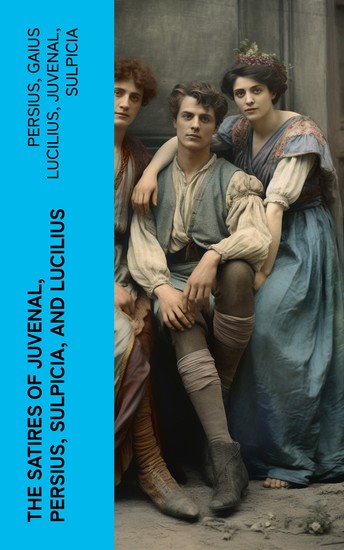
The Satires of Juvenal Persius Sulpicia and Lucilius - Literally translated into English prose with notes chronological tables arguments &c - cover

The Satires of Juvenal Persius Sulpicia and Lucilius - Literally translated into English prose with notes chronological tables arguments &c

Persius, Gaius Lucilius, Juvenal, Sulpicia

Translator Lewis Evans, William Gifford

Publisher: e-artnow

  • 0
  • 0
  • 0

Summary

The Satires of Juvenal, Persius, Sulpicia, and Lucilius is a compilation of satires by Latin authors, written in the early 2nd century. They convey a wide-ranging discussion of society and social norms.
Available since: 11/22/2023.
Print length: 826 pages.

Other books that might interest you

  • It Never Ends With Us - cover

    It Never Ends With Us

    Marcus Reed

    • 0
    • 0
    • 0
    It Never Ends With Us is a profound exploration of love, trauma, and the illusion of closure. Where most stories stop at survival, this one begins — tracing the invisible echoes of abuse and the emotional residue that lingers long after the last goodbye. Through the lens of modern romance and cultural myth, it questions whether cycles of pain can truly be broken, or if they only transform, adapting to new forms and faces. With philosophical depth and psychological realism, it exposes how society markets empowerment while misunderstanding healing, and how the desire for neat endings betrays the complexity of recovery. This is not a story about endings — it’s a meditation on what remains when the story refuses to end.
    Show book
  • A 1940s Childhood - From Bomb Sites to Children's Hour - cover

    A 1940s Childhood - From Bomb...

    James Marsh

    • 0
    • 0
    • 0
    Do you remember collecting shrapnel and listening to Children's Hour? Carrying gas masks or sharing your school with evacuees from the city? The 1940s was a decade of great challenge for everyone who lived through it. The hardships and fear created by a world war were immense. Britain's towns and cities were being bombed on an almost nightly basis, and many children faced the trauma of being parted from their parents and sent away to the country to live with complete strangers. For just over half of this decade the war continued, meaning food and clothing shortages became a way of life. But through it all, and afterwards, the simplicity of kids shone. From collecting bits of shot-down German aircraft to playing in bomb-strewn streets, kids made their own fun. Then there was the joy of the second half of the 1940s, when fathers came home and the magic of 'normal life' returned. 
     
    This trip down memory lane will take you through the most memorable and evocative experiences of growing up in the 1940s.
    Show book
  • 3 Years in Pakistan - The Erik Audé Story - cover

    3 Years in Pakistan - The Erik...

    Erik Audé

    • 0
    • 0
    • 0
    "3 Years in Pakistan: The Erik Aude Story" offers a riveting account of Erik Aude's tumultuous three-year journey through the heart of Pakistan. Falsely accused of drug trafficking, Aude's life takes an unexpected turn as he finds himself thrust into the unforgiving depths of a foreign prison system. Amid the harsh realities of death row, Aude discovers unexpected pockets of humanity and kindness that illuminate the darkness surrounding him. Through the trials and tribulations of incarceration, Aude's resilience shines as he navigates the complexities of the Pakistani legal system with unwavering determination. "3 Years in Pakistan" is a gripping tale of survival, redemption, and the enduring power of the human spirit to find light in the darkest of places
    Show book
  • Triggers of Peace - cover

    Triggers of Peace

    Solomon Aurelius

    • 0
    • 0
    • 0
    Triggers of Peace By Solomon Aurelius 
    In a world overflowing with stress, anxiety, and constant distractions, finding true peace can feel impossible. 
    But what if the peace you seek has always been within reach? 
    In Triggers of Peace, author Solomon Aurelius offers a profound yet practical guide to cultivating inner tranquility amidst life's chaos. Drawing on a blend of ancient wisdom and modern practices, this book takes you on a transformative journey through twelve pathways that lead to calm, healing, and emotional freedom. 
    Explore the power of: 
    Mindfulness meditation to quiet your mind and connect with the present. 
    Prayer as a source of spiritual grounding and personal clarity. 
    Nature and its capacity to restore balance and perspective. 
    Physical movement, including yoga and sports, as a release for stress and tension. 
    Forgiveness, as the ultimate path to inner freedom and emotional healing. 
    In these pages, you'll discover that peace is not a distant goal but a state of being that you can access at any moment. Whether through reflection, movement, or compassion, Triggers of Peace empowers you to break free from the burdens of stress and embrace a life filled with balance, clarity, and joy.
    Show book
  • Mothering by the Book - The Power of Reading Aloud to Overcome Fear and Recapture Joy - cover

    Mothering by the Book - The...

    Jennifer Pepito, Sally Clarkson

    • 0
    • 0
    • 0
    Becoming a better, happier mom starts with the stories you tell your kids 


    As a mom, you want to nurture a strong family, but fear steals your joy. Sometimes you wonder if you're failing your children or whether you're cut out for this. 


    Beloved writer and mom of seven Jennifer Pepito understands. She was intent on loving her children well, but fear and worry pushed her around. Ultimately, she found her joy in a most surprising place: the pages of classic literature she was reading aloud to her children every day. These stories helped her reclaim the wonder of childhood for herself and her children. 


    In Mothering by the Book, Jennifer takes you on a fascinating, whimsical journey that will bring freedom and fun to your parenting—one great book at a time.
    Show book
  • The Rest Is Memory - cover

    The Rest Is Memory

    Lily Tuck

    • 0
    • 0
    • 0
    THE HEARTBREAKING STORY OF A YOUNG CATHOLIC GIRL TRANSPORTED TO AUSCHWITZ BECOMES A RASHOMON-LIKE RONDO BY ONE OF OUR GREATEST NOVELISTS. 
     
    First glimpsed riding on the back of a boy’s motorcycle, fourteen-year-old Czeslawa comes to life in this mesmerizing novel by Lily Tuck, who imagines her upbringing in a small Polish village before her world imploded in late 1942.  
     
    Stripped of her modest belongings, shorn, and tattooed number 26947 on arriving at Auschwitz, Czeslawa is then photographed. Three months later, she is dead. 
     
    How did this happen to an ordinary Polish citizen? This is the question that Tuck grapples with in this haunting novel, which frames Czeslawa’s story within the epic tragedy of six million Poles who perished during the German occupation. A decade prior to writing The Rest Is Memory, Tuck read an obituary of the photographer Wilhelm Brasse, who took more than 40,000 pictures of the Auschwitz prisoners. Included were three of Czeslawa Kwoka, a Catholic girl from rural southeastern Poland. Tuck cut out the photos and kept them, determined to learn more about Czeslawa, but she was only able to glean the barest facts: the village she came from, the transport she was on, that she was accompanied by her mother and her neighbors, her tattoo number, and the date of her death. From this scant evidence, Tuck’s novel becomes a remarkable kaleidoscopic feat of imagination, something only our greatest novelists can do. 
     
    “Beautifully written, all the while instilling a sense of horror” (Susanna Moore), Tuck’s language swirls about, yet not a word is out of place. The subtly rotating images tumble out at us, accelerating as we learn about Czeslawa’s tragic stay in Auschwitz, the lives of real people such as the barbaric Commandant Rudolf Höss; his unconscionable wife, Hedwig; the psychiatrist and child rescuer Janusz Korczak; and the mordant Polish short story writer Tadeusz Borowski. 
     
    Although we are certain of Czeslawa’s fate, we have no choice but to keep turning the pages, thoroughly mesmerized by Tuck’s near otherworldly prose. 
     
    In Lily Tuck’s hands, The Rest Is Memory becomes an unforgettable work of historical reclamation that rescues an innocent life, one previously only recalled by a stark triptych of photographs. 
     
    “The Rest Is Memory is a literary resurrection, as shattering as it is astonishing. Lily Tuck has done the impossible; from darkness and hideous cruelty, she has woven an unforgettable paean to hope, to life, to justice.”—Junot Diaz
    Show book