Join us on a literary world trip!
Add this book to bookshelf
Grey
Write a new comment Default profile 50px
Grey
Subscribe to read the full book or read the first pages for free!
All characters reduced
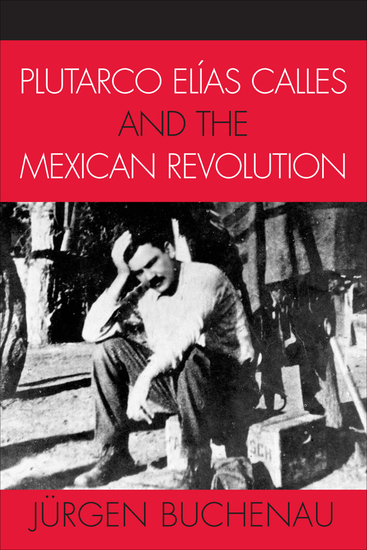
Plutarco Elías Calles and the Mexican Revolution - cover

Plutarco Elías Calles and the Mexican Revolution

Jürgen Buchenau

Publisher: Stackpole Books

  • 0
  • 0
  • 0

Summary

This biography of the Mexican revolutionary examines his rise from soldier to president to his continued influence as Jefe Maximo. Hailing from the border state of Sonora, Plutarco Elías Calles found his calling in the early years of the revolution, quickly rising to national prominence. As president from 1924 to 1928, Calles undertook an ambitious reform program, modernized the financial system, and defended national sovereignty against an interventionist U.S. government. Yet these reforms failed to eradicate underdevelopment, corruption, and social injustice. Moreover, his unyielding campaigns against political enemies and the Catholic Church earned him a reputation as a repressive strongman. After his term as president, Calles continued to exert broad influence as his country's foremost political figure while three weaker presidents succeeded each other in an atmosphere of constant political crisis. He played a significant role in founding a ruling party that reined in power-hungry military leaders and helped workers attain better living conditions. This dynastic party and its successors, including the present-day Partido Revolucionario Institucional (Party of the Institutional Revolution), remained in power until 2000. Through this comprehensive assessment of a quintessential Mexican politician, Buchenau opens an illuminating window into both the Mexican Revolution and contemporary Mexico.
Available since: 06/14/2023.
Print length: 312 pages.

Other books that might interest you

  • Economic History of Colombia - From Independence to Modern Times - cover

    Economic History of Colombia -...

    Anya Solace

    • 0
    • 0
    • 0
    The economic history of Colombia is a rich and complex narrative shaped by its colonial past, its struggle for independence, and its evolution into a modern, globalized economy. Colombia’s economic trajectory is marked by cycles of growth, stagnation, and reform, heavily influenced by both internal and external forces. To understand Colombia’s present-day economic standing, it is essential to first explore the historical context that laid the foundation for its economic structure. 
    The history of Colombia’s economy begins with its pre-Colombian civilizations, which thrived through agriculture and trade. The Spanish colonization in the 16th century drastically altered the region's economic systems. Colombia became a key part of the Spanish Empire’s colonial economy, centered on the extraction of gold, silver, and agricultural products. During the colonial era, the economic structure was based on a system of encomiendas, which exploited Indigenous labor, and the export of valuable resources to Spain. This period was foundational in creating the early foundations of the Colombian economy, particularly its dependence on mineral wealth. 
    The struggle for independence from Spain in the early 19th century, which culminated in 1810 with the declaration of independence and a protracted series of wars, significantly disrupted the economy. The wars of independence led to the fragmentation of the region into several separate entities, each facing economic challenges as they sought to stabilize and develop. Upon achieving independence in 1819, Colombia faced a host of problems, including political fragmentation, lack of infrastructure, and limited industrial capacity. These challenges hindered the country's economic development for much of the 19th century.
    Show book
  • Laughter - An Essay on the Meaning of the Comic - cover

    Laughter - An Essay on the...

    Henri Bergson

    • 0
    • 0
    • 0
    Henri Bergson's 'Laughter: An Essay on the Meaning of the Comic' dissects the essence of humor and laughter. With keen philosophical observation, Bergson explores how comedy arises from societal incongruities and mechanical rigidity. This insightful analysis transcends mere amusement, shedding light on the deeper significance of laughter as a social and intellectual phenomenon, making it a timeless exploration of the human experience and the absurdities of life. Read in English, unabridged.
    Show book
  • The Psychology of Secrets - My Adventures with Murderers Cults and Influencers - cover

    The Psychology of Secrets - My...

    Andrew Gold

    • 0
    • 0
    • 0
    This audio edition is read by the author, Andrew Gold, and includes an exclusive author Q&A. "Andrew Gold is the new Jon Ronson. Smart, funny, brave and deeply thoughtful, The Psychology of Secrets is an absolute must read" - Will Storr, bestselling author of The Status Game and The Science of Storytelling--Cult leaders, murderers, psychopaths – and you. Take a deep dive into the bizarre psychology of secrecy with Andrew Gold, award-winning investigative journalist and host of On the Edge With Andrew Gold. We all keep secrets. 97 per cent of us are hiding a secret right now, and on average we each hold thirteen at any one time. There’s a one-in-two chance that those secrets involve a breach of trust, a lie or a financial impropriety. They are the stuff of gossip, of novels and of classic dramas; secrets form a major part of our hidden inner lives.Andrew Gold knows this better than anyone. As a public figure, he has found himself the unwitting recipient of hundreds of strangers' most private revelations. This set him on a journey to understand this critical part of our societies and lives. Why do we keep secrets? Why are we fascinated by those of others? What happens to our mind when we confess?Drawing from psychology, history, social science, philosophy and personal interviews, The Psychology of Secrets is a rollicking journey through the history of secrecy.--"That Andrew Gold is a truly edgy journalist, broadcaster and now writer is - but should not be - one of our culture’s best kept secrets" - David Baddiel, bestselling author of The God Desire
    Show book
  • Pakistan's ISI - A Concise History of the Inter-Services Intelligence Directorate - cover

    Pakistan's ISI - A Concise...

    Julian Richards

    • 0
    • 0
    • 0
    Forged during the tumultuous aftermath of Partition in 1947, the Inter-Services Intelligence Directorate (ISI) has grown to become the preeminent intelligence service in Pakistan. Its capabilities are comprehensive, its remit covers both foreign and domestic intelligence, and it is one of the most feared and respected agencies of the Global South. 


    Pakistan's ISI provides an up-to-date and detailed introduction to the ISI and its historical evolution. The narrative is rooted in a deep and wide-ranging contextualization of the state of Pakistan and its security environment. The story is one of an agency that grew from humble beginnings into an extremely capable and robust force at the heart of power in the state. The ISI utilizes broad human intelligence networks and employs covert action and support for militants, particularly in its rivalry with India. As a crucial intelligence partner for the West during the Cold War and into the contemporary era, the ISI has been both an essential ally and problematic partner. The shadow of this agency continues to loom over Pakistan's democratic institutions. 


    This book will appeal to students, scholars, and general listeners interested in intelligence and the politics and history of South Asia.
    Show book
  • Battle of Culloden The: The History and Legacy of the Jacobite Revolts’ Most Famous Battle - cover

    Battle of Culloden The: The...

    Editors Charles River

    • 0
    • 0
    • 0
    The Jacobites conjure up many images to 21st century Britons, including romantic heroism, the Outlander series, and Bonnie Prince Charlie as the doomed hero of the cause, but Jacobitism was a cause that had far reaching consequences across 18th century Europe. The Jacobites were not only supporters of the exiled Stuart monarchy, but also against the political and religious settlements agreed to across the British Isles. As Jacobite historians such as Daniel Szechi and Frank McLynn have noted, the specter of the Jacobite threat was present for the British government and monarchy in their dealings with European powers throughout the 18th century. This was especially true in France, the country that supported the exiled Stuarts and gave them a home until 1714. This soured the French monarchy’s relationship with Britain, and the Hanoverian kings who replaced the Stuarts were always aware of it. 
    Of all the fighting conducted by the Jacobites, the Battle of Culloden, fought on April 16, 1746, was probably the most famous battle of them all, and it was a complete disaster for the Jacobite army. The government army outnumbered and outgunned the Jacobites, and when snow fell that morning, it left the battlefield wet and boggy. The exposed field also meant there would be nowhere for the Jacobites to avoid the enemy’s gunfire. The battle began around 1:00 p.m. with British artillery fire that the Jacobites struggled to respond against, and the famous Highland charge employed by the Scottish clans was hopeless in a boggy field. Their opposition had learned from previous encounters by attacking their opponent on the right instead of straight ahead, which bypassed the Highlanders’ shield. The battle lasted about an hour, and in that time the Jacobites lost about 2,000 men, a resounding defeat that marked the end of the Jacobites’ struggle to restore a Stuart to the throne.
    Show book
  • Sleep Reimagined - The Fast Track to a Revitalized Life - cover

    Sleep Reimagined - The Fast...

    Pedram Navab

    • 0
    • 0
    • 0
    Insomnia looks different for everyone. Whether it’s caused by stress, a traumatic life event, or even a snoring partner, poor sleep can affect the quality of your waking life. But Dr. Pedram Navab wants listeners to know that it’s not a lost cause?falling asleep can be just as easy as waking up. With his cognitive behavioral therapy (CBT-I) program, paired with relatable case studies of different sleep disorders, listeners are guided to new and improved sleep in as little as four weeks. In Sleep Reimagined, the six-step CBT-I program teaches listeners how to understand sleep, rewire their arousal system through therapeutic relaxation, practice sleep restriction and stimulus control, restructure attitudes towards sleep, use mindfulness intervention to continue cognitive components, and prevent insomnia relapse through planning. Both comprehensive and entertaining, this book is the perfect bedside companion to discover better sleep and better life.
    Show book