Junte-se a nós em uma viagem ao mundo dos livros!
Adicionar este livro à prateleira
Grey
Deixe um novo comentário Default profile 50px
Grey
Assine para ler o livro completo ou leia as primeiras páginas de graça!
All characters reduced
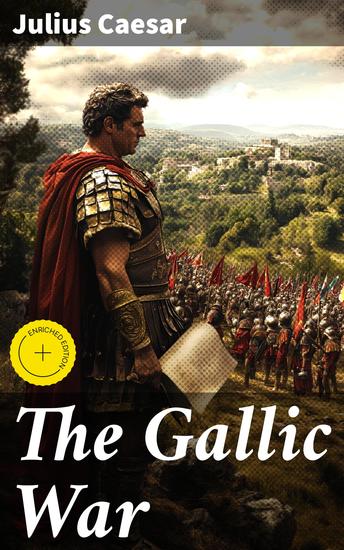
The Gallic War - Enriched edition Historical Account of Julius Caesar's Military Campaign in Celtic Gaul - cover
LER

The Gallic War - Enriched edition Historical Account of Julius Caesar's Military Campaign in Celtic Gaul

Julius Caesar

Tradutor W. A. McDevitte, W. S. Bohn

Editora: Good Press

  • 0
  • 0
  • 0

Sinopse

In "The Gallic War," Julius Caesar presents a pivotal account of his military campaign against the Gallic tribes from 58 to 50 BCE. Written in a concise, dry, and objective literary style, Caesar's reports are characterized by their clarity, vivid descriptions, and strategic insight, reflecting the conventions of Roman historiography. His first-person narrative offers not only a record of battles and troop movements but also illuminates the complex interactions between the Romans and various tribes, revealing the social and political dynamics of Gaul during a transformative period in Roman history. Julius Caesar, a prominent statesman and military general, composed this work during his time away from Rome, likely to justify his actions and bolster his political standing back home. His dual role as both observer and participant grants unique authority to his narrative. As someone deeply immersed in the intricacies of power, ambition, and governance, Caesar's keen insights into leadership and military strategy emerge as focal themes throughout the text. "The Gallic War" is an essential read for anyone interested in military history, politics, or Roman culture. Caesar's articulate first-hand account not only documents a significant epoch but also serves as a timeless reflection on the nature of power, ambition, and the complexities of leadership.

In this enriched edition, we have carefully created added value for your reading experience:
- A succinct Introduction situates the work's timeless appeal and themes.
- The Synopsis outlines the central plot, highlighting key developments without spoiling critical twists.
- A detailed Historical Context immerses you in the era's events and influences that shaped the writing.
- An Author Biography reveals milestones in the author's life, illuminating the personal insights behind the text.
- A thorough Analysis dissects symbols, motifs, and character arcs to unearth underlying meanings.
- Reflection questions prompt you to engage personally with the work's messages, connecting them to modern life.
- Hand‐picked Memorable Quotes shine a spotlight on moments of literary brilliance.
- Interactive footnotes clarify unusual references, historical allusions, and archaic phrases for an effortless, more informed read.
Disponível desde: 18/11/2023.
Comprimento de impressão: 181 páginas.

Outros livros que poderiam interessá-lo

  • 10 Biggest Battles of the Civil War The: The History of the Largest Battles in America's Deadliest Conflict - cover

    10 Biggest Battles of the Civil...

    Editors Charles River

    • 0
    • 0
    • 0
    The names of history’s most famous battles still ring in our ears today, their influence immediately understood by all. Marathon lent its name to the world’s most famous race, but it also preserved Western civilization during the First Persian War. Saratoga, won by one of the colonists’ most renowned war heroes before he became his nation’s most vile traitor. Hastings ensured the Normans’ success in England and changed the course of British history. Waterloo, which marked the reshaping of the European continent and Napoleon’s doom, has now become part of the English lexicon.  
    Americans have long been fascinated by the Civil War and its biggest battles, and this audiobook explains the campaigns and events that brought about decisive battles like Gettysburg, Second Bull Run, Chancellorsville, Chickamauga, Antietam, Murfreesboro, and more, along with what went right and wrong on both sides and the aftermath of the battles. Accounts of the battles by important leaders like Sherman and Grant are cited, along with analysis of the generals and fighting. 
    Ver livro
  • Laurence Olivier and Richard Burton: The Lives and Careers of Britain’s Most Famous Shakespearean Actors - cover

    Laurence Olivier and Richard...

    Editors Charles River

    • 0
    • 0
    • 0
    Of all the great actors of the 20th century, none personifies acting royalty more than Laurence Olivier, and some of this is simply due to the fact that he was actually knighted in 1947, along with a lengthy list of other honors that include being named a life peer in 1970 and admission to the Order of Merit in 1984. To speak of The Right Honourable Lord Laurence Olivier is not a figure of speech but rather a fact. Of course, in addition to the literal sense of the term, there is undeniably a manner in which Laurence Olivier qualifies as acting royalty, as it is not for nothing that Spencer Tracy once referred to Olivier as “the greatest actor in the English-speaking world” (Bacall). It is also important to note that Tracy refers to Olivier not as a film or theater actor specifically, because much of Olivier’s lofty standing derives from his ability to successfully navigate different mediums like stage, film, and television. The breadth of mediums in which he worked, the various roles he inhabited within them (actor, producer, director), and the formidable time span of his career lend Olivier’s career a scope of perhaps unmatched magnitude.   
    	In the 1960s, the most popular actor in the world was Richard Burton, a hard-drinking Welshman who was nevertheless so professional that he was one of the preeminent stage performers of his day. In fact, he performed Shakespeare so magnificently that he was compared to British legend Laurence Olivier, and that success ultimately led to a film career that earned him 7 Academy Award nominations, as well as BAFTA and Golden Globe awards for Best Actor. Given his accomplishments on the stage and in Hollywood, Burton became one of the world’s most recognizable leading men, so it seemed fitting that he engaged in one of Hollywood’s most legendary romances with Elizabeth Taylor.
    Ver livro
  • The Fraternity of the Rose Cross - cover

    The Fraternity of the Rose Cross

    Manly Palmer Hall

    • 0
    • 0
    • 0
    Who were the Rosicrucians? Were they an organization of profound thinkers rebelling against the inquisitional religious and philosophical limitations of their time or were they isolated transcendentalists united only by the similarity of their viewpoints and deductions? Where was the "House of the Holy Spirit, " in which, according to their manifestoes, they met once a year to plan the future activities of their Order? Who was the mysterious person referred to as "Our Illustrious Father and Brother C.R.C."? Did those three letters actually stand for the words "Christian Rosie Cross"? Was Christian Rosencreutz, the supposed author of the Chymical Nuptials, the same person who with three others founded "The Society of the Rose Cross"? 
    What relationship existed between Rosicrucianism and mediæval Freemasonry? Why were the destinies of these two organizations so closely interwoven? Is the "Brotherhood of the Rose Cross" the much-sought-after link connecting the Freemasonry of the Middle Ages with the symbolism and mysticism of antiquity, and are its secrets being perpetuated by modern Masonry? Did the original Rosicrucian Order disintegrate in the latter part of the eighteenth century, or does the Society still exist as an organization, maintaining the same secrecy for which it was originally famous? What was the true purpose for which the "Brotherhood of the Rose Cross" was formed? Were the Rosicrucians a religious and philosophic brotherhood, as they claimed to be, or were their avowed tenets a blind to conceal the true object of the Fraternity, which possibly was the political control of Europe? These are some of the problems involved in the study of Rosicrucianism.
    Ver livro
  • Don't Talk Negatively Behind Anybody's Back - cover

    Don't Talk Negatively Behind...

    Pastor Philip

    • 0
    • 0
    • 0
    The fact that you would take time to talk negatively about someone, means that you have a picture in your mind of the person you're talking about. The picture in your mind of the person you're talking negatively about, will be transmitted by that person's angel in protest to our Father in heaven.  The song "It'll Be Ok" sung by Chey at the end of the message gives the audience the opportunity to reflect on the message.
    Ver livro
  • Orkney Days - An Island Life - cover

    Orkney Days - An Island Life

    Christine Muir

    • 0
    • 0
    • 0
    This is the charming and poignant account of twenty-five years spent in Orkney. After her marriage to an islander, Christine Muir went to live on the tiny island of North Ronaldsay, where she and her husband brought up their four children and ran a small croft.
    Following the seasons though the year, Orkney Days is full of observations of the natural world at their doorstep. Beautiful descriptions of the island and its flora and fauna – from wildflowers and medicinal herbs to seals and seabirds – are mingled with memories of a young family growing up and the rhythms of daily life far from the bustle of the modern world. There is much too about the work involved in running their croft and the cattle and sheep that are its mainstay, about the traditions and lore of the island which stretch back over countless generations, and about the modern developments which changed it forever.
    Ver livro
  • Willingness to Learn - The Open Mindset - cover

    Willingness to Learn - The Open...

    Esther Jameson

    • 0
    • 0
    • 0
    The journey begins with the simple act of curiosity, a spark that drives us to explore the vast realm of knowledge and self-improvement. In every life, there exists a turning point where the desire to learn outweighs the comfort of the familiar. This chapter explores the early stages of that transformative journey, when individuals decide to step beyond their comfort zones and embrace the challenges of growth. It is a time filled with both excitement and uncertainty, where every question asked becomes a stepping stone toward a deeper understanding of oneself and the world. 
    At the heart of this journey is the recognition that learning is not a finite process. Instead, it is an ongoing adventure that demands patience, persistence, and an open mind. The decision to learn often comes after moments of reflection, when past experiences—both successes and failures—combine to illuminate the need for change. This process involves shedding limiting beliefs and accepting that each setback is a valuable lesson in disguise. The willingness to embrace the unknown, even when the outcome is uncertain, becomes the foundation upon which a richer, more informed life is built. 
    In this early stage, individuals frequently encounter obstacles that test their resolve. It is in overcoming these barriers that the true value of the learning journey is revealed. The initial steps may be filled with self-doubt, yet every challenge conquered reinforces the commitment to personal growth. This chapter emphasizes that every small victory contributes to a greater sense of purpose and capability. The gradual accumulation of knowledge and experience leads to a newfound confidence that empowers learners to tackle more complex questions and explore diverse fields of inquiry.
    Ver livro