Join us on a literary world trip!
Add this book to bookshelf
Grey
Write a new comment Default profile 50px
Grey
Subscribe to read the full book or read the first pages for free!
All characters reduced
Caesar' Gallic War - Enriched edition An Account of Caesar's Campaign in Celtic Gaul - cover

Caesar' Gallic War - Enriched edition An Account of Caesar's Campaign in Celtic Gaul

Julius Caesar

Translator W. A. McDevitte, W. S. Bohn

Publisher: Musaicum Books

  • 0
  • 0
  • 0

Summary

Julius Caesar's 'Caesar's Gallic War' is a compelling account of his military campaigns in Gaul, written in a straightforward and bold prose style that mirrors his commanding presence on the battlefield. The book provides a detailed and vivid portrayal of the Roman conquest of Gaul, showcasing Caesar's strategic brilliance and leadership skills. It also offers valuable insights into Roman military tactics and the political landscape of the time, making it a significant historical document. Caesar's writing is both informative and engaging, drawing readers into the heart of the action and keeping them captivated throughout. This work is essential reading for anyone interested in Roman history or military affairs, offering a firsthand account of one of the most influential figures in ancient Rome. Julius Caesar's firsthand experience on the battlefield and his keen political insight lend depth and authenticity to 'Caesar's Gallic War', making it a must-read for history enthusiasts and military scholars alike.

In this enriched edition, we have carefully created added value for your reading experience:
- A succinct Introduction situates the work's timeless appeal and themes.
- The Synopsis outlines the central plot, highlighting key developments without spoiling critical twists.
- A detailed Historical Context immerses you in the era's events and influences that shaped the writing.
- An Author Biography reveals milestones in the author's life, illuminating the personal insights behind the text.
- A thorough Analysis dissects symbols, motifs, and character arcs to unearth underlying meanings.
- Reflection questions prompt you to engage personally with the work's messages, connecting them to modern life.
- Hand‐picked Memorable Quotes shine a spotlight on moments of literary brilliance.
- Interactive footnotes clarify unusual references, historical allusions, and archaic phrases for an effortless, more informed read.
Available since: 11/02/2018.
Print length: 181 pages.
Other books that might interest you

  • Alexander the Great: An Enthralling Guide to the Rise of the Macedonian Empire Its Ruler and His Conquests - cover

    Alexander the Great: An...

    Billy Wellman

    • 0
    • 0
    • 0
    Did you know that Alexander the Great once introduced proskynesis to the Macedonian court? 
    Proskynesis, the act of kissing the ground or the feet of someone of higher rank, was a normal custom of the Persians. In the court of the Achaemenid Empire, this act was typically done before the king. In contrast to the practice of the Greeks and Macedonians, proskynesis was performed by the Persians only when they were communicating with their ancient gods.  
    The invasion of the Achaemenid Empire had always been on top of the list for Alexander the Great. Ever since he came to power, the king had desired the submission of Darius III, the reigning king of the Persians at that time. Though he defeated the king in two battles and eventually conquered its territories, Alexander appears to have soon found a deep love for Persian customs and traditions. Of course, the king’s gradual change and assimilation of Persian culture did not sit well with the Macedonian people.  
    According to the ancient writer Arrian, when Alexander attempted to apply proskynesis to his court, his decision was met with massive criticism from both the Macedonians and Greeks. And even when he stopped the practice, the Macedonians continued to witness their king apply a variety of Persian customs in the kingdom. Some said his Persianization played a minor role in his death, while others claimed that he died of natural causes. The sources that tell the story of Alexander often contradict each other, which can be confusing for curious readers hoping to learn about the great king’s eventful life.  
    But that is about to change. With this all-new enthralling history audiobook, you can easily explore the gripping events that took place throughout the life of Alexander the Great. 
    Scroll up and click the “add to cart” button to learn more about Alexander the Great!
    Show book
  • The Shakespeare Conundrum - Examining the True Identity of the Literary Genius - cover

    The Shakespeare Conundrum -...

    John Harpoon

    • 0
    • 0
    • 0
    The question of who wrote the works attributed to William Shakespeare has intrigued scholars, historians, and literary enthusiasts for centuries. Despite being one of the most celebrated figures in the world of literature, Shakespeare’s true identity remains a subject of mystery. The sheer volume of his works, their profound depth, and the complexity of their themes have led many to wonder whether the man from Stratford-upon-Avon was truly the author of the plays and sonnets that bear his name. This uncertainty has given rise to one of the most enduring and controversial debates in literary history: the Shakespeare authorship question. 
      
    The core of this mystery lies in the limited biographical information available about Shakespeare’s life. Born in 1564 in Stratford-upon-Avon, Shakespeare’s early years remain largely undocumented, with no personal manuscripts or letters bearing his signature. The surviving records of his life mainly consist of legal documents, such as his marriage license, business transactions, and his will. While these historical artifacts confirm his existence and some of his professional endeavors, they provide little insight into his intellectual and literary development. For a figure of his stature, this absence of personal evidence is startling, leading some to question whether the “Stratford man” could have truly written the works attributed to him. 
      
    In the absence of definitive evidence, a number of alternative theories have emerged, suggesting that another writer, or group of writers, may have been responsible for Shakespeare’s remarkable body of work. These theories have ranged from the claim that the works were penned by an aristocrat such as Francis Bacon, to the suggestion that the true author was the playwright Christopher Marlowe, whose death in 1593 has been disputed by some.
    Show book
  • Equal to Mystery: In Search of Harold Sonny Ladoo - cover

    Equal to Mystery: In Search of...

    Christopher Laird

    • 0
    • 0
    • 0
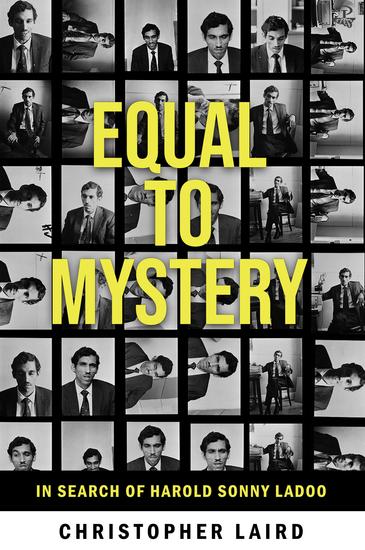
    When the Trinidadian novelist, Harold Sonny Ladoo was found dead soon after the publication of his classic novel, No Pain Like This Body, for Christopher Laird, it became an obsession to try to discover the writer behind the work and what had brought about his untimely end. Equal to Mystery – words written by Ladoo – is the record of that pursuit.
    
    When, as the editor of a Trinidadian literary journal in the radical years of the early 1970s, Christopher Laird was sent Harold Sonny Ladoo's novel, No Pain Like This Body (1973) to review, he knew he was looking at something revolutionary in Caribbean fiction. It is a novel that has recently been republished as a Penguin Modern Classic. But the next news Laird heard of Ladoo was that he had returned to Trinidad from Canada and had been found dead – very probably murdered – in the canefields outside his family's village of McBean. Laird follows in the path of Ladoo to Canada, where he went to make a name for himself as a writer, and tracks him as a student and young married man through conversations with his widow and other family members. He looks in detail at his relationships with two Canadian writers, Dennis Lee and Peter Such, who supported his work, and in Lee's case published him. Here there is an acute account of their meetings across the line of race, of the mix of generous contact and elusive flight in their relationship. Above all, with access to Ladoo's unpublished material -- short stories and fragments of the vast body of fiction he announced he was writing -- Laird offers acute analysis of what is there, honest bafflement about just what Ladoo was up to, with a tragic sense of the talent that was lost through his untimely death.
    Show book
  • A Rare Recording of Roald Dahl - cover

    A Rare Recording of Roald Dahl

    Roald Dahl

    • 0
    • 0
    • 0
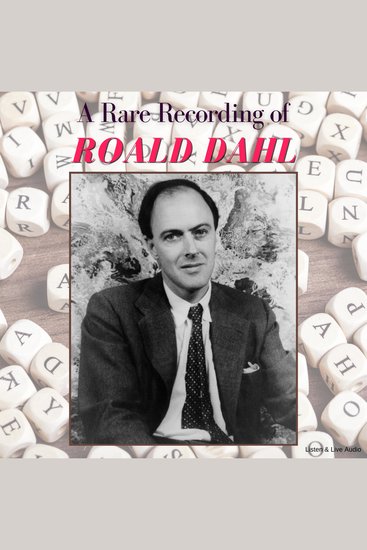
    Roald Dahl (September 13, 1916 - November 23, 1990), born in Cardiff, Wales, was a novelist, poet, screenwriter, and short story author, as well as a fighter pilot and intelligent officer in the Royal Air Force (RAF) during World War II. Considered one of the greatest storytellers for children of the 20th century, Dahl's classic works include Charlie and the Chocolate Factory, James and the Giant Peach, The Witches, The Twits and Matilda. His books have sold more than 300 million copies worldwide.
    Show book
  • Ghana Empire - The Land of Gold and the Birth of West African Power - cover

    Ghana Empire - The Land of Gold...

    Rolf Hedger

    • 0
    • 0
    • 0
    The Ghana Empire, also known as Wagadou, emerged as one of the earliest and most influential states in West Africa. Situated in the Sahel region, between the Senegal and Niger rivers, it thrived in an environment that was both challenging and advantageous for settlement and expansion. The Soninke people, who founded the empire, played a crucial role in establishing a political and economic system that allowed Ghana to dominate the region for centuries. 
    The origins of the Ghana Empire can be traced to the migrations and settlements of the Soninke, a Mande-speaking group, who gradually organized themselves into small communities. These communities initially relied on agriculture, herding, and local trade but soon recognized the value of the trans-Saharan trade routes that passed through their territory. The strategic location of Ghana, near valuable gold deposits and trade routes, allowed it to grow into a powerful state. The Soninke clans, under the leadership of a ruling dynasty, established centralized control, which set the foundation for the empire’s expansion. 
    The political structure of early Ghana was based on a hierarchical system, with the king, known as the Ghana, at the top. The title "Ghana" was both a royal designation and a symbol of authority. The king served as the supreme leader, making key decisions related to governance, trade, and military strategy. His power was reinforced by a council of elders and advisors, often drawn from the nobility and influential families. This system enabled stability and continuity, which contributed to the long-term success of the empire.
    Show book
  • Critias - cover

    Critias

    Plato

    • 0
    • 0
    • 0
    Plato’s Critias is the foundational source of one of the most enduring mysteries in human history: the lost civilization of Atlantis. In this unfinished dialogue, Plato unveils a majestic tale passed down through Solon from ancient Egyptian priests—of a powerful empire beyond the Pillars of Heracles, rich in technology, beauty, and ambition. 
    But this is no mere fantasy. Critias blends myth, philosophy, and political allegory to offer a cautionary vision: the rise and fall of a mighty civilization undone by its hubris. Through detailed descriptions of Atlantis’s geography, military power, and social organization, Plato reveals not only a mythic past but a philosophical warning to the future. 
    Why did Atlantis fall? What makes a society just or unjust? What happens when divine order is abandoned for mortal pride? Though the dialogue ends abruptly, its impact has echoed through millennia—fueling imaginations, explorations, and philosophical debates ever since. 
    This audiobook delivers Critias in its full glory: a glimpse into Plato’s unfinished vision of a civilization that may have once been—or was meant to be a mirror of our own.
    Show book