Join us on a literary world trip!
Add this book to bookshelf
Grey
Write a new comment Default profile 50px
Grey
Subscribe to read the full book or read the first pages for free!
All characters reduced
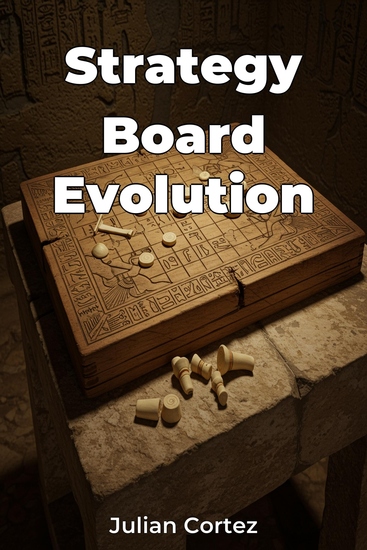
Strategy Board Evolution - cover

Strategy Board Evolution

Julian Cortez

Translator A AI

Publisher: Publifye

  • 0
  • 0
  • 0

Summary

Strategy Board Evolution explores the captivating history and psychology behind strategy board games, examining why certain games like chess, Go, and backgammon have endured across cultures and centuries. The book delves into how these games reflect human cognition, culture, and strategic thinking. Intriguingly, these games tap into fundamental aspects of the human mind, fostering social interaction and challenging our problem-solving abilities. One key insight is the connection between game design and cognitive function, highlighting potential applications in education and therapy. 

 
The book progresses chronologically, starting with ancient civilizations and tracing the evolution of board games to their modern forms. Key chapters analyze specific games, dissecting their rules, strategies, and cultural impact. By integrating historical analysis, psychological insights, and game theory, Strategy Board Evolution provides a holistic understanding of why these games continue to captivate and offer cognitive benefits like enhanced decision-making.
Available since: 03/31/2025.
Print length: 64 pages.

Other books that might interest you

  • City Networks - Connectivity and Urban Development - cover

    City Networks - Connectivity and...

    Lyric Vale

    • 0
    • 0
    • 0
    Connectivity is a critical element in shaping the development and functionality of modern cities. As urbanization accelerates, the ability to connect people, services, and infrastructure becomes fundamental in ensuring that cities grow in a sustainable, efficient, and equitable manner. Whether through transportation, digital infrastructure, or social systems, connectivity determines the overall effectiveness of urban environments. It not only enables economic growth and innovation but also enhances the quality of life for urban residents, facilitating better access to services, opportunities, and resources. As cities evolve, improving connectivity has become one of the most pressing priorities for urban planners, policymakers, and developers. 
    Historically, the evolution of urban connectivity was rooted in physical infrastructure. Roads, railways, and ports formed the foundation for the development of cities, enabling the movement of goods, services, and people. These early forms of connectivity allowed urban centers to thrive, driving economic activity and creating spaces for cultural exchange. As cities grew, so did their need for more complex and advanced networks. In the 21st century, digital connectivity has added a new layer of importance to urban development. High-speed internet, mobile technology, and digital communication systems have transformed how cities function, providing real-time access to information and services that were previously unavailable. 
    The concept of the "smart city" highlights the profound impact of digital connectivity on urban life. By integrating technologies such as the Internet of Things (IoT), artificial intelligence, and big data, cities can improve everything from traffic management to resource distribution. Smart city solutions enable cities to operate more efficiently and sustainably, optimizing the use of energy, water, and other resources while reducing waste and pollution.
    Show book
  • Empower Your Finances: Break Free From Patriarchal Limits and Love Your Life - Break Financial Chains! Access Insightful Audio Lessons for Ultimate Life and Money Mastery - cover

    Empower Your Finances: Break...

    Roarke Hemingwell

    • 0
    • 0
    • 0
    ⭐⭐ Empower Your Finances ⭐⭐ 
    Break Free From Patriarchal Limits and Love Your Life 
    Looking to enhance your financial knowledge and break free from patriarchal constraints to live a life you love? 
    This audiobook is your ultimate guide to understanding and mastering the principles of financial empowerment. 
    Your search ends here! 
    This audiobook serves as your definitive companion for deepening your understanding, applying your skills, and engaging in hands-on exercises. With this, you're geared for success. 
    Updated for the latest financial strategies and methodologies. 
    Key features of this enriched guide: 
    - Profound insights into achieving financial freedom 
    - Detailed explanations of key financial principles 
    - Effective strategies for financial planning and wealth management 
    Our guide distinguishes itself through comprehensive coverage, which is essential for your financial success. Concepts aren't merely skimmed; they are delved into with precision. 
    Please note that this audiobook is not affiliated with any official financial entity and is purely an independent resource for your benefit. 
    Designed with a clear structure and easy-to-understand language, our guide ensures smooth transitions between topics. Say goodbye to dense jargon and welcome clear, precise, and technically accurate content. 
    So, why wait? Click the BUY NOW button, secure your guide, and begin your journey to financial freedom and a life you truly love!
    Show book
  • Sun Tzu's The Art of War - Unabridged - cover

    Sun Tzu's The Art of War -...

    Sun Tzu

    • 0
    • 0
    • 0
    "The Art of War" is the widely acclaimed book of military strategy written by the legendary Chinese general and philosopher Sun Tzu.   
    In this treatise, Sun Tzu lays out his basic philosophy of how to wage military campaigns, including a description of the correct temperament of a general, flanking and attack strategies, the use of spies, the employment of deception and counter-intelligence and dozens of other time-honored pieces of military advice. The book has been read and studied by scores of leaders, presidents, generals and even corporate titans and Sun Tzu is often praised as the finest military strategist in history.   
    We are proud to present this manuscript in its original and unabridged format, as translated by Lionel Giles, M.A. in 1910.
    Show book
  • Not What I Expected - Help and Hope for Parents of Atypical Children - cover

    Not What I Expected - Help and...

    Ph.D. Rita Eichenstein, M.D....

    • 0
    • 0
    • 0
    A pediatric neuropsychologist presents strategies to help parents of specialneeds children navigate the emotional challenges they face 
     
    As diagnosis rates continue to rise for autism, ADHD, learning disabilities, and other developmental differences, parents face a maze of medical, psychological, and educational choices—and a great deal of emotional stress. With compassion,  
    clarity, and an emphasis on practical solutions, Dr. Rita Eichenstein walks readers through the five stages of acceptance and helps readers understand their own emotional experience, so that they can embrace their child with acceptance, compassion, and joy.
    Show book
  • Paging God - Religion in the Halls of Medicine - cover

    Paging God - Religion in the...

    Wendy Cadge

    • 0
    • 0
    • 0
    While the modern science of medicine often seems nothing short of miraculous, religion still plays an important role in the past and present of many hospitals. When three-quarters of Americans believe that God can cure people who have been given little or no chance of survival by their doctors, how do today’s technologically sophisticated health care organizations address spirituality and faith? 
      
    Through a combination of interviews with nurses, doctors, and chaplains across the United States and close observation of their daily routines, Wendy Cadge takes readers inside major academic medical institutions to explore how today’s doctors and hospitals address prayer and other forms of religion and spirituality. From chapels to intensive care units to the morgue, hospital caregivers speak directly in these pages about how religion is part of their daily work in visible and invisible ways. In Paging God: Religion in the Halls of Medicine, Cadge shifts attention away from the ongoing controversy about whether faith and spirituality should play a role in health care and back to the many ways that these powerful forces already function in healthcare today.
    Show book
  • The Shocking Truth about International Aid - cover

    The Shocking Truth about...

    Zoey Fraisers

    • 0
    • 0
    • 0
    International aid has long been heralded as a solution to the world’s most pressing problems, from poverty and hunger to disease and disaster recovery. It is a system built on the idea that wealthier nations and organizations have the responsibility to assist those in need, providing the necessary resources to help vulnerable populations rise above their circumstances. With trillions of dollars allocated to aid efforts across the globe, it would seem that international aid is fulfilling its mission to promote global well-being. However, a closer examination reveals a far more complex, and often disheartening, reality. 
      
    While aid is essential in times of crisis, its long-term effects are often overlooked. Far too frequently, the aid process is tainted by inefficiencies, corruption, and political agendas, which hinder its effectiveness and frequently exacerbate the problems it seeks to solve. Donor countries may provide aid with specific political or economic interests in mind, making the assistance less about altruism and more about advancing a nation's own objectives. Likewise, organizations tasked with distributing aid can become bogged down by bureaucratic red tape, mismanagement, and a lack of accountability, leading to resources being squandered or diverted from the people who need them most. 
      
    The impact of international aid is not always as straightforward as it appears. While some projects undoubtedly achieve their goals, many others fail to deliver lasting results, leaving behind a trail of dependency rather than empowerment. Aid can often unintentionally disrupt local economies and social structures, creating reliance on external support rather than fostering self-sufficiency. In some cases, aid even perpetuates cycles of poverty by undermining local industries or creating a mindset of dependency that stifles innovation and growth.
    Show book