
Join us on a literary world trip!
Add this book to bookshelf
Grey
Write a new comment Default profile 50px
Grey
Subscribe to read the full book or read the first pages for free!
All characters reduced
Cold Hearts Warm - cover

Cold Hearts Warm

Julian Beaumont

Translator A AI

Publisher: Publifye

  • 0
  • 0
  • 0

Summary

Cold Hearts Warm explores the challenging yet vital process of rebuilding trust within family relationships. It highlights the interconnected roles of trust, empathy, and time in mending broken bonds. The book emphasizes that rebuilding trust goes beyond simple apologies, requiring consistent effort and a genuine understanding of others' perspectives.

 
For instance, cultivating empathy, the ability to understand and share another's feelings, is presented as a crucial bridge across resentment. Drawing from research in psychology and family dynamics, the book offers a fact-based approach to understanding and resolving conflicts. It provides practical tools and techniques for active listening, perspective-taking, and emotional regulation.

 
The book unfolds systematically, beginning with core concepts and progressing through conflict resolution strategies to a practical guide for initiating meaningful conversations. Ultimately, Cold Hearts Warm aims to empower readers with the knowledge and skills needed to foster healing and create lasting positive change within their families, emphasizing that sustained effort and genuine care are essential for reconciliation.
Available since: 02/27/2025.
Print length: 120 pages.
Other books that might interest you

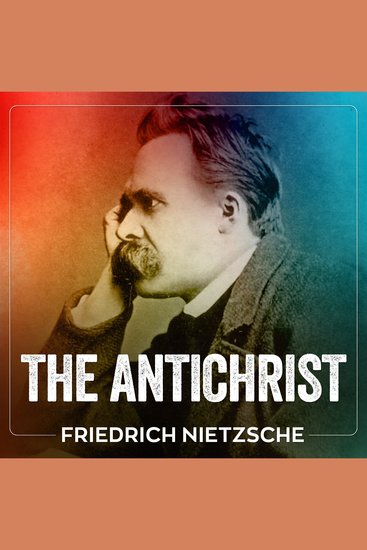
  • The Antichrist - cover

    The Antichrist

    Friedrich Nietzsche

    • 0
    • 0
    • 0
    The Antichrist is a book by the philosopher Friedrich Nietzsche, originally published in 1895. Although it was written in 1888, its controversial content made Franz Overbeck and Heinrich Köselitz delay its publication, along with Ecce Homo. The German title can be translated into English as either The Anti-Christ or The Anti-Christian, depending on how the German word Christ is translated.  
    Nietzsche claimed in the foreword to have written the book for a very limited readership. In order to understand the book, he asserted that the reader "...must be honest in intellectual matters to the point of hardness to so much as endure my seriousness, my passion." The audience should be above politics and nationalism. Also, the usefulness or harmfulness of truth should not be a concern. Characteristics such as "strength which prefers questions for which no one today is sufficiently daring; courage for the forbidden" are also needed. He disdained all other readers.
    Show book
  • Aurora - Part 3: Teasing The Straight Gay - cover

    Aurora - Part 3: Teasing The...

    Kathrin Pissinger

    • 0
    • 0
    • 0
    A female domination story with a queer twist. 
    In a glorious finale, I'm setting the bathroom stripper and her peeping toyfriend up for a meeting at a gay bar, where I'm finally going to see who is willing to become gay in order to get a threesome with me.
    Show book
  • How to Recognize Toxic Relationships - cover

    How to Recognize Toxic...

    Olivia Werner

    • 0
    • 0
    • 0
    [How to Recognize Toxic Relationships] delves into the intricate psychological landscape of modern relationships with unflinching precision and rare emotional intelligence. Written in lyrical prose that cuts straight to the heart, this groundbreaking exploration examines the subtle ways toxicity infiltrates our closest connections, offering readers a profound understanding of the quiet violence of emotional manipulation. Through masterfully crafted chapters that weave together psychological insight with intimate narrative, the book illuminates the often-invisible patterns of control, gaslighting, and identity erosion that characterize toxic relationships. With its keen observations of digital-age dynamics and the ways technology can amplify relationship dysfunction, this work speaks directly to contemporary readers while touching on timeless themes of human connection and self-preservation.
    Show book
  • Double Agent Balloon - Dickie Metcalfe's Espionage Career for MI5 and the Nazis - cover

    Double Agent Balloon - Dickie...

    David Tremain

    • 0
    • 0
    • 0
    Dickie Metcalfe was not your typical secret agent, but he was larger than life in more ways than one. Unlike many other agents who were part of the Double Cross System during the Second World War, he did not defect; nor was he blackmailed into becoming a spy. Instead, using his father's connection with Sir Vernon Kell, the first director of MI5, Metcalfe volunteered his services. 


    Recently cashiered from his infantry regiment, he had an ulterior motive—by supplying MI5 with tidbits of information about weapons and arms deals in his newfound profession as an arms dealer, he hoped they would be able to help him get his commission reinstated. Metcalfe became BALLOON, a sub-agent of double agent TRICYCLE's Yugoslav spy ring. 


    Concurrent with his spying activities, he collaborated with the coinventor of the Bren gun to develop a new submachine gun for British forces. After the war, he was also a celebrated motor racing driver and continued to compete until shortly before his death. His success as a double-cross agent in the eyes of both his masters—British and German—is examined in this book, using official documents as a primary source.
    Show book
  • Enquiry Concerning the Principles of Morals and Other Works An - cover

    Enquiry Concerning the...

    David Hume

    • 0
    • 0
    • 0
    In his authobiography, David Hume declared unequivocally that this work, An Enquiry Concerning the Principles of Morals (1751) is ‘of all my writings, historical, philosophical, or literary, incomparably the best.’ In it, Hume takes the discussion away from traditional attitudes where either rational or metaphysical issues govern moral principles. Instead, he introduces the human factor, introducing the sentiments and passions inherent in human psychology.  
    In the opening paragraph of his Enquiry he states the ground clearly: ‘There has been a controversy started of late, much better worth examination, concerning the general foundation of Morals; whether they be derived from Reason, or from Sentiment; whether we attain the knowledge of them by a chain of argument and induction, or by an immediate feeling and finer internal sense; whether, like all sound judgement of truth and falsehood, they should be the same to every rational intelligent being; or whether, like the perception of beauty and deformity, they be founded entirely on the particular fabric and constitution of the human species.’ 
    He challenges the notion that reason can dictate moral principles independently of our desires and sentiments, arguing instead that reason serves as a tool to navigate and articulate our moral sentiments. 
    Central to Hume's thesis is the concept of moral approbation and disapprobation, which he contends stem from our natural inclination to feel pleasure or aversion in response to certain actions or traits. 
    He pursues his theme with characteristic clarity, concentrating on topics including benevolence, justice, utility, qualities useful to ourselves and others. He rejects moral absolutism which presumes the existence of immutable moral laws. Throughout, he emphasizes the importance of empathy and compassion as essential components of ethical behaviour.  
    Hume's "An Enquiry Concerning the Principles of Morals" stands as a testament to his profound insight into the complexities of human nature and morality. 
    This recording also contains two essays which also reflect the independence of his views for his time, On Suicide and On the Immortality of the Soul.
    Show book
  • Vedanta Philosophy - Five Lectures on Reincarnation - cover

    Vedanta Philosophy - Five...

    Swami Abhedananda

    • 0
    • 0
    • 0
    "Vedanta Philosophy: Five Lectures on Reincarnation" by Swami Abhedananda offers profound insights into the spiritual concept of reincarnation as viewed through the lens of Vedanta. In these five enlightening lectures, Swami Abhedananda explores the soul's journey through multiple lifetimes, the law of karma, and the ultimate goal of liberation. With clarity and wisdom, he delves into ancient teachings, providing a thoughtful analysis that bridges Eastern philosophy and contemporary thought, encouraging deeper spiritual reflection.
    Show book