Join us on a literary world trip!
Add this book to bookshelf
Grey
Write a new comment Default profile 50px
Grey
Subscribe to read the full book or read the first pages for free!
All characters reduced
Around the world in 80 days(Illustrated) - cover

Around the world in 80 days(Illustrated)

Jules Verne

Publisher: Micheal Smith

  • 0
  • 0
  • 0

Summary

Illustrated Edition: Enjoy 20 vibrant and detailed illustrations that bring the story’s most thrilling moments to life.
	Includes a Comprehensive Summary: Dive into a captivating and concise summary that encapsulates the essence of this timeless adventure.
	Features a Detailed Characters List: Get acquainted with the memorable cast of characters through a comprehensive list, enhancing your reading experience.
	Contains an Author Biography: Delve into the fascinating life of Jules Verne, the visionary author behind this classic novel.

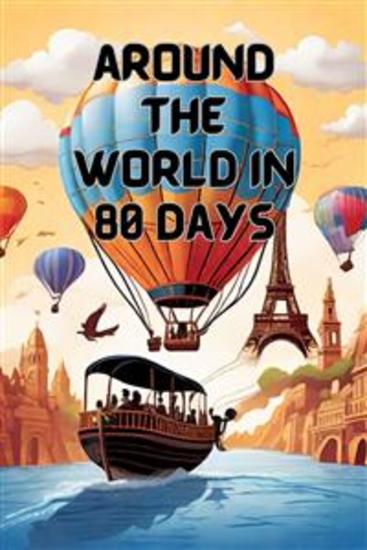
Step into a world of adventure and intrigue with this beautifully illustrated edition of Jules Verne's timeless classic, "Around the World in Eighty Days." This edition is enriched with 20 stunning illustrations that capture the spirit of Verne's beloved tale, bringing the diverse cultures and breathtaking landscapes to life.

Phileas Fogg, an intriguing Englishman, bets his whole fortune on circumnavigating the world in eighty days. Fogg embarks on an adventure fraught with peril, passion, and unexpected surprises with his trusty attendant Passepartout. Every page is a fresh experience, from the exotic streets of Bombay to the wild American frontier.

This edition not only includes a visual feast of illustrations but also provides a comprehensive summary, allowing readers to grasp the full scope of Verne's masterpiece. A detailed list of characters is also featured, offering insights into the motivations and backstories of Phileas Fogg, Passepartout, Aouda, and the many fascinating characters they meet on their journey.

To complete this enriched reading experience, delve into the author biography section and learn about the life and times of Jules Verne, the literary pioneer who envisioned this epic journey. Discover the inspirations behind his work and how he became one of the most translated authors in the world.

Don't miss this opportunity to embark on the journey of a lifetime. With its combination of thrilling adventure, rich characterization, and vivid illustrations, this edition of "Around the World in Eighty Days" is a treasure trove for readers of all ages. Grab your copy today and set sail on an unforgettable voyage around the world!


Available since: 12/15/2023.
Other books that might interest you

  • Les Misérables: Volume 5: Jean Valjean - Book 2: The Intestine of the Leviathan (Unabridged) - cover

    Les Misérables: Volume 5: Jean...

    Victor Hugo

    • 0
    • 0
    • 0
    Victor-Marie Hugo (26 February 1802 - 22 May 1885) was a French poet, novelist, essayist, playwright, and dramatist of the Romantic movement. During a literary career that spanned more than sixty years, he wrote abundantly in an exceptional variety of genres: lyrics, satires, epics, philosophical poems, epigrams, novels, history, critical essays, political speeches, funeral orations, diaries, and letters public and private, as well as dramas in verse and prose.
    BOOK 2: THE INTESTINE OF THE LEVIATHAN: Paris casts twenty-five millions yearly into the water. And this without metaphor. How, and in what manner? Day and night. With what object? With no object. With what intention? With no intention. Why? For no reason. By means of what organ? By means of its intestine. What is its intestine? The sewer.
    Show book
  • Intentions - cover

    Intentions

    Oscar Wilde

    • 0
    • 0
    • 0
    "Intentions" by Oscar Wilde is a captivating collection of essays that showcases the wit, wisdom, and provocative ideas of one of literature's most celebrated playwrights and thinkers. In this thought-provoking work, Wilde explores various topics with his trademark style of irony, satire, and social commentary. "Intentions" is a captivating exploration of Wilde's unique worldview, blending aestheticism, social critique, and philosophical reflection. It is a testament to his brilliance as a writer and thinker, inviting readers to engage in lively contemplation on the nature of art, morality, and the human experience.
    Show book
  • Crime and Punishment - cover

    Crime and Punishment

    Fyodor Dostoyevsky

    • 0
    • 0
    • 0
    Crime and Punishment is a novel by the Russian author Fyodor Dostoevsky. It was first published in the literary journal The Russian Messenger in twelve monthly installments during 1866. It was later published in a single volume. It is the second of Dostoevsky's full-length novels following his return from ten years of exile in Siberia. Crime and Punishment is considered the first great novel of his mature period of writing. The novel is often cited as one of the supreme achievements in world literature.Crime and Punishment follows the mental anguish and moral dilemmas of Rodion Raskolnikov, an impoverished ex-student in Saint Petersburg who plans to kill an unscrupulous pawnbroker, an old woman who stores money and valuable objects in her flat. He theorises that with the money he could liberate himself from poverty and go on to perform great deeds, and seeks to convince himself that certain crimes are justifiable if they are committed in order to remove obstacles to the higher goals of 'extraordinary' men. Once the deed is done, however, he finds himself racked with confusion, paranoia, and disgust. His theoretical justifications lose all their power as he struggles with guilt and horror and confronts both the internal and external consequences of his deed.
    Show book
  • Almayer's Folly - cover

    Almayer's Folly

    Joseph Conrad

    • 0
    • 0
    • 0
    "Almayer's Folly" by Joseph Conrad is a haunting and atmospheric novel that marks the debut of one of the most influential writers in modern literature. Set in the remote trading outposts of the Malay Archipelago, the story explores themes of obsession, colonial ambition, cultural conflict, and personal disillusionment.
    
    The novel centers on Kaspar Almayer, a Dutch trader who dreams of wealth, status, and escape from the tropical wilderness he despises. Married into a local Malay family and isolated from European society, Almayer clings desperately to fantasies of hidden treasure and a glorious return to Europe. As his dreams unravel, he becomes increasingly alienated—from his wife, from his daughter Nina, and from the world around him.
    
    Through Almayer's tragic decline, Conrad examines the moral emptiness of colonial aspirations and the psychological toll of living between cultures. The tropical setting, rendered in lush and foreboding detail, mirrors Almayer's inner turmoil and sense of futility. Indigenous characters are portrayed with complexity, challenging European assumptions of superiority and exposing the fragile foundations of colonial power.
    
    Almayer's Folly is both a personal tragedy and a broader critique of imperialism, revealing how greed, pride, and cultural misunderstanding can lead to ruin. Conrad's rich, symbolic prose and psychological depth foreshadow the themes that would define his later masterpieces.
    
    Somber, reflective, and deeply evocative, Almayer's Folly is an essential work of literary fiction. It offers readers a powerful introduction to Joseph Conrad's exploration of the human psyche and the moral shadows cast by empire.
    Show book
  • A Christmas Tree - cover

    A Christmas Tree

    Charles Dickens

    • 0
    • 0
    • 0
    Charles John Huffam Dickens (7 February 1812 – 9 June 1870) was an English writer and social critic. He created some of the world's best-known fictional characters and is regarded as the greatest novelist of the Victorian era. His works enjoyed unprecedented popularity during his lifetime, and by the twentieth century critics and scholars had recognised him as a literary genius. His novels and short stories enjoy lasting popularity.
    I have been looking on, this evening, at a merry company of children assembled round that pretty German toy, a Christmas Tree. The tree was planted in the middle of a great round table, and towered high above their heads. It was brilliantly lighted by a multitude of little tapers; and everywhere sparkled and glittered with bright objects. There were rosy–cheeked dolls, hiding behind the green leaves; and there were real watches (with movable hands, at least, and an endless capacity of being wound up) dangling from innumerable twigs; there were French–polished tables, chairs, bedsteads, wardrobes, eight–day clocks, and various other articles of domestic furniture (wonderfully made, in tin, at Wolverhampton), perched among the boughs, as if in preparation for some fairy housekeeping; there were jolly, broad–faced little men, much more agreeable in appearance than many real men—and no wonder, for their heads took off, and showed them to be full of sugar–plums; there were fiddles and drums; there were tambourines, books, work–boxes, paint–boxes, sweetmeat–boxes, peep–show boxes, and all kinds of boxes; there were trinkets for the elder girls, far brighter than any grown–up gold and jewels; there were baskets and pincushions in all devices; there were guns, swords, and banners; there were witches standing in enchanted rings of pasteboard, to tell fortunes; there were teetotums, humming–tops, needle–cases, pen–wipers, smelling–bottles, conversation–cards, bouquet–holders; real fruit, made artificially dazzling with gold leaf; imitation apples, pears, and walnuts, crammed with surprises; in short, as a pretty child, before me, delightedly whispered to another pretty child, her bosom friend, “There was everything, and more.”
    Show book
  • Hartmann The Anarchist - cover

    Hartmann The Anarchist

    Edward Fawcett

    • 0
    • 0
    • 0
    Hartmann the Anarchist was originally published in 1892 when Edward Douglas Fawcett was 17 years old and was out of print for many years until this edition.  
    Rudolph Hartmann is one of the most fiendish villains in literary history, raining pitiless death from his airship on Parliament, St. Paul's, and The City. Just 20 years later, Fawcett's apocalyptic vision came true when German zeppelins bombed London.  
    Introduction by anarchist historian Ian Bone.
    Show book