Join us on a literary world trip!
Add this book to bookshelf
Grey
Write a new comment Default profile 50px
Grey
Subscribe to read the full book or read the first pages for free!
All characters reduced
AN ESSAY IN DEFENCE OF THE FEMALE SEX - Enriched edition A feminist literature classic - cover

AN ESSAY IN DEFENCE OF THE FEMALE SEX - Enriched edition A feminist literature classic

Judith Drake

Publisher: Musaicum Books

  • 0
  • 0
  • 0

Summary

Judith Drake's 'An Essay in Defence of the Female Sex' is a groundbreaking work of feminist literature that challenges the traditional views on women's roles in society. Written in the early 18th century, this book presents a compelling argument for the intellectual and moral equality of women, drawing on historical examples and philosophical reasoning. Drake's writing style is persuasive and eloquent, making this text both engaging and thought-provoking for readers interested in gender studies and women's rights movements of the time. This book stands out as a passionate defense of women's capabilities and autonomy in a society that often viewed them as inferior. Judith Drake's personal experiences as a woman in a male-dominated world undoubtedly influenced her decision to write this powerful and influential essay. Her advocacy for gender equality and social justice is evident throughout the text, reflecting her commitment to challenging the status quo and advocating for change. In conclusion, 'An Essay in Defence of the Female Sex' is a must-read for those seeking to understand the historical roots of gender inequality and the ongoing struggle for women's rights.

In this enriched edition, we have carefully created added value for your reading experience:
- A succinct Introduction situates the work's timeless appeal and themes.
- The Synopsis outlines the central plot, highlighting key developments without spoiling critical twists.
- A detailed Historical Context immerses you in the era's events and influences that shaped the writing.
- A thorough Analysis dissects symbols, motifs, and character arcs to unearth underlying meanings.
- Reflection questions prompt you to engage personally with the work's messages, connecting them to modern life.
- Hand‐picked Memorable Quotes shine a spotlight on moments of literary brilliance.
- Interactive footnotes clarify unusual references, historical allusions, and archaic phrases for an effortless, more informed read.
Available since: 12/06/2017.
Print length: 191 pages.
Other books that might interest you

  • The Chinese Great Leap Forward Famine - A Social and Political Catastrophe - cover

    The Chinese Great Leap Forward...

    Sarah Willards

    • 0
    • 0
    • 0
    The origins of the Great Leap Forward are deeply rooted in the political ambition and ideological vision of Mao Zedong, the founding leader of the People’s Republic of China. Following the success of the Communist revolution in 1949, Mao sought not only to rebuild a war-torn nation but to rapidly transform it into a socialist utopia capable of rivaling the industrial powers of the West. By the mid-1950s, China had already launched its First Five-Year Plan, modeled after the Soviet approach to centralized economic planning. Encouraged by early gains in heavy industry, Mao envisioned a second phase of development that would leap over traditional stages of economic growth. 
    At the heart of this vision was a push for mass mobilization. Mao believed that the sheer size of China's population could be harnessed as a revolutionary force capable of achieving miraculous feats. The Great Leap Forward, initiated in 1958, was designed to propel China into a modern communist society by emphasizing agricultural collectivization and rural industrialization simultaneously. Rather than relying on expert knowledge or slow-paced industrial planning, Mao favored decentralized enthusiasm and ideological commitment, trusting that the collective will of the people would overcome any technical limitations. 
    One of the most radical elements of this plan was the establishment of people’s communes, which replaced the traditional family unit and private farming with large-scale collective labor. Households were merged into communes comprising thousands of individuals, who would eat, sleep, and work under strict communal arrangements. The idea was to increase efficiency and free up labor for industrial production, especially in rural areas where backyard furnaces were set up to produce steel. This was accompanied by an aggressive campaign to eliminate what were seen as capitalist tendencies, including private plots and individual incentives.
    Show book
  • The Solution Revolution - How Business Government and Social Enterprises Are Teaming Up to Solve Society’s Toughest Problems - cover

    The Solution Revolution - How...

    William Eggers, Paul Macmillan

    • 0
    • 0
    • 0
    World hunger. Climate change. Crumbling infrastructure. It’s clear that in today’s era of fiscal constraints and political gridlock the government alone can no longer tackle these and other towering social problems. What’s required is a new, more collaborative and productive economic system. The Solution Revolution brings hope—revealing a new economy where players from across the spectrum of business, government, philanthropy, and social enterprise converge to solve big problems and create public value.By erasing public-private sector boundaries, the solution economy is unlocking trillions of dollars in social benefit and commercial value. Where tough societal problems persist, new problem solvers are crowdfunding, ridesharing, app-developing, or impact-investing to design innovative new solutions for seemingly intractable problems. Providing low-cost health care, fighting poverty, creating renewable energy, and preventing obesity are just a few of the tough challenges that also represent tremendous opportunities for those at the vanguard of this movement.Government cannot handle alone the huge challenges facing our global society—and it shouldn’t. We need a different economic paradigm that can flexibly draw on resources, combine efforts, and create value, while improving the lives of citizens. The Solution Revolution shows the way.
    Show book
  • Responsibility - The Accountable Life - Owning Your Actions and Duties - cover

    Responsibility - The Accountable...

    Esther Jameson

    • 0
    • 0
    • 0
    Responsibility is the cornerstone of a meaningful life, forming the basis for personal growth, trust, and fulfillment. It is the ability to own one's actions, decisions, and their consequences without shifting blame onto others. This chapter examines the intricate nature of responsibility and its profound influence on our character and relationships. At its core, responsibility involves acknowledging the power and impact of our choices. When individuals accept responsibility, they embrace a mindset that values integrity, self-discipline, and accountability. This mindset is critical for personal development and paves the way for a more respectful and trustworthy society. 
    The concept of responsibility is not merely about following rules or fulfilling duties; it extends into every aspect of our lives. It is evident in the way we interact with family, friends, and colleagues, as well as in our professional endeavors. When we take responsibility, we are better equipped to learn from our mistakes and strive for continuous improvement. This process of learning and growing is essential, as it helps us understand the importance of our actions and their potential impact on others. Embracing responsibility means accepting that our decisions have consequences, both positive and negative, and that we are accountable for managing these outcomes. 
    Moreover, responsibility instills a sense of purpose and direction. When individuals consciously choose to be responsible, they align their actions with their values and goals. This alignment brings about clarity in decision-making and helps build trust within communities. Trust is a vital element in every relationship, as it enables open communication and fosters deeper connections. In this context, being responsible is not a burden, but a privilege that empowers us to contribute positively to society.
    Show book
  • Butler to the World - The Book the Oligarchs Don't Want You to Read - How Britain Helps the World's Worst People Launder Money Commit Crimes and Get Away with Anything - cover

    Butler to the World - The Book...

    Oliver Bullough

    • 0
    • 0
    • 0
    This program is read by the author.In his forceful follow-up to Moneyland, Oliver Bullough unravels the dark secret of how Britain placed itself at the center of the global offshore economy and at the service of the worst people in the world.The Suez Crisis of 1956 was the nadir of Britain's twentieth century, the moment when the once-superpower was bullied into retreat. "Great Britain has lost an empire and not yet found a role," said Dean Acherson, a former US secretary of state. Acheson's line has entered into the canon of great quotations: but it was wrong. Britain had already found a role. The leaders of the world just hadn't noticed it yet.Butler to the World reveals how Britain came to assume its role as the center of the offshore economy. Written polemically, but studded with witty references to the butlers of popular fiction, it demonstrates how so many elements of modern Britain have been put at the service of the world's oligarchs.The Biden administration is putting corruption at the heart of its foreign policy, and that means it needs to confront Britain's role as the foremost enabler of financial crime and ill behavior. This audiobook lays bare how London has deliberately undercut U.S. regulations for decades, and calls into question the extent to which Britain can be considered a reliable ally.A Macmillan Audio production from St. Martin's Press
    Show book
  • Ancient Origins of the Egyptian Empire - How the Greatest Monuments on Earth were Built under Mysterious Circumstances - cover

    Ancient Origins of the Egyptian...

    EZRA IVANOV

    • 0
    • 0
    • 0
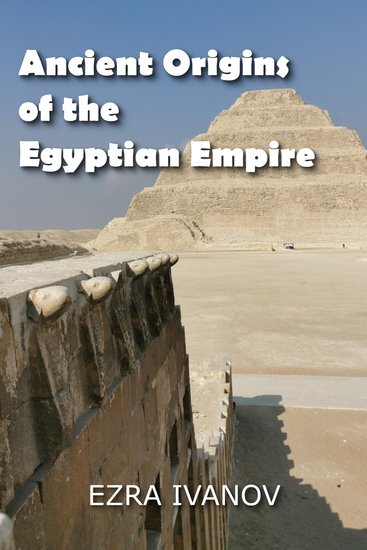
    It is nearly impossible to imagine Giza any different today with its desert backdrop and its majestic, sentinel-like pyramids that can't help but exude a sense of permanence. 
    Edfu's account, compiled from a series of now lost books attributed to the moon-god Thoth, allows us to reconstruct how the Giza plateau may have looked over 11,000 years ago. 
    Giza was built around a shallow lake, fed directly from the Nile if the texts were believed. This ecosystem is similar to what one might see today in equatorial Africa. If we find a time machine and travel back to this distant era, we would find a hot, humid atmosphere alive with lush green vegetation. 
    This hypothesis is not mere speculation, for it is known that the river used to flow closer to the plateau's edge in the past. In addition, evidence of a lake and dock dating back to Old Kingdom times has also been found beyond the plateau's western limits. 
    In the eyes of the Shining Ones, this would represent the primordial sea of chaos from which the first land appeared at the beginning of Time.
    Show book
  • Soviet Union - cover

    Soviet Union

    Kelly Mass

    • 0
    • 0
    • 0
    This title consists of 3 books, which are about these topics:1 - Stalingrad has changed names. It's now called Volgograd and is still one of the largest cities in Russia. But we can't ignore the fact that for a significant time in history, it was called Stalingrad, named after the tyrant and leader of the Soviet Union in the Second World War, Joseph Stalin. Let's explore the history of this city during the Second World War, and why the battles fought there were so horrendous and pivotal in history.2 - From 1924 till his death in 1953, Joseph Vissarionovich Stalin was a Georgian revolutionary and Soviet politician who ruled the Soviet Union. He was General Secretary of the Communist Party of the Soviet Union from 1922 to 1952 and Chairman of the Soviet Union's Council of Ministers from 1941 to 1953. In spite of ruling the nation as part of a collective management, he ultimately combined power and ended up being the totalitarian of the Soviet Union by the 1930s. Stalin, a communist dedicated to Lenin's grasp of Marxism, formalized these concepts as Marxism-- Leninism, while his personal policies were called Stalinism.3 - From 1922 till 1991, the Soviet Union, officially the Union of Soviet Socialist Republics (USSR), was a socialist state that covered Europe and Asia. It was in theory a federal union of different sovereign republics; but, till its closing years, its administration and economy were highly centralized.
    Show book