Join us on a literary world trip!
Add this book to bookshelf
Grey
Write a new comment Default profile 50px
Grey
Subscribe to read the full book or read the first pages for free!
All characters reduced
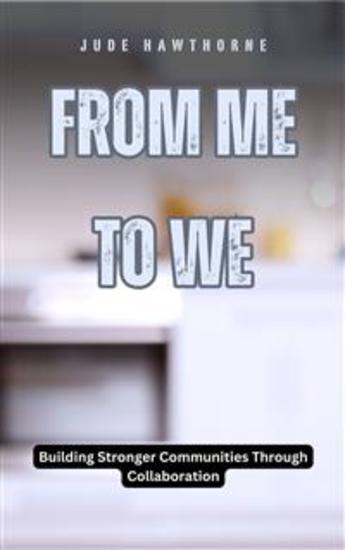
From Me to We - Building Stronger Communities Through Collaboration - cover

From Me to We - Building Stronger Communities Through Collaboration

Jude Hawthorne

Publisher: QuantumQuill Press

  • 0
  • 0
  • 0

Summary

In "From Me to We: Building Stronger Communities Through Collaboration," Jude Hawthorne explores the transformative power of community collaboration. This inspiring book reveals how collective efforts can bring about positive change, addressing local challenges and fostering a sense of unity. Through engaging stories and practical examples, Hawthorne highlights the role of libraries as neutral hubs where individuals of all ages can come together, share ideas, and work towards common goals. Discover how bridging generational gaps, addressing food insecurity, and creating inclusive spaces can strengthen communities. "From Me to We" is a call to action for anyone looking to make a difference by moving from individual efforts to collective impact.
Available since: 07/15/2024.

Other books that might interest you

  • Maya Civilization - Pyramids Astronomy and the Rise and Fall of Mesoamerican Power - cover

    Maya Civilization - Pyramids...

    Rolf Hedger

    • 0
    • 0
    • 0
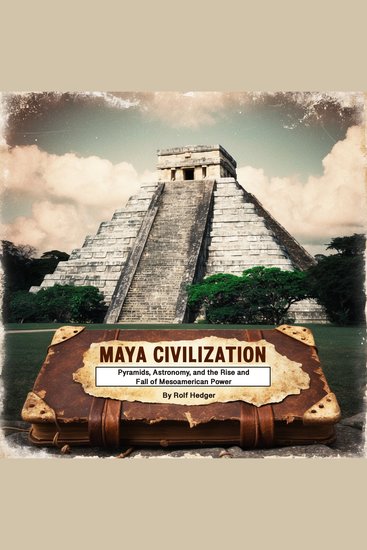
    The Maya civilization emerged from the fertile lands of Mesoamerica, where early agricultural societies gradually developed into one of the most advanced cultures of the ancient world. Long before the rise of monumental cities and towering pyramids, the ancestors of the Maya lived in small villages, relying on farming, hunting, and fishing for sustenance. Corn, or maize, became the cornerstone of their diet and played a central role in their mythology, economy, and daily life. Over time, these early settlements expanded, evolving into complex societies with trade networks, religious practices, and political hierarchies. 
    The roots of Maya civilization can be traced back to the Preclassic period, around 2000 BCE. During this time, small communities scattered across present-day southern Mexico, Guatemala, Belize, Honduras, and El Salvador began cultivating staple crops such as maize, beans, squash, and chili peppers. As agricultural techniques improved, populations grew, leading to the formation of larger settlements. Villages transitioned into regional centers, where early forms of leadership and governance emerged. These developments set the stage for the sophisticated city-states that would later define the Maya world. 
    The Maya were not isolated in their cultural development. They shared Mesoamerica with other influential civilizations, most notably the Olmecs, who thrived along the Gulf Coast of Mexico. The Olmecs, often considered the “mother culture” of Mesoamerica, left a lasting impact on the Maya through their artistic styles, religious beliefs, and ceremonial architecture. The colossal stone heads of the Olmecs, their early writing systems, and their concept of a sacred ballgame were all absorbed and adapted by the Maya. This exchange of ideas helped shape the foundations of Maya civilization, leading to the rise of the first great Maya cities.
    Show book

  • Mobilize - How to Reboot the American Industrial Base and Stop World War III - cover

    Mobilize - How to Reboot the...

    Shyam Sankar, Madeline Hart

    • 0
    • 0
    • 0
    From the CTO of Palantir comes a bold call to arms for resurrecting America’s industrial base, and winning the defense technology race that will define the twenty-first century. 
     
    America is in an undeclared state of emergency. Not since the Cold War has the US faced such powerful enemies—and our military isn’t ready. Shyam Sankar, Chief Technology Officer of Palantir, issues an urgent call to action: Mobilize. 
     
    The American industrial base once underwrote American victory. Builders and workers rallied to win World War II. For most of the twentieth century, great American companies from General Mills to Chrysler had defense businesses that sent mankind into space and won the Cold War. But the forges fell silent and the furnaces went dark. America’s innovators and warfighters were ripped apart. Now China, not America, leads the world in manufacturing. America is the underdog. The good news is, we’ve been here before. 
     
    Mobilize tells the remarkable true stories of the Americans who moved heaven and earth to produce for our troops and help our country win the twentieth century. And it exposes the shocking blunders that broke the Pentagon and weakened our military. 
     
    There’s a war for America’s future, stymied between the forces of complacency and change. If we empower exceptional individuals and harness the power of capitalism and competition, America can unleash the brains and brawn we need to resurrect our industrial base, stop World War III, and help our country build—and win.
    Show book
  • Putin's Russia - Life in a Failing Democracy - cover

    Putin's Russia - Life in a...

    Anna Politkovskaya

    • 0
    • 1
    • 0
    A searing portrait of a country in disarray and of the man at its helm, from "the bravest of Russian journalists" (The New York Times)Hailed as "a lone voice crying out in a moral wilderness" (New Statesman), Anna Politkovskaya made her name with her fearless reporting on the war in Chechnya. Here, she turned her steely gaze on the multiple threats to Russian stability, among them Vladimir Putin himself.Rich with characters and poignant accounts, Putin's Russia depicts a far-reaching state of decay. Politkovskaya describes an army in which soldiers die from malnutrition, parents must pay bribes to recover their dead sons' bodies, and conscripts are even hired out as slaves. She exposes rampant corruption in business, government, and the judiciary, where everything from store permits to bus routes to court appointments is for sale. And she offers a scathing condemnation of the war in Chechnya, where kidnappings, extra-judicial killings, rape, and torture beget terrorism rather than fighting it. Finally, Politkovskaya denounces both Putin, for stifling civil liberties as he pushes the country back to a Soviet-style dictatorship, and the West, for its unqualified embrace of the Russian leader.Sounding an urgent alarm, Putin's Russia is a gripping portrayal of a country in crisis and the testament of a great and intrepid reporter, who received death threats and survived assassination attempts for her scathing criticism of the Kremlin. Tragically, on October 7, 2006, Politkovskaya was shot and found dead in an elevator in her Moscow apartment building. After several years of investigations, five men were imprisoned for her murder.
    Show book
  • The Alice Behind Wonderland - cover

    The Alice Behind Wonderland

    Anonymous

    • 0
    • 0
    • 0
    On a summer's day in 1858, in a garden behind Christ Church College in Oxford, Charles Dodgson, a lecturer in mathematics, photographed six-year-old Alice Liddell, the daughter of the college dean, with a Thomas Ottewill Registered Double Folding camera, recently purchased in London. 
     
    Simon Winchester deftly uses the resulting image--as unsettling as it is famous, and the subject of bottomless speculation--as the vehicle for a brief excursion behind the lens, a focal point on the origins of a classic work of English literature. Dodgson's love of photography framed his view of the world and was partly responsible for transforming a shy and half-deaf mathematician into one of the world's best-loved observers of childhood. Little wonder that there is more to ""Alice Liddell as the Beggar Maid"" than meets the eye. Using Dodgson's published writings, private diaries, and of course his photographic portraits, Winchester gently exposes the development of Lewis Carroll and the making of his Alice.
    Show book
  • ASVAB EXPERT: Boost Your Score with Shocking Secrets! - "Transform your ASVAB journey! Dive into engaging audio lessons revealing shocking secrets to boost your score!" - cover

    ASVAB EXPERT: Boost Your Score...

    Gideon Waverly

    • 0
    • 0
    • 0
    ASVAB EXPERT: Boost Your Score with Shocking Secrets! 
    ⭐⭐ Simplified Guide & Explanations Included ⭐⭐ 
    Are you eager to advance your career and enhance your knowledge by successfully passing the ASVAB? 
    Searching for a thorough guide that encompasses everything you need to pass the ASVAB? 
    Your search concludes here! 
    This guide is your ultimate resource for deepening your understanding, honing your skills, and engaging in practical exercises. With this, you will be set for success. 
    Updated for the ASVAB Exam Structure 2024-2025. 
    Key features of this enhanced guide: 
    - In-depth insights about the ASVAB Certification 
    - Comprehensive explanation of how to master the ASVAB 
    - Effective strategies for preparation and exam tackling 
    Our guide stands out through its extensive coverage, which is crucial for your exam success. Concepts are explored in detail, rather than just glossed over. 
    Please note that this guide is independent and not affiliated with any official ASVAB entities, serving solely as a valuable resource for you. 
    Designed with a clear structure and accessible language, our ASVAB Guide ensures smooth transitions between topics. Say farewell to complicated jargon, and embrace clear, concise, and technically accurate content. 
    So, why wait? Click the BUY NOW button, grab your guide, and embark on your journey to ASVAB success in 2024! 
    Get ready to maximize your score and unlock new opportunities!
    Show book
  • If P Then Q - Why Philosophy Can Teach You How to Think and Help You Live a Happy Life By the Methods of Applying Logic to Solve the Problems in Your Life and Achieve Success (A Scholarly Monograph) - cover

    If P Then Q - Why Philosophy Can...

    Russell Hasan

    • 0
    • 0
    • 0
    This short paper on logic argues that logic and science can go hand in hand, and that, by taking observations of perceptions and sensations, and applying logical analysis to them, you have the power to build conceptual models and frameworks that you can use in order to predict what you should do in the future and to reason how to solve the problems in your life. Examples from hard science, and examples of the use of science and logic in the courtroom to understand legal arguments, are presented, as well examples of how to figure out the answers to the mundane ordinary problems that we humans have in our lives. 
    Mandatory must-read for anyone who wants to think and live using logic.
    Show book