Join us on a literary world trip!
Add this book to bookshelf
Grey
Write a new comment Default profile 50px
Grey
Subscribe to read the full book or read the first pages for free!
All characters reduced
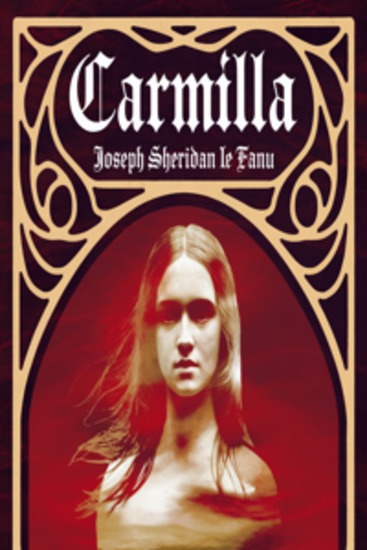
Carmilla (illustrated) - cover

Carmilla (illustrated)

Joseph Sheridan Le Fanu

Publisher: Swish

  • 0
  • 0
  • 0

Summary

Discover Carmilla, the classic Gothic novella by Joseph Sheridan Le Fanu, first published in 1872. This haunting tale of mystery and vampirism predates Dracula and offers an enchanting, suspense-filled story set in the dark woods of Styria. With themes of love, fear, and the supernatural, Carmilla continues to captivate readers with its timeless allure. This edition has been carefully formatted for digital publication, preserving the original text for an immersive reading experience. Dive into a masterpiece that shaped vampire literature and Gothic fiction as we know it today.
Perfect for fans of Gothic literature, horror, and classic stories with a twist of the macabre.
Available since: 12/10/2024.


Other books that might interest you

  • The Master of Mystery - cover

    The Master of Mystery

    Jack London

    • 0
    • 0
    • 0
    Jack London's "The Master of Mystery" is set in a Native American fishing village in Alaska. A woman has lost her most valuable possession: the blankets of a deceased Englishman. The culprit must be found, but what makes matters more complicated is that the local shaman has fallen out of favor, forcing a feared shaman from outside the village to come to their aid. Can he help them, and will the culprit be found? The short story is one of London's stories inspired by the period the writer spent at the Klondike Gold Rush in the late 19th century and was published in the early 20th century.
    Show book
  • The Prize - From their pens to your ears genius in every story - cover

    The Prize - From their pens to...

    Mary Webb

    • 0
    • 0
    • 0
    Mary Gladys Meredith was born on 25th March 1881 at Leighton Lodge in the village of Leighton, near Shrewsbury in Shropshire.  
    Mary was home-schooled by her father before being sent to a finishing school in Southport in 1895. Her longs walks in the countryside helped her develop a heightened sense of observation and description, of both people and places, which later infused both her poetry and prose. 
    When she was 20 she developed symptoms of Graves' disease, a thyroid disorder that caused bulging protuberant eyes and throat goitre. This caused life-long ill health and was a possible contributor to her early death.  
    Mary was first published as a teenager when her brother sent to a local newspaper her poem on a recent rail accident.  Mary, who was in the habit of destroying her work was appalled though placated when she discovered that it had received some positive appreciation in readers letters. 
    1912 brought marriage to Henry Bertram Law Webb, a teacher. He supported her literary work which, in 1917, resulted in the publication of her novel ‘The Golden Arrow.’ 
    A few years later they acquired a property in London where, it was hoped, recognition of her literary talents would be more easily recognised.   
    Her 1924 novel, ‘Precious Bane’, won the Prix Femina Vie Heureuse, the prestigious French literary prize awarded by an all-female jury. 
    Most of her poetry and various other works were only published after her death. 
    By 1927 her health was deteriorating and her marriage failing.   
    Mary Webb died on 8th October 1927 at St Leonards-on-Sea, East Sussex.  She was 46.
    Show book
  • The Imp of the Perverse - cover

    The Imp of the Perverse

    Sampi Books, Edgar Allan Poe

    • 0
    • 0
    • 0
    In the short story "The Imp of the Perverse", Edgar Allan Poe deals with the psychology of guilt and self-destruction. A man, after committing a murder in order to inherit a fortune, is tormented by the need to confess his crime, driven by an irresistible impulse, the "demon of perversity", which leads him to his own ruin.
    Show book
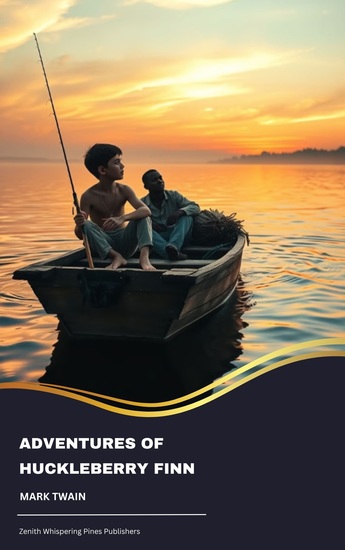
  • Adventures of Huckleberry Finn - cover

    Adventures of Huckleberry Finn

    Mark Twain

    • 0
    • 0
    • 0
    He runs from civilization—and discovers what it truly means to be human.
    Drifting down the Mississippi River on a raft, young Huck Finn escapes a world of cruelty and hypocrisy alongside Jim, a man seeking freedom of his own. As they travel through danger, humor, and quiet moments of reflection, Huck is forced to question the values he has been taught—and to choose between society's rules and his own conscience.
    
    Widely regarded as "the great American novel," this timeless classic blends sharp satire with deep compassion. Mark Twain's vivid storytelling captures the voice of youth, the struggle for moral truth, and the enduring power of friendship against injustice.
    
    If you love adventurous storytelling with heart, humor, and lasting meaning, this novel remains as powerful and relevant as ever.
    
    Open the book—and follow the river toward freedom, courage, and truth.
    Show book
  • The Spectre Bridegroom - From their pens to your ears genius in every story - cover

    The Spectre Bridegroom - From...

    William Hunt

    • 0
    • 0
    • 0
    The bookshelves of British literature are incredible collections that have gathered together centuries of very talented authors.  From these Isles their fame spread and whilst among their number many are now forgotten or neglected their talents endure.  Among them is the English writer William Hunt.
    Show book
  • Comanche Conflict (Stonecroft Saga Book 14) - A Historical Western Novel - cover

    Comanche Conflict (Stonecroft...

    B.N. Rundell

    • 0
    • 0
    • 0
    BULLETS, BLOOD, DEATH AND VENGEANCE FILLED THE VALLEY AS BITTER ENEMIES CLASHED. 
    Gabe and company spent the winter with the Mouache Ute but the buffalo hunt was watched by a hunting party of Yaparuhka Comanche. That hunting party soon became a raiding party and the blood began to flow. 
    When the Northern Arapaho descend on the plains, the bitter enemies of the Comanche riled the warriors bent on vengeance to attack the Arapaho, and warriors died. But the cry for vengeance was directed at the white man and his people that were responsible for the deaths of Comanche warriors. 
    The quest for vengeance was misdirected and again the stench of death would fill the air.
    Show book