Join us on a literary world trip!
Add this book to bookshelf
Grey
Write a new comment Default profile 50px
Grey
Subscribe to read the full book or read the first pages for free!
All characters reduced
All in the dark - cover

All in the dark

Joseph Sheridan Le Fanu

Publisher: Good Press

  • 0
  • 0
  • 0

Summary

Joseph Sheridan Le Fanu's "All in the Dark" intricately weaves a tapestry of suspense and psychological depth, exploring the eerie landscapes of human fear and the supernatural. The novella is emblematic of Le Fanu's mastery in the Gothic genre, characterized by his rich descriptive style and an atmospheric sense of impending dread that permeates the narrative. Set against the backdrop of Victorian society, the story delves into the shadowy realms of the mind, merging the uncanny with the everyday and examining how darkness—not just literal but figurative—can envelop one's consciousness and reality. Le Fanu, an influential figure in Gothic literature, was known for his exploration of themes such as supernatural horror and the ambiguities of morality. Raised in a culturally rich environment, his Irish heritage and encounters with the supernatural folklore of his homeland undoubtedly shaped his narrative voice. His oeuvre illustrates his deep fascination with the uncanny, which is poignantly manifested in "All in the Dark," where he invites readers to confront their innermost anxieties. This novella is a compelling read for aficionados of Gothic fiction and those who appreciate the intertwining of psychological insight with supernatural elements. Le Fanu's atmospheric storytelling and keen observations make "All in the Dark" not merely a tale of horror, but a profound exploration of the human psyche's darker corners.
Available since: 04/24/2025.
Print length: 200 pages.
Other books that might interest you

  • Fantomina: Love in a Maze - cover

    Fantomina: Love in a Maze

    Eliza Haywood

    • 0
    • 0
    • 0
    'Her design was once more to engage him, to hear him sigh, to see him languish, to feel the strenuous pressures of his eager arms, to be compelled, to be sweetly forc'd to what she wished with equal ardour.'
    
    Originally published in 1725, and daringly exploring themes such as identity, class and female desire, Fantomina: Love in a Maze is comprehended as one of the finest – yet underappreciated – novellas of the eighteenth-century.
    
    A beautiful young woman becomes intrigued with a charming, but severely shallow, young man at the theatre: Beauplaisir. Witnessing his treatment of some of the ladies there, she disguises herself as 'Fantomina', to determine whether his behaviour would change towards her. After a short fling, Beauplaisir tires of her and leaves, much to her outrage. Fantomina then takes on a series of alternative personas in a bid to re-capture his attention. A scathing commentary on men's treatment of women in society, Fantomina: Love in a Maze is a remarkable work which would have scandalised its readers at the time of publication. This audiobook is brought to life by the brilliant Helen Keeley.
    Eliza Haywood (1693 – 1756) was an English writer, actress and publisher. In her lifetime, she penned over seventy works, including novels, poetry, plays and periodicals. A proto-feminist, she was famed for her romance writing, which mirrored contemporary scandals in eighteenth century society.
    Show book
  • Be This Her Memorial - From their pens to your ears genius in every story - cover

    Be This Her Memorial - From...

    Caradoc Evans

    • 0
    • 0
    • 0
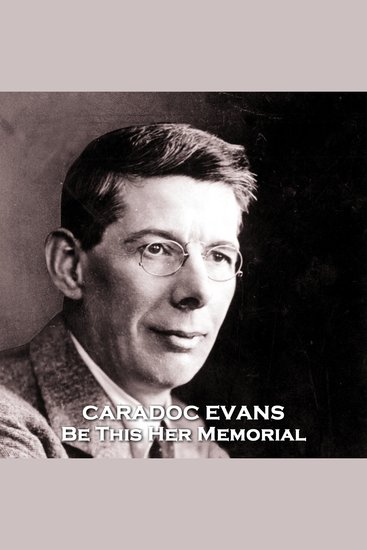
    The bookshelves of British literature are incredible collections that have gathered together centuries of very talented authors.  From these Isles their fame spread and whilst among their number many are now forgotten or neglected their talents endure.  Among them is Caradoc Evans.
    Show book
  • Masque of the Red Death - cover

    Masque of the Red Death

    Edgar Allan Poe

    • 0
    • 0
    • 0
    The Masque of the Red Death, a short story written by Edgar Allan Poe, follows Prince Prospero's attempts to avoid a dangerous plague known as the Red Death by hiding in his abbey. He, along with many other wealthy nobles, has a masquerade ball within seven rooms of his abbey, each decorated with a different color. In the midst of their revelry, a mysterious figure enters and makes his way through each of the rooms. When Prospero confronts this stranger, he falls dead. The story follows many traditions of Gothic fiction and is often analyzed as an allegory about the inevitability of death, though some critics advise against an allegorical reading. Many different interpretations have been presented, as well as attempts to identify the true nature of the disease of the "Red Death."
    Show book
  • Carmilla - cover

    Carmilla

    Joseph Sheridan Le Fanu

    • 0
    • 0
    • 0
    tbc
    Show book
  • Lord Jim - cover

    Lord Jim

    Joseph Conrad

    • 0
    • 0
    • 0
    "Lord Jim" is a novel by Joseph Conrad, originally published as a serial in Blackwood's Magazine from 1899 to 1900 and later as a book in 1900. The novel is a complex exploration of honor, guilt, and redemption through the story of Jim, a young British seaman. Jim dreams of being a hero but is faced with a critical test when he abandons a ship in distress. His idealism is shattered by his actions, and the novel follows his quest for atonement. Conrad's narrative delves into the psychological depth of Jim's character, using a non-linear storytelling technique that was innovative for its time.
    Show book
  • The Devoted Friend - cover

    The Devoted Friend

    Oscar Wilde

    • 0
    • 0
    • 0
    Once upon a time, there was a kind and honest man named Hans. He lived alone in a tiny cottage.
    Hans was a little man who owned a beautiful garden, where he grew flowers of all kinds and colours which were sold in the market to make some money. He enjoyed the company of another man called Hugh, a miller who used to visit Hans very often during the summer time and with whom he shared thoughts about friendship and loyalty. Hans was so devoted to Hugh that he even gifted him whole bunches of flowers from his own garden.
    Show book