Join us on a literary world trip!
Add this book to bookshelf
Grey
Write a new comment Default profile 50px
Grey
Subscribe to read the full book or read the first pages for free!
All characters reduced
"My Visit to Tolstoy": Five Discourses - Enriched edition - cover

"My Visit to Tolstoy": Five Discourses - Enriched edition

Joseph Krauskopf

Publisher: DigiCat

  • 0
  • 0
  • 0

Summary

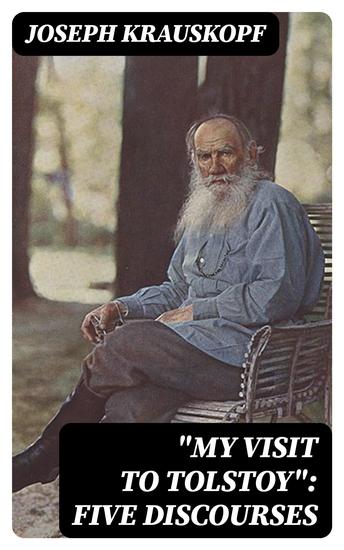
In "My Visit to Tolstoy: Five Discourses," Joseph Krauskopf presents a thought-provoking exploration of the philosophy and spirituality of one of literature's greatest icons, Leo Tolstoy. Written in a carefully crafted literary style that intertwines personal reflection with intellectual rigor, Krauskopf's discourses delve into themes of morality, religion, and the pursuit of truth. Set against the backdrop of the early 20th century, a time of burgeoning existential exploration, the book captures the essence of Tolstoy's teachings while contextualizing them within the broader spectrum of his life and artistic oeuvre. Joseph Krauskopf, an esteemed rabbi and philosopher, draws on his extensive training in theology, paired with a profound admiration for Tolstoy's moral vision, to illuminate the transformative power of Tolstoy's ideas. Having experienced the complexities of faith and ethical living, Krauskopf approaches these discourses with both reverence and critical insight, making the philosophical inquiries accessible to a wide audience. His scholarly background and deep understanding of various religious traditions allow him to present Tolstoy's beliefs in a nuanced manner, thereby bridging gaps between cultural and theological paradigms. This book is a must-read for anyone intrigued by the moral struggles that define the human experience. Krauskopf's eloquent and engaging approach provides readers with significant insights not only into Tolstoy's worldview but also into their own spiritual journey. "My Visit to Tolstoy" invites reflections on the ethical dimensions of living, making it a vital contribution to both literary and philosophical discussions.

In this enriched edition, we have carefully created added value for your reading experience:
- Hand‐picked Memorable Quotes shine a spotlight on moments of literary brilliance.
- Interactive footnotes clarify unusual references, historical allusions, and archaic phrases for an effortless, more informed read.
Available since: 06/03/2022.
Print length: 44 pages.
Other books that might interest you

  • Egyptian Mythology for Kids: Captivating Tales and Myths of Gods Goddesses Monsters and Pharaohs - cover

    Egyptian Mythology for Kids:...

    Matt Clayton

    • 0
    • 0
    • 0
    Have you ever wondered why the ancient Egyptians made mummies, why they built the gigantic pyramids, or what they believed in?  
    All these questions and more will be answered in this incredible audiobook on Egyptian mythology. Become an ancient Egyptian myth buster and find out which legends about ancient Egypt are pure fiction! 
    Learning doesn’t have to be a chore. This audiobook makes it easy and exciting with interesting facts, helpful pronunciation tips for those tricky new words, and meanings for some of the words you may not have heard before. On top of this, at the end of each chapter, there are exciting and creative activities to make learning fun. Plus, there’s even a final chapter full of fun facts about ancient Egypt! 
    You’ll be amazed to hear the weird, wonderful, and downright crazy myths surrounding this ancient civilization. Here are just a few of them and some of the other amazing things you’ll learn in this audiobook:The mummy’s curse—is it real?The ancient Egyptians had more than one creation story!Nobody knows who exactly built the pyramids. Was it slaves?Were there aliens in ancient Egypt?Which pharaoh was eaten by a hippopotamus?Egyptians took the meaning of “cat lover” to a whole new level.There were so many gods that even the Egyptians got them mixed up!Who was His Majesty “herself”?Learn the tale of the god who was chopped to bits and lived to tell the tale!How do you make a mummy?The gods were part animals!Is the Nile River the center of the universe? Pharaohs were living gods.Your heart had to be lighter than a feather to become immortal!Where would you face five-headed reptiles, snakes with knives, and fire-breathing dragons?The Book of the Dead wasn’t as scary as it sounds. The ancient Egyptians loved junk food and playing games too!
    Show book
  • The Fallacy of Freedom - cover

    The Fallacy of Freedom

    Gregory Heary

    • 0
    • 0
    • 0
    How can you achieve true freedom in a society laden with diverse and often conflicting beliefs? This book cuts through the noise, offering clarity on what it means to be free in a world governed by ideologies.Exploring the notion of freedom, this book presents a riveting analysis of its impact on society and individual minds. It highlights the tension between the advocates of free speech and expression and those who perceive these freedoms as threats. By dissecting the actions and motivations of both supporters and critics of freedom, the book provides a unique lens through which to view our own beliefs. The book delves deep into the battleground of ideologies where freedom clashes with traditional and modern beliefs. Proponents of freedom argue for its necessity in expression and innovation, while its opponents criticize its potential for leading to chaos and moral decay. Through a detailed analysis of these conflicting viewpoints, this book illuminates the complexities of freedom in society. It examines how historical and religious teachings shape our understanding and practice of freedom, advocating for a balanced mental hygiene that aligns with divine guidance. By embracing this approach, you're not just informed but transformed, equipped to use your freedom wisely and in ways that contribute to personal and communal well-being. This astute analysis not only clarifies what it means to be truly free but also challenges you to examine your own beliefs and the societal norms that shape them. It navigates the intricate dynamics of freedom and control, offering you a path to a more enlightened, purpose-driven life.Unlock the path to true freedom and mental clarity by picking up this book today!
    Show book
  • The Land Is Sung - Zulu Performances and the Politics of Place - cover

    The Land Is Sung - Zulu...

    Thomas M. Pooley

    • 0
    • 0
    • 0
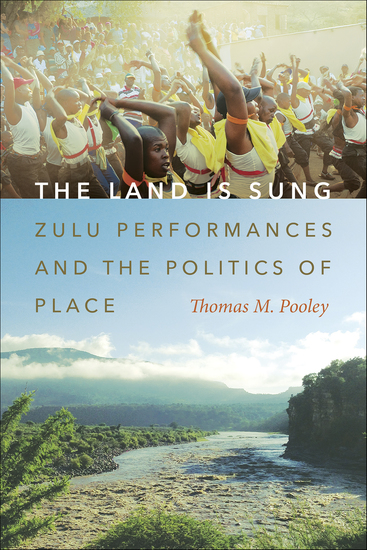
    What does it mean to belong? In The Land is Sung, musicologist Thomas M. Pooley shows how performances of song, dance, and praise poetry connect Zulu communities to their ancestral homes and genealogies. For those without land tenure in the province of KwaZulu-Nata, performances articulate a sense of place. Migrants express their allegiances through performance and spiritual relationships to land are embodied in rituals that invoke ancestral connection while advancing well-being through intergenerational communication. Engaging with justice and environmental ethics, education and indigenous knowledge systems, musical and linguistic analysis, and the ethics of recording practice, Pooley's analysis draws on genres of music and dance recorded in the midlands and borderlands of South Africa, and in Johannesburg's inner city. His detailed sound writing captures the visceral experiences of performances in everyday life. The book is richly illustrated and there is a companion website featuring both video and audio examples.
    Show book
  • Reckoning of Power - Oppenheimer the Atomic Bomb & World War 2 - cover

    Reckoning of Power - Oppenheimer...

    History Brought Alive

    • 0
    • 0
    • 0
    Discover the untold story of the most terrifying invention in human historyThis audiobook explores the history of the Atomic Bomb in World War II, and uncovers Robert Oppenheimer's mysterious role as its visionary leader.As the world plunged into war, Oppenheimer found himself at the centre of a moral and scientific dilemma. Could science save humanity, or would it be its downfall?With gripping narratives and meticulous research, this book takes you on a riveting journey from the Manhattan Project to the Atomic Bombings at Hiroshima and Nagasaka, traversing the landscapes of WWII, and the nuclear age aftermath.Here are some of the highlights:J. Robert Oppenheimer, the brilliant, but troubled physicist who played a key role in the development of the Atomic BombExplore the turbulent backdrop of World War II, where global conflict ignited scientific innovationStep into the shoes of some of the greatest scientific minds in history—Albert Einstein, Edward Teller, Leslie Groves, Niels Bohr, and Leo SzilárdWitness the crucial moments and decisions that led to the dropping of the "Little Boy" and "Fat Man" Atomic Bombs on Hiroshima and NagasakiDiscover the Manhattan Project, a top secret mission that assembled the world's brightest minds in a race against the sinister, Nazi Atomic ProjectE = mc²: Unravel the mysteries of Einstein's groundbreaking equation that laid the foundation for atomic scienceExplore the Cold War and the arms race, followed by a glimpse into the future of nuclear energy 
    All of this and much, much more….Whether you're a history enthusiast or new to the subject, this book tells all about Oppenheimer, the Atomic Bomb, World War II, and the Nuclear Age Aftermath.Grab your copy of this book today!
    Show book
  • Tainos and Caribs The: The History of the Indigenous Natives Who Encountered Christopher Columbus in 1492 - cover

    Tainos and Caribs The: The...

    Editors Charles River

    • 0
    • 0
    • 0
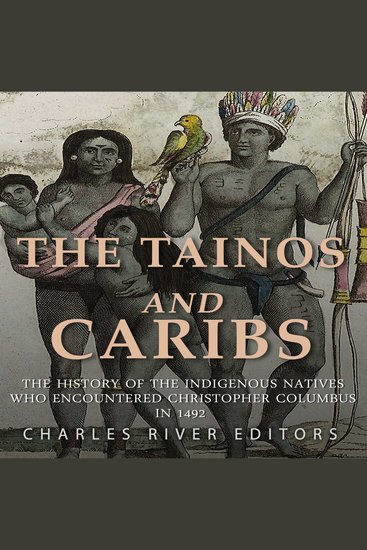
    On October 12, 1492, one of the most important “first contacts” of the modern era was made when three ships of Spanish origin approached the island archipelago now known as the Bahamas, cautiously dropping anchor as the captain of the fleet gazed across to what he assumed was the coast of India. According to the popular version of the story, amazed at the sight of ships and men of such unfamiliar appearance, the native people of the island plunged into the clear waters of the western Atlantic, expertly swimming or aboard dugout canoes, and came out to greet the strangers. 
    	In all probability, the meeting was much more cautious and incremental, but the idea that these innocent people, raised in a tropical Eden, might embrace with such open enthusiasm their own destruction is picturesque, and no doubt appeals to contemporary perceptions. By whatever means one might choose to view it, this meeting of cultures certainly did mark the beginning of a bold new chapter in the history of Europe, and the beginning of the end of an ancient race of native people occupying a vast new continent.  
    	The entries into Christopher Columbus’ log as he recorded his first encounters with the indigenous people of the “Indies” are very telling. The island people arrived alongside his ships, offering humble gifts that Columbus described as “parrots and balls of cotton and spears and many other things, which they exchanged for the glass beads and hawks' bells.” These were the Taínos people, or the “Arawaks” as they would come to be known, and Columbus described them as “well built…with good bodies and handsome features.”  
    	This description, while deceptively simple, had a chilling implication, because Columbus was not taking note of these facts out of idle interest but in terms of how best to exploit them. As the natives offered up gifts aand by implication the freedom of their islands, Columbus remarked simply on their primitive appearance.
    Show book
  • The Religion of American Greatness - What's Wrong with Christian Nationalism - cover

    The Religion of American...

    Paul D. Miller

    • 0
    • 0
    • 0
    ECPA Top Shelf Award Winner
    Long before it featured dramatically in the 2016 presidential election, Christian nationalism had sunk deep roots in the United States. From America's beginning, Christians have often merged their religious faith with national identity. But what is Christian nationalism? How is it different from patriotism? Is it an honest quirk, or something more threatening?
    Paul D. Miller, a Christian scholar, political theorist, veteran, and former White House staffer, provides a detailed portrait of—and case against—Christian nationalism. Building on his practical expertise not only in the archives and classroom but also in public service, Miller unravels this ideology's historical importance, its key tenets, and its political, cultural, and spiritual implications.
    Miller shows what's at stake if we misunderstand the relationship between Christianity and the American nation. Christian nationalism—the religion of American greatness—is an illiberal political theory, at odds with the genius of the American experiment, and could prove devastating to both church and state. Christians must relearn how to love our country without idolizing it and seek a healthier Christian political witness that respects our constitutional ideals and a biblical vision of justice.
    Show book